technology news
-
20-03-2026
IP65 Rated EC Cooling Fans for Dusty and Wet Environments
In conclusion, Rongtech's IP65 rated EC cooling fans represent a specialized and essential class of thermal management solution. They transcend the limitations of standard cooling by combining guaranteed physical protection against dust and water with the efficiency, controllability, and intelligence of modern EC motor technology. In doing so, they enable engineers to design robust systems for the real world—where dirt, moisture, and extreme conditions are a constant reality. By ensuring that critical electronics remain cool, clean, and operational in these hostile settings, Rongtech fans provide the foundational thermal reliability that allows industrial automation, communications infrastructure, and processing equipment to deliver on their promise of uninterrupted performance and long service life.
-
19-03-2026
The Role of Intelligent Power Modules (IPMs) in Simplifying Motor Drive Design
In conclusion, Intelligent Power Modules from Rongtech represent a paradigm shift in motor drive design, moving from a complex, discrete-component assembly to a streamlined, system-in-a-package solution. By integrating power switches, drivers, and comprehensive protection into a single, thermally efficient unit, they dramatically reduce design complexity, accelerate development cycles, and enhance system-level reliability. This allows engineers to allocate their valuable resources to differentiation and innovation at the application level, rather than reinventing the power stage. In an era demanding smarter, more efficient, and more compact motorized systems, Rongtech IPMs provide the essential, simplified power foundation that makes advanced motion control accessible, reliable, and economically viable for a vast range of products.
-
18-03-2026
AC-DC Converters from Rongtech: Reliable Power for Industrial Control Systems
In conclusion, Rongtech's AC-DC converters are far more than simple power adapters; they are engineered lifelines for industrial control systems. By delivering clean, stable, isolated, and protected DC power from the raw and noisy AC mains, they enable the precision, reliability, and intelligence of modern automation. Built to withstand the rigors of the industrial environment and designed with comprehensive safety and compliance features, they provide the dependable "power foundation" upon which efficient factories, safe processes, and smart infrastructure are built. Choosing Rongtech for AC-DC conversion is an investment in system resilience, minimized downtime, and ultimately, in the seamless and safe operation of industrial control.
-
17-03-2026
High Power Thick Film Resistors for Pulse and Continuous Loads
In summary, high power thick film resistors from Rongtech are essential, active components in the management and control of electrical energy. They are the definitive solution for applications that demand the reliable dissipation of power, whether that power is steady and continuous or sudden and intense. By mastering the materials science of thick films and the thermal engineering of robust packages, Rongtech provides components that ensure safety, protect sensitive electronics, and enable precise control in systems ranging from factory automation and clean energy to medical technology and transportation. In the circuit, they are the reliable, unwavering element that turns excess energy into controlled heat, making them a cornerstone of robust and efficient power design.
-
16-03-2026
The Role of Ceramic Capacitors in High-Frequency Decoupling and Filtering
In conclusion, ceramic capacitors, especially the advanced MLCCs offered by Rongtech, are far from passive components; they are active guardians of signal integrity and power stability in the high-frequency domain. Their unparalleled ability to provide an ultra-low impedance path at GHz frequencies makes them indispensable for decoupling, filtering, and EMI suppression in today's most advanced electronic systems. By delivering localized charge, cleaning power rails, and shaping signal paths, Rongtech's ceramic capacitors enable the reliable operation of everything from cutting-edge communications infrastructure to the power electronics that drive modern industry, proving that stability at the smallest component level is foundational to performance at the system level.
-
15-03-2026
Phase Control Thyristors in Industrial Power Control Applications
In summary, Phase Control Thyristors like Rongtech's R76KPE represent a mature yet vital technology in industrial power electronics. Their unique latching operation, combined with unparalleled robustness, high power handling, and cost-effectiveness, makes them the ideal solution for applications requiring reliable, phase-angle-based control of AC power. From mitigating inrush currents in motors to delivering precise heat in industrial processes, Rongtech thyristors provide the dependable, hands-on control that forms the muscular backbone of modern industrial automation, proving that in the world of high-power control, simplicity and strength often triumph.
-
14-03-2026
Fast Recovery Diodes (FRD) and FRD Modules
In conclusion, Fast Recovery Diodes and Modules are not merely components; they are fundamental enablers of high-frequency, high-efficiency power conversion. By drastically reducing switching losses and enabling faster system operation, they are key to achieving the power density and energy efficiency demanded by today's advanced technologies. Rongtech's comprehensive portfolio, spanning from discrete diodes to fully integrated modules, provides engineers with the precise tools to optimize performance, reliability, and thermal management in applications ranging from industrial automation and clean energy to next-generation electric vehicles. In the quest for smarter, greener, and more powerful electronics, the speed and efficiency of the FRD remain indispensable.
-
13-03-2026
High Precision Shunt Resistors from Rongtech: An Alternative to Magnetic Sensing
In summary, Rongtech's high-precision shunt resistors offer a robust, accurate, and cost-efficient alternative to magnetic current sensing. Their strengths in direct measurement, exceptional stability, low temperature drift, and noise immunity make them indispensable in applications demanding truth and reliability in current data. From extending EV range to optimizing solar harvest and ensuring industrial precision, Rongtech's shunt technology provides the foundational measurement integrity upon which smarter, more efficient power systems are built, proving that sometimes the most straightforward solution is the most powerful.
-
12-03-2026
The Role of Sensor ICs in Modern Power Management Systems
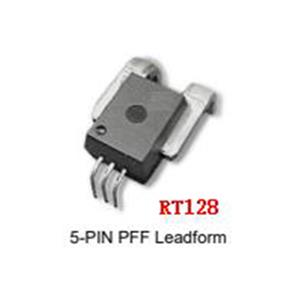
In conclusion, Sensor ICs have evolved from simple protective components to the essential sensory organs of modern power management systems. They provide the critical, accurate data required for precision control, peak efficiency optimization, and forward-looking system health monitoring. As technology advances towards greater integration and intelligence, the role of these components, as exemplified by Rongtech's diverse portfolio, will only become more central. They are the indispensable link that translates the physical realities of power flow into actionable intelligence, enabling the smarter, more efficient, and more reliable electronic systems that will define our technological future.
-
11-03-2026
The Impact of Capacitance Value on Inverter Switching Frequency
The selection of the optimal capacitance value in an inverter is not a static decision but a dynamic calculation that is directly influenced by the target switching frequency. Rongtech's engineering solutions, which combine low-ESL film capacitor technology with high-reliability materials, empower designers to push the boundaries of frequency, achieving higher power density and efficiency without compromising the stability of the DC bus.