How FRD Diode Modules Reduce Losses in Inverter Circuits
How FRD Diode Modules Reduce Losses in Inverter Circuits
The Critical Role of Diodes in Inverter Circuits and the Loss Challenge
Inverter circuits, which convert direct current (DC) to alternating current (AC), rely on the precise switching of power semiconductors like IGBTs (Insulated-Gate Bipolar Transistors). However, an equally critical component is the freewheeling diode (FRD), which is often integrated into the same module as the IGBT. Its primary function is to provide a path for the inductive load current when the IGBT switches off. Without this path, high voltage spikes would occur, potentially destroying the switch. The problem lies in the diode's reverse recovery characteristic. When the diode is forward-biased, it conducts current. When the voltage reverses, it takes a finite amount of time for the diode to stop conducting and block the reverse voltage. During this reverse recovery time (trr), a significant reverse recovery current flows, which coincides with a high voltage across the diode. This overlap of high current and high voltage creates a power loss known as switching loss, which is a major source of inefficiency, especially in high-frequency switching inverters found in applications like variable frequency drives (VFDs), uninterruptible power supplies (UPS), and solar inverters.
How FRD Diode Modules Minimize Switching Losses
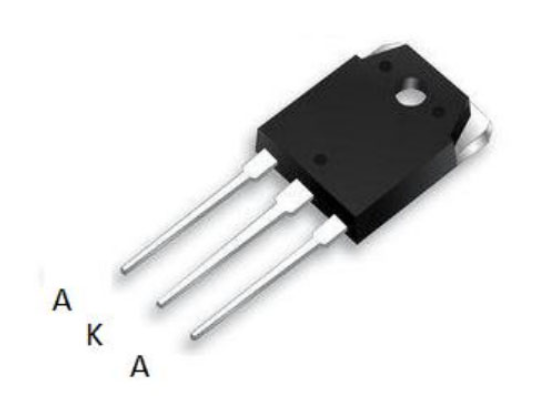
Fast Recovery Diode (FRD) modules are specifically engineered to address the limitations of standard diodes by fundamentally improving their reverse recovery characteristics. The key parameters are a very short reverse recovery time (trr) and a soft recovery characteristic. A shorter trr directly reduces the duration of the reverse recovery current flow, thereby minimizing the energy lost during each switching cycle. More importantly, the soft recovery feature ensures that the reverse recovery current decays smoothly rather than abruptly snapping off. An abrupt stop (hard recovery) causes high-frequency ringing due to circuit parasitics, leading to Electromagnetic Interference (EMI) issues and potential voltage spikes that stress the components. The soft recovery of high-quality FRD modules, such as those offered by Rongtech (e.g., R60FP30DN), effectively suppresses this ringing. This combination of ultrafast switching and soft recovery directly translates to lower total switching losses, higher inverter efficiency, reduced heat generation, and improved system reliability. It allows the inverter to operate at higher switching frequencies, which can lead to benefits like smaller magnetic components (inductors, transformers) and improved output waveform quality.
The System-Level Benefits and Selection Criteria
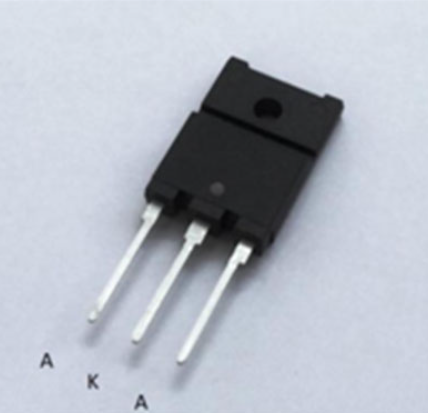
The reduction in switching losses achieved by FRD modules delivers substantial system-level advantages. Lower losses mean less heat is generated, which reduces the demands on the cooling system. This can allow for the use of smaller, less expensive heat sinks and cooling fans, leading to a more compact and cost-effective inverter design. Higher efficiency also contributes directly to energy savings and improved power density (more power in a smaller volume). When selecting an FRD module, engineers must consider key specifications beyond the reverse recovery time. The maximum repetitive reverse voltage (Vrrm) must exceed the circuit's peak voltage. The average forward current (If) rating must handle the load current. The reverse recovery softness factor (the ratio of ta to tb in the recovery waveform) is a critical indicator of recovery quality. Partnering with a reputable manufacturer like Rongtech ensures access to modules with optimized characteristics, comprehensive datasheets, and proven reliability in demanding applications like industrial motor drives and welding equipment. This careful selection is crucial for building high-performance, efficient, and reliable power conversion systems.
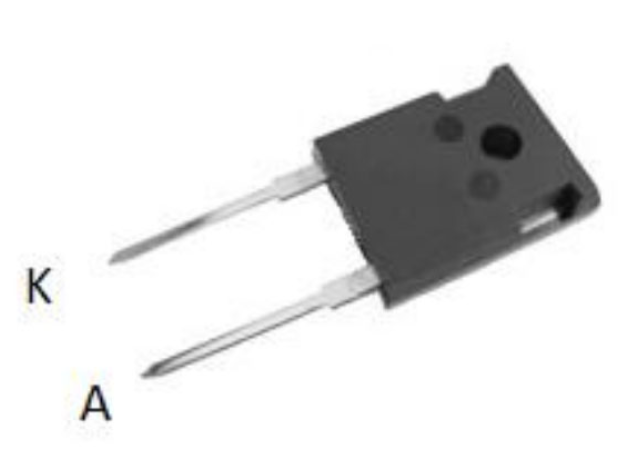
In summary, FRD diode modules are not passive components but active enablers of efficiency in modern inverter circuits. By drastically reducing switching losses through ultrafast and soft recovery characteristics, they directly lower operating temperatures, improve energy efficiency, and enhance overall system reliability. The strategic selection of high-performance FRD modules is, therefore, a critical design decision for achieving superior performance in applications ranging from motor drives to renewable energy systems.