What is an Open Loop Current Sensor
What is an Open Loop Current Sensor
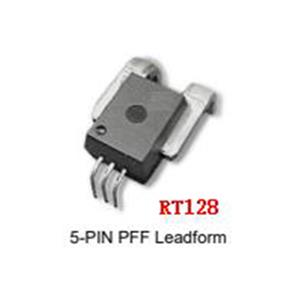
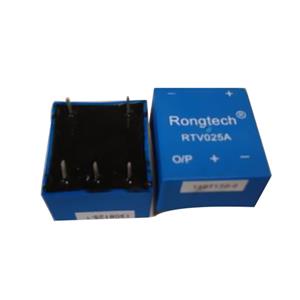
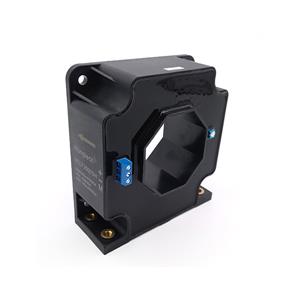
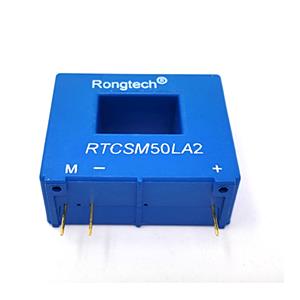
An open loop current sensor is a fundamental device used for measuring electrical current in a non-intrusive manner. Its core principle relies on the Hall Effect. When a current-carrying conductor is placed perpendicular to a magnetic field, a proportional voltage, known as the Hall voltage, is generated across a semiconductor chip (the Hall element). In an open loop configuration, the primary current (Ip) flowing through the conductor generates a magnetic field concentrated by a magnetic core. This magnetic field is then sensed by the Hall element. The resulting Hall voltage is amplified and output as a signal (Vout) that directly represents the magnitude of the measured current. A key characteristic of this design is its simplicity—there is no compensatory mechanism to nullify the sensed magnetic field, hence the term "open loop." This makes the sensor highly regarded for its compact size, cost-effectiveness, and fast response time, making it suitable for a broad range of applications where extreme high precision is not the primary concern.
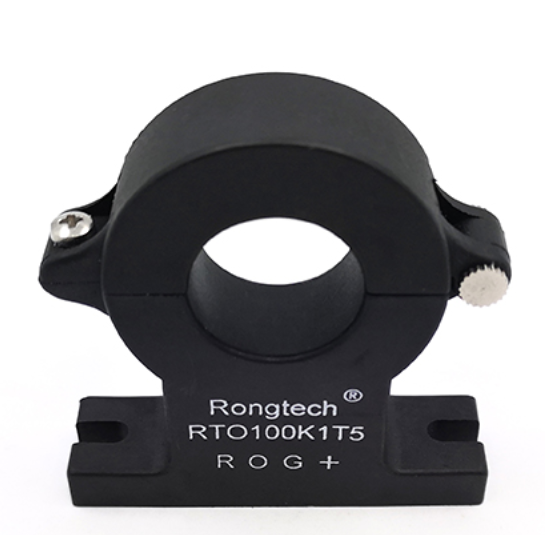
Key Advantages and Application Scenarios
The primary advantages of open loop current sensors stem from their straightforward design. They are generally more compact and lightweight compared to their closed loop counterparts, as they require fewer components. This makes them ideal for space-constrained applications like variable frequency drives (VFDs) and switch-mode power supplies (SMPS). Furthermore, their low power consumption and excellent linearity over a wide measuring range make them highly efficient. Common application scenarios include over-current protection in industrial motor drives, where they help prevent damage by detecting fault conditions. They are also widely used in battery management systems (BMS) to monitor charge and discharge cycles, and in renewable energy systems, such as solar inverters, for DC link current measurement. Their robustness and ability to measure large AC or DC currents, often in isolation from the main circuit, provide both safety and design flexibility.
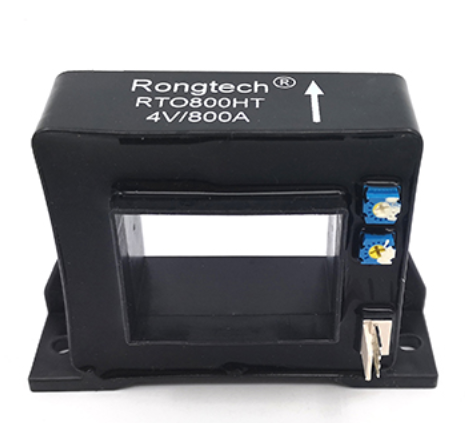
Considerations When Selecting an Open Loop Sensor
While highly versatile, open loop current sensors have certain limitations that must be considered during the design phase. The most significant trade-off for their simplicity and cost-effectiveness is typically lower accuracy and stability compared to closed loop sensors. They can be susceptible to temperature drift, meaning the output may vary with changes in ambient temperature, and may have a non-linear response at the extremes of their range. Therefore, selecting the right sensor requires careful evaluation of parameters like accuracy, linearity, operating temperature range, and response time. For applications demanding the highest precision, a closed loop or fluxgate sensor might be a better choice. However, for cost-sensitive, high-volume applications where good performance is sufficient, open loop sensors, like those offered by Rongtech Industry, present an optimal balance of performance, size, and price.
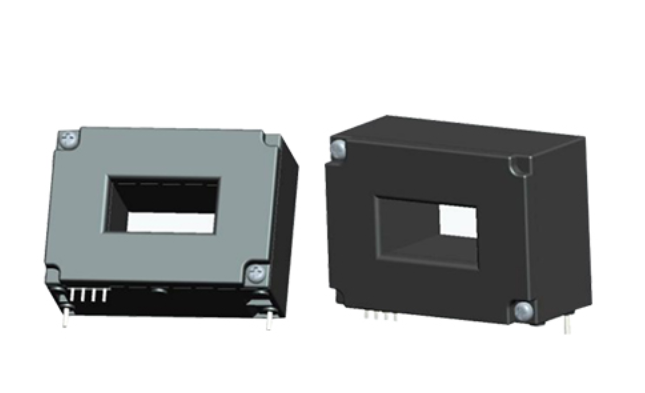
In conclusion, the open loop current sensor is a highly practical solution for AC/DC current measurement across numerous industries. Its Hall Effect-based, non-intrusive design offers an effective combination of compact size, rapid response, and cost efficiency. While mindful of its limitations in ultra-high precision scenarios, engineers consistently value it for applications ranging from industrial automation and renewable energy to consumer electronics. Understanding its operational principles, advantages, and ideal use cases is key to leveraging its capabilities effectively in modern electronic design.