Application of Thyristors in Industrial Soft Starters and Dimming Systems
Application of Thyristors in Industrial Soft Starters and Dimming Systems
1. The Core Principle: Phase-Angle Control for Precision Power Management
The fundamental application of thyristors (particularly SCRs - Silicon Controlled Rectifiers) in both soft starters and dimming systems revolves around the powerful technique of phase-angle control. This method allows for precise regulation of the output voltage delivered to a load by controlling the point during each AC half-cycle at which the thyristor is triggered into conduction. A thyristor acts as a high-speed switch that, once triggered by a gate pulse, remains conducting until the current through it drops to zero. In phase-angle control, the gate trigger pulse is deliberately delayed by a specific angle (the firing angle) after the zero-crossing point of the AC voltage. By adjusting this firing angle, the effective RMS voltage applied to the load (e.g., a motor winding or a lamp) can be smoothly varied from nearly zero to full line voltage. This provides a simple, efficient, and robust method for controlling the power flow without the need for inefficient resistive dividers, making it ideal for managing high-power loads in industrial and commercial settings.
2. Mitigating Inrush Current: The Role of Thyristors in Motor Soft Starters
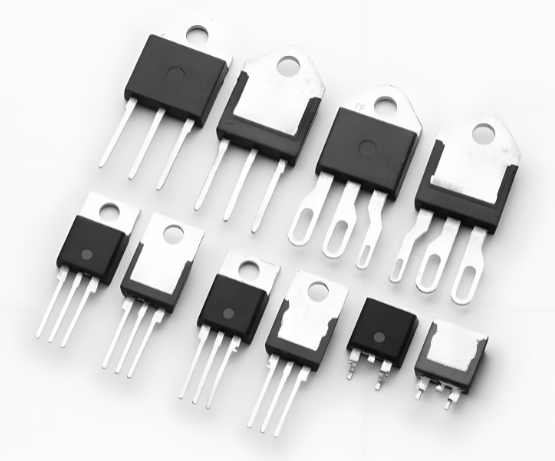
The primary application of thyristors in industrial soft starters is to solve the critical problem of high inrush current. When an AC induction motor is started by directly connecting it to the power line, it can draw a current 6 to 10 times its full-load current. This massive inrush current causes voltage dips in the electrical supply system, mechanical stress on the motor and driven equipment, and excessive heating. A thyristor-based soft starter addresses this by using a pair of anti-parallel SCRs for each phase to gradually ramp up the voltage applied to the motor terminals. At startup, the controller applies a firing angle that results in a low voltage. As the motor accelerates, the controller progressively advances the firing angle, smoothly increasing the voltage and torque. This controlled acceleration, facilitated by the precise switching of thyristors like the R76KPE series, limits the inrush current to a safe level, typically 2-3 times the full-load current. This not only protects the motor and machinery but also reduces stress on the electrical infrastructure, leading to improved system reliability and longevity.
3. From Industrial Power to Controlled Illumination: Thyristors in Dimming Systems
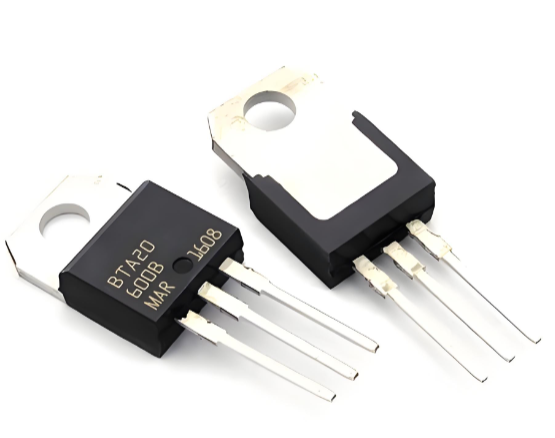
The same phase-control principle that enables motor soft-starting is directly applicable to lighting dimming systems, particularly for incandescent, halogen, and certain LED drivers. In a thyristor-based dimmer, the circuit controls the power delivered to the light source by varying the firing angle. A later firing angle results in a shorter conduction time per cycle and a lower average power, which dims the light. While the core technology is identical, the implementation differs in scale and precision. Industrial lighting or stage dimming racks handle high power levels, requiring robust thyristor modules similar to those used in soft starters. In contrast, commercial and residential dimmers use smaller, cost-optimized thyristor packages. The key challenge in modern dimming is compatibility with a wide range of load types, especially LEDs, which can be sensitive to the waveform distortion caused by phase-cutting. Advanced dimmers incorporate sophisticated control logic to ensure stable operation and avoid flicker, showcasing the evolution of the fundamental thyristor circuit to meet modern efficiency and performance demands in both industrial and consumer applications.
Summary
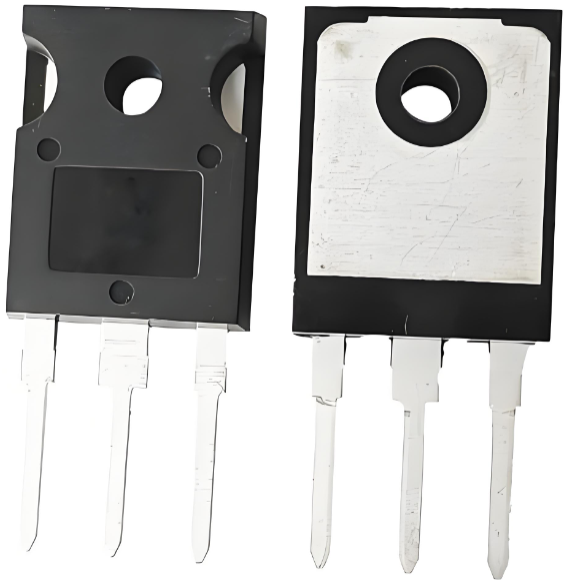
In summary, the thyristor's ability to provide efficient, phase-controlled power regulation makes it a versatile and indispensable component across two distinct domains. In industrial soft starters, it ensures the smooth, controlled acceleration of motors, protecting equipment and electrical networks. In dimming systems, it delivers precise control over lighting levels, from industrial facilities to homes. This dual application underscores the enduring value and adaptability of thyristor technology in managing AC power effectively and reliably.