Current Sensor Output Signal Guide: 0-5V, 0-10V, 4-20mA And Custom Output
Current Sensor Output Signal Guide: 0-5V, 0-10V, 4-20mA And Custom Output
Current sensor output signal selection is one of the most common reasons for model mismatch in power electronics projects. A sensor may have the correct current range and aperture size, but if the output signal does not match the controller, ADC, PLC, BMS, PCS, inverter control board, or EV charger module, the system may read wrong current data or require redesign.
This guide explains how to choose between 0-5V, 0-10V, 4-20mA and custom current sensor output signals, and what buyers should confirm before requesting a quote for EV chargers, battery energy storage systems, solar inverters, motor drives, UPS systems, railway systems, welding machines, and industrial power systems.
Quick Answer
To choose the right current sensor output signal, buyers should first confirm the input requirement of the controller or monitoring system. 0-5V output is commonly used for ADC, MCU, BMS and compact control boards. 0-10V output is often used for PLC and industrial analog input systems. 4-20mA output is suitable for longer-distance industrial signal transmission and stronger noise resistance. Custom output is useful for OEM projects, replacement sensors, special controllers, bidirectional current measurement, or systems requiring non-standard scaling.
1. Why Output Signal Matching Is So Important
A current sensor does not only measure current. It also converts the measured current into a signal that the control system can understand. If the output signal type, voltage range, zero point, polarity, scaling, or wiring definition does not match the control board, the system may calculate incorrect current values.
For example, a current sensor with 0-5V output cannot directly replace a sensor with 4-20mA output unless the controller supports both signal types. A sensor with 0-10V output may overload a controller input designed only for 0-5V. A bidirectional current sensor may use a midpoint voltage at zero current, which must be understood by the BMS, PCS, inverter controller, or EV charger control board.
Output mismatch can cause wrong display current, wrong charging current regulation, incorrect SOC calculation, unstable inverter feedback, false protection, or controller alarm. This is why output signal should be confirmed before price comparison and sample ordering.
Before requesting a quote, buyers should provide the controller input type, required output range, supply voltage, current direction, zero-current output point, signal wiring distance, and whether the signal is used for monitoring, control feedback, or protection.
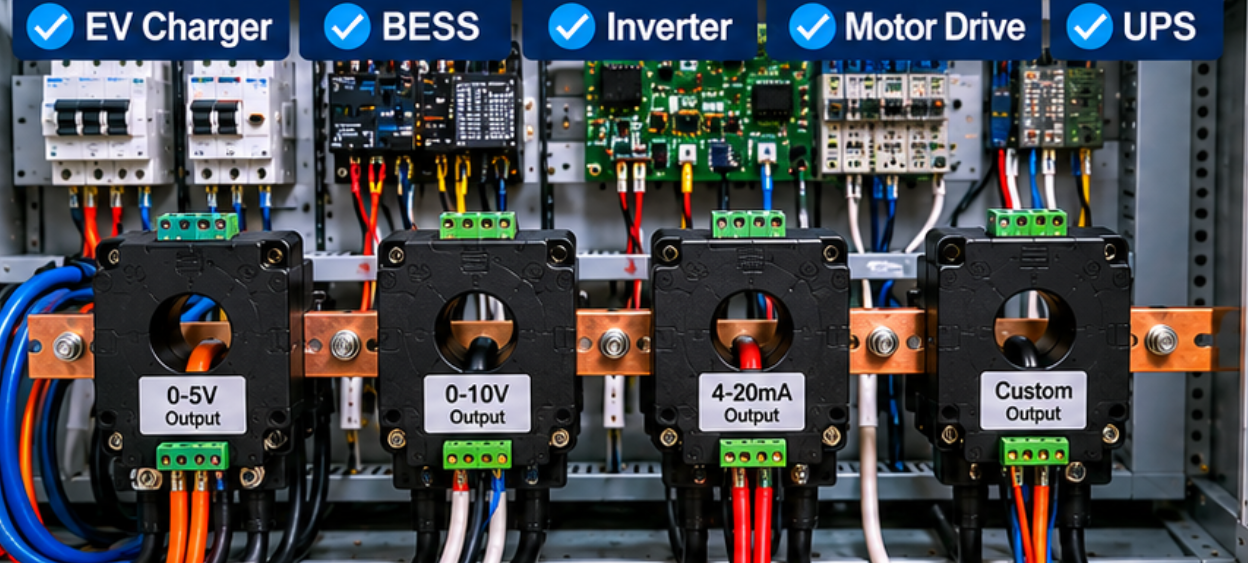
Common Output Signal Matching Problems
The sensor output voltage range is higher than the controller input range.
The controller expects 4-20mA, but the sensor provides voltage output.
The zero-current output point is not understood by the control system.
The output polarity is reversed during bidirectional current measurement.
The analog signal is unstable because the wiring distance is too long or noisy.
The replacement sensor has different scaling from the original model.
The sensor supply voltage does not match the available power rail.
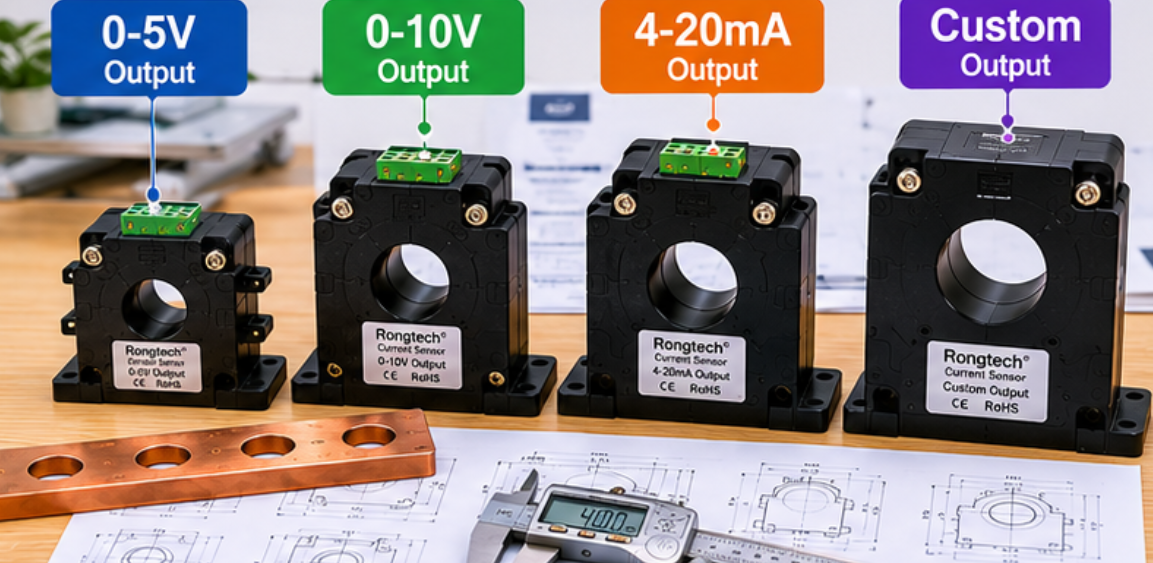
2. 0-5V Output: Common For ADC, BMS And Compact Controllers
0-5V output is one of the most common current sensor signal types. It is widely used in compact control boards, MCU systems, ADC inputs, BMS circuits, EV charging modules, battery cabinets, and small to medium industrial control systems. The main advantage is simple signal processing and easy matching with many low-voltage control circuits.
For unidirectional current measurement, 0V may represent zero current and 5V may represent full-scale current. For bidirectional current measurement, the sensor may use a midpoint output such as 2.5V at zero current, with output increasing or decreasing according to current direction. Buyers must confirm this before connecting the sensor to the control board.
0-5V output is suitable when the sensor is close to the controller and the electrical noise environment is controlled. If the signal cable is long or installed near high-current switching devices, buyers should review shielding, grounding, filtering, and EMC design.
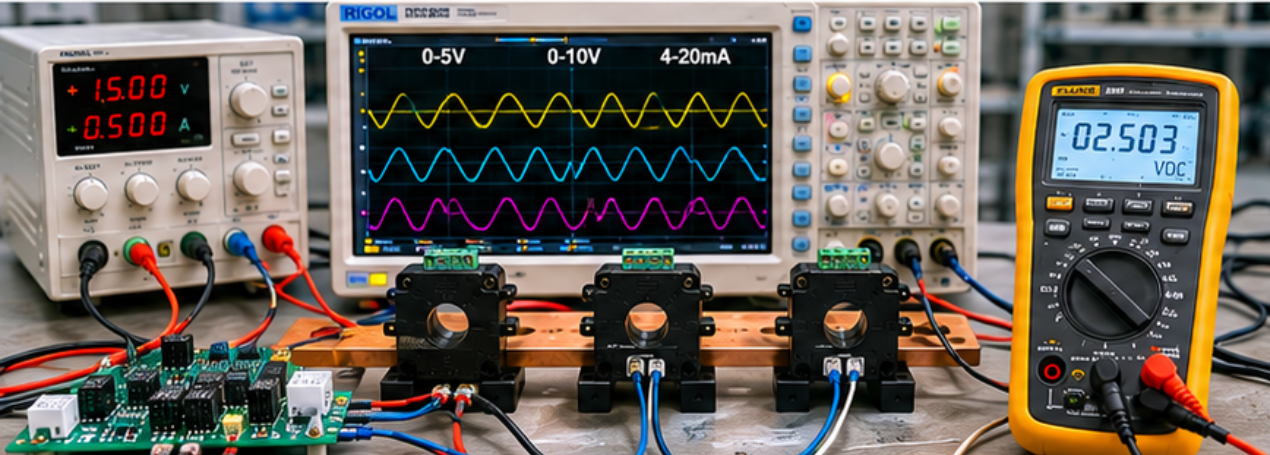
| 0-5V Output Checkpoint | Why It Matters | What Buyers Should Confirm |
|---|---|---|
| Controller Input Range | Prevents input overload or wrong reading | ADC input supports 0-5V |
| Zero-Current Output | Important for bidirectional measurement | 0V zero point or midpoint zero point such as 2.5V |
| Output Scaling | Determines current calculation | Example: 0-5V equals 0-500A |
| Signal Distance | Voltage signals are more sensitive to noise over long wiring | Cable length and cabinet wiring route |
| Supply Voltage | Sensor must work with available power rail | +5V, +12V, +15V, +24V, or ±15V depending on model |
3. 0-10V Output: Suitable For PLC And Industrial Analog Input
0-10V output is commonly used in industrial automation systems, PLC analog input modules, monitoring systems, control cabinets, and industrial power equipment. Compared with 0-5V, 0-10V provides a larger voltage span and is familiar to many industrial controller platforms.
This output type is often selected when the current sensor signal needs to be connected to a PLC, industrial controller, or monitoring device. It can be useful in UPS systems, DC power supplies, industrial motor drives, energy storage cabinets, and large power control panels.
Buyers should confirm whether the controller input is truly 0-10V. Some control boards only support 0-5V or 3.3V ADC input, and connecting 0-10V directly may cause signal error or hardware damage. For bidirectional current measurement, buyers should also confirm how zero current and reverse current are represented.

| 0-10V Output Checkpoint | Why It Matters | What Buyers Should Confirm |
|---|---|---|
| PLC Input Compatibility | Ensures correct industrial analog input reading | PLC or controller supports 0-10V input |
| Scaling Definition | Affects current display and control calculation | Example: 0-10V equals 0-1000A |
| Noise Environment | Industrial cabinets may contain strong switching noise | Cable shielding, grounding, cabinet layout |
| Input Protection | Prevents controller input damage | Maximum analog input voltage of the controller |
| Signal Ground | Incorrect grounding can introduce measurement error | Grounding method and isolation requirement |
4. 4-20mA Output And Custom Output: When Buyers Need Them
4-20mA output is widely used in industrial signal transmission. It is suitable when the sensor signal needs to travel a longer distance, when the electrical environment is noisy, or when the system uses industrial analog current input modules. Compared with voltage output, current output can provide better signal robustness in many industrial applications.
4-20mA output is often used in industrial power cabinets, monitoring systems, process control systems, large UPS systems, railway power systems, and remote measurement applications. Buyers should confirm loop power, load resistance, wiring method, current scaling, and controller input type before selecting this output.
Custom output is needed when the project has special controller requirements, replacement compatibility needs, bidirectional current measurement, non-standard current range, special zero point, digital communication, or OEM integration requirements. Custom output can help buyers avoid redesign when replacing an existing model or matching a fixed controller platform.
| Output Type | Best Fit | Buyer Should Confirm |
|---|---|---|
| 4-20mA | Longer wiring distance and industrial monitoring | Loop power, load resistance, scaling, controller current input |
| ±4V / ±5V | Bidirectional current measurement | Controller supports bipolar input and current direction logic |
| CAN / RS485 | Digital monitoring and smart power systems | Protocol, baud rate, address, data format, communication distance |
| Custom Voltage Output | OEM controller matching and replacement projects | Required output range, zero point, scaling, polarity, connector |
| Relay / Switch Output | Protection or alarm signal | Trip threshold, normally open or normally closed logic |
5. What Buyers Should Send Before Requesting A Quote
To receive an accurate quotation, buyers should provide the application, measured current type, current range, output signal requirement, controller input type, supply voltage, isolation requirement, aperture size, conductor dimensions, wiring distance, and whether customization is needed.
If the project is replacing an existing current sensor, buyers should also provide the original model number, datasheet, wiring definition, output scaling, photos, and installation dimensions. This allows the supplier to evaluate whether a direct replacement or custom output version is required.
Example Quote Request:
Application: EV charging module DC output current monitoring
Measured current: DC current
Current range: 500A rated, 800A peak
Output signal: 0-5V, zero-current midpoint for bidirectional measurement
Controller input: ADC input 0-5V
Supply voltage: +15V
Isolation requirement: 4kV or higher
Installation: Copper busbar 40 × 6 mm
Quantity: 20 samples first, estimated annual demand 3000 pieces
Final Output Signal Checklist
Confirm controller input type: ADC, PLC, BMS, PCS, inverter board, EV charger controller, or monitoring system.
Confirm output signal: 0-5V, 0-10V, 4-20mA, ± output, digital output, relay output, or custom output.
Confirm output scaling and full-scale current value.
Confirm zero-current output point and current direction logic.
Confirm supply voltage and pin definition.
Confirm wiring distance, shielding, grounding, and EMC environment.
Confirm isolation voltage and working voltage.
Provide current range, peak current, aperture size, busbar or cable dimensions.
Provide sample quantity, annual demand, and customization requirements.
Conclusion
Choosing the right current sensor output signal is essential for accurate current measurement and smooth system integration. 0-5V output is common for ADC, BMS, MCU and compact control boards. 0-10V output is suitable for PLC and industrial analog input systems. 4-20mA output is useful for longer-distance industrial signal transmission and noisy environments. Custom output is suitable for OEM projects, replacement sensors, bidirectional current measurement and special controller platforms.
Before requesting a quote, buyers should provide controller input requirements, current range, output scaling, zero-current point, supply voltage, isolation requirement, aperture size, and application details. A complete output signal requirement helps suppliers recommend the correct current sensor faster and reduce sample testing risk.
FAQ
1. Which current sensor output signal is most common?
0-5V is very common for ADC, MCU, BMS and compact control boards. 0-10V and 4-20mA are common in industrial control and PLC systems.
2. When should I choose 4-20mA output?
4-20mA output is suitable for longer wiring distance, industrial monitoring systems, PLC current input modules and noisy electrical environments.
3. Can current sensor output be customized?
Yes. Custom output can be provided for OEM projects, replacement models, special controller inputs, bidirectional current measurement and non-standard scaling requirements.
4. What is zero-current output?
Zero-current output is the sensor output when the measured current is zero. In bidirectional current sensors, this may be a midpoint voltage such as 2.5V for a 0-5V output system.
5. What should I provide before requesting a quote?
Provide application, current range, output signal requirement, controller input type, supply voltage, isolation requirement, aperture size, conductor size, wiring distance, sample quantity and annual demand.
Request Current Sensor Output Signal Selection Support
If you need current sensors with 0-5V, 0-10V, 4-20mA, digital or custom output for EV chargers, BESS, inverters, motor drives, UPS systems, railway systems or industrial power equipment, send us your current range, controller input, output scaling, supply voltage, isolation requirement, aperture size and estimated quantity. Our team can help you match a suitable output signal solution.
Contact Us Get Quote