How To Replace A Current Sensor Model Without Changing The Control System
How To Replace A Current Sensor Model Without Changing The Control System
Many power electronics projects need to replace an existing current sensor model because of cost pressure, long lead time, discontinued models, supplier changes, or local sourcing requirements. However, replacing a current sensor is not simply choosing another model with the same rated current. If the output signal, supply voltage, accuracy, response time, wiring definition, aperture size, or installation structure does not match, the control system may read wrong current data or require redesign.
This guide explains how to replace a current sensor model without changing the control system, what parameters must be compared, and what buyers should provide before requesting a replacement current sensor quote for EV chargers, BESS, solar inverters, motor drives, UPS systems, welding machines, railway systems, and industrial power electronics.
Quick Answer
To replace a current sensor model without changing the control system, buyers must match the original sensor’s current range, output signal, supply voltage, pin definition, response time, accuracy, offset, isolation voltage, aperture size, mounting holes, wiring direction, and mechanical dimensions. The replacement sensor should produce a compatible signal for the existing controller, ADC, PLC, BMS, PCS, or inverter control board. Before requesting a replacement quote, buyers should send the original model number, datasheet, wiring diagram, photos, installation dimensions, application, current range, and quantity requirement.
1. Why Current Sensor Replacement Requires Careful Matching
A current sensor is connected to the control system through electrical signals, power supply, wiring terminals, and mechanical installation. If one of these factors is different, the replacement may not work correctly even if the rated current is the same. For example, a 500A current sensor with 0-5V output cannot directly replace a 500A sensor with 4-20mA output unless the control system supports both signal types.
The control system may already be designed around a specific signal range, zero-current output point, polarity direction, response speed, and calibration method. If the replacement sensor has different output scaling or offset, the controller may calculate incorrect current values. This can affect charging current regulation, BMS current calculation, inverter feedback, motor control, welding current control, or overcurrent protection.
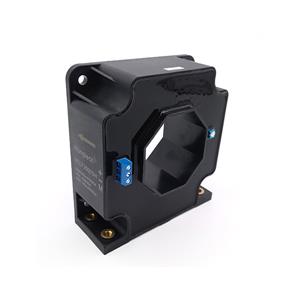
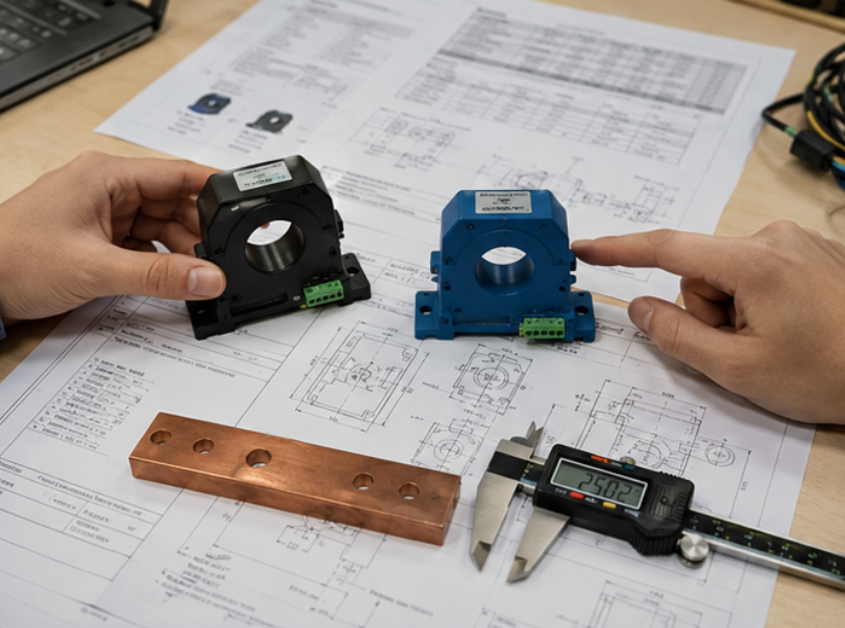
Mechanical compatibility is also important. The replacement sensor must fit the existing cable, copper busbar, mounting holes, cabinet space, and wiring direction. If the aperture is too small, the conductor cannot pass through. If the mounting holes are different, the cabinet structure may need modification. If the terminal direction changes, the wiring harness may not reach the connector.
For OEM buyers, a successful replacement should reduce cost or improve supply stability without creating new design risk. The best replacement current sensor is not only electrically similar, but also mechanically compatible and easy to verify during sample testing.
Common Reasons For Replacing A Current Sensor Model
The original current sensor has a long lead time or unstable supply.
The existing model is discontinued or difficult to purchase.
The buyer wants a more cost-effective alternative supplier.
The project needs local sourcing or a China current sensor manufacturer.
The control system cannot be changed, but the sensor supplier must be replaced.
The original sensor size or output needs small customization.
The buyer wants better accuracy, lower drift, or stronger isolation without redesigning the system.
2. Electrical Parameters That Must Be Matched
The first parameter to compare is current range. The replacement sensor should match the original rated current, peak current, overload capability, and measured current type. If the original sensor measures bidirectional DC current, the replacement should also support bidirectional measurement and provide a compatible zero-current output point.
Output signal is one of the most important compatibility factors. Current sensors may use 0-5V, 0-10V, ±4V, ±5V, 4-20mA, CAN, RS485, or customized output. The replacement sensor output must match the existing controller input. Even if the signal type is the same, buyers should check scaling, zero point, polarity, load resistance, and output response.
Supply voltage must also be checked. Some current sensors require +5V, +12V, +15V, +24V, or ±15V. If the replacement sensor needs a different power supply, the control board may not support it. For direct replacement, the supply voltage and power pin definition should be compatible with the existing wiring harness.
Accuracy, offset drift, response time, and bandwidth should be compared according to the application. If the sensor is used only for display, small differences may be acceptable. If the sensor is used for BMS calculation, EV charging control, inverter feedback, motor drive control, or fast overcurrent protection, the replacement must match the original performance more carefully.
Isolation voltage and safety design should not be reduced during replacement. In high-voltage EV chargers, BESS cabinets, solar inverters, UPS systems, and railway power systems, the replacement sensor should meet or exceed the original isolation requirement, working voltage, creepage distance, clearance distance, and insulation performance.
| Parameter To Compare | Why It Matters | Replacement Checkpoint |
|---|---|---|
| Rated Current | Determines normal measurement range | Match original rated current or confirm acceptable range difference |
| Peak Current | Prevents saturation during overload or transient conditions | Replacement should meet or exceed original peak current capability |
| Output Signal | Directly affects controller reading | Match 0-5V, 0-10V, 4-20mA, ± output, CAN, RS485, or custom output |
| Zero Point | Important for bidirectional or DC measurement | Confirm zero-current output and polarity direction |
| Supply Voltage | Sensor must work with existing power rail | Match +5V, +12V, +15V, +24V, ±15V, or existing system power |
| Pin Definition | Wrong wiring may damage the sensor or controller | Compare power, ground, output, shield, and communication pins |
| Accuracy And Drift | Affects current calculation and system control | Match accuracy, offset drift, temperature drift, and linearity |
| Response Time | Important for control and protection | Replacement should not be slower than system requirement |
| Isolation Voltage | Protects low-voltage control circuits | Replacement should meet or exceed original isolation requirement |
3. Mechanical And Installation Compatibility
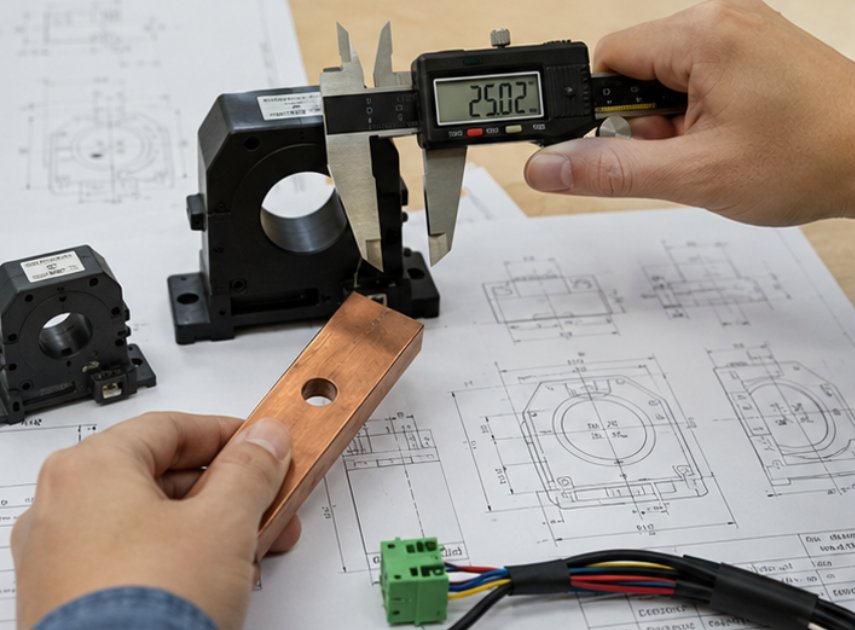
Mechanical compatibility is just as important as electrical compatibility. A replacement current sensor should fit the existing conductor and installation space. Buyers should compare aperture size, cable diameter, busbar width, busbar thickness, mounting hole distance, sensor height, sensor width, terminal direction, and cable outlet direction.
In EV chargers and BESS cabinets, current sensors are often installed around copper busbars or high-current cables. If the replacement aperture is too small, it cannot be installed. If the aperture is too large, the sensor may fit physically but the conductor position may affect accuracy. The conductor should remain properly centered according to the sensor design.
Mounting structure should be checked before ordering samples. Some sensors are panel-mounted, some are PCB-mounted, some are busbar-mounted, and some use split core design. If the replacement model has different mounting holes or terminal positions, the buyer may need to modify the cabinet or wiring harness, which defeats the purpose of a drop-in replacement.
For replacement projects, photos are very useful. Buyers should provide photos of the original sensor installed in the equipment, close-up images of terminals, busbar layout, wiring harness, mounting holes, and available space. This helps the supplier quickly judge whether a direct replacement or customized replacement is more realistic.
| Mechanical Item | What To Compare | Why It Matters |
|---|---|---|
| Aperture Size | Hole diameter or rectangular window size | Must fit the cable or copper busbar |
| Busbar Size | Width, thickness, and conductor position | Ensures correct installation and stable measurement |
| Mounting Holes | Hole distance, screw size, mounting surface | Avoids cabinet modification |
| Sensor Body Size | Length, width, height, terminal position | Must fit available cabinet space |
| Terminal Direction | Connector direction, cable outlet, terminal block position | Ensures wiring harness can connect without redesign |
| Mounting Type | Panel mount, PCB mount, busbar mount, DIN rail, split core | Determines whether the replacement can be installed directly |
4. Replacement Process Without Changing The Control System
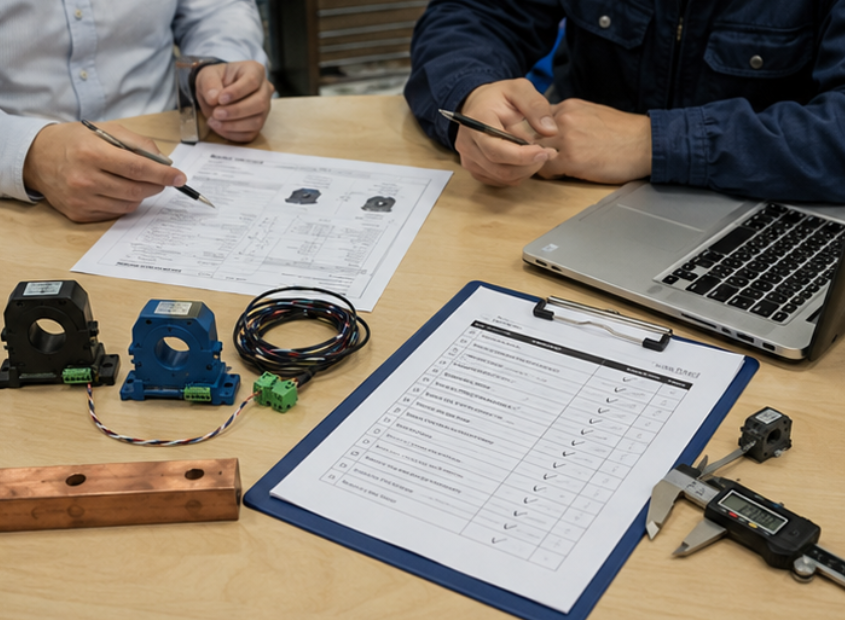
The safest replacement process starts with collecting original information. Buyers should provide the original current sensor model number, datasheet, wiring diagram, installation photos, measured current range, output signal, power supply, and system application. If the original datasheet is not available, photos and measured dimensions can still help the supplier evaluate replacement possibilities.
The second step is parameter comparison. The supplier should compare current range, output signal, supply voltage, pin definition, isolation, accuracy, response time, aperture, and mounting structure. Any difference should be clearly marked before sample testing. If the replacement cannot be fully matched, a customized version may be needed.
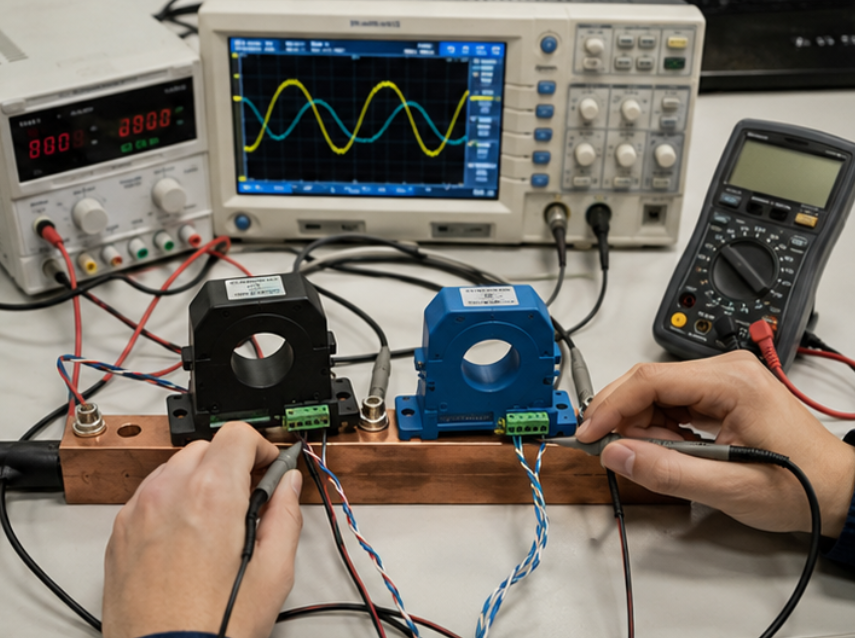
The third step is sample testing. The replacement sensor should be tested at zero current, normal current, peak current, and real operating temperature. The output should be compared with the original sensor and system controller reading. For high-power equipment, testing should include startup, load change, protection condition, and long-term operation.
The final step is approval for batch replacement. Before mass production, buyers should confirm wiring compatibility, mechanical fit, output consistency, temperature performance, isolation safety, and supplier delivery stability. A good replacement project should reduce cost or improve supply reliability without increasing system redesign risk.
Example Replacement Request:
Original model: Existing 500A Hall effect current sensor
Application: EV charging module DC output current monitoring
Output signal: 0-5V
Supply voltage: +15V
Aperture: Suitable for 40 × 6 mm copper busbar
Requirement: Replace original sensor without changing controller or wiring harness
Quantity: 30 samples first, estimated annual demand 5000 pieces
Common Replacement Mistakes To Avoid
Choosing a replacement only by rated current.
Ignoring zero-current output and polarity direction.
Using a different output signal without changing controller input.
Forgetting supply voltage and pin definition compatibility.
Replacing a fast-response sensor with a slower model.
Reducing isolation voltage below the original design requirement.
Ordering samples before confirming aperture size and mounting holes.
Skipping real load testing before batch replacement.
Conclusion
Replacing a current sensor model without changing the control system requires careful matching of electrical, mechanical, and safety parameters. Buyers should compare current range, output signal, zero point, supply voltage, pin definition, accuracy, drift, response time, isolation voltage, aperture size, mounting holes, and installation direction before ordering samples.
For EV chargers, BESS, solar inverters, motor drives, UPS systems, welding machines, railway systems, and industrial power electronics, the best replacement current sensor is the one that fits the existing controller, wiring harness, cabinet structure, and real operating conditions. A complete replacement request helps suppliers recommend compatible models faster and reduce redesign risk.
FAQ
1. Can I replace a current sensor with another model of the same current rating?
Not always. The replacement must also match output signal, supply voltage, pin definition, accuracy, response time, isolation voltage, aperture size, and mounting structure.
2. What information should I provide for a replacement current sensor quote?
You should provide the original model number, datasheet, wiring diagram, photos, current range, output signal, supply voltage, aperture size, application, and quantity requirement.
3. Can the replacement sensor use the same controller input?
Yes, if the output signal, scaling, zero point, polarity, supply voltage, and wiring definition are compatible with the existing controller input.
4. What if the original sensor has been discontinued?
A supplier can help evaluate a replacement if you provide the original datasheet, photos, installation dimensions, output requirements, and application conditions. A customized replacement may be possible.
5. Should I test the replacement sensor before mass production?
Yes. The replacement sensor should be tested under zero current, normal current, peak current, operating temperature, and real system load before batch approval.
Request A Replacement Current Sensor Quote
If you need to replace an existing current sensor model without changing your control system, send us the original model number, datasheet, wiring diagram, photos, output signal, supply voltage, aperture size, and application details. Our team can help you evaluate a compatible or customized replacement solution for EV chargers, BESS, inverters, motor drives, UPS systems, and industrial power electronics.
Contact Us Get Quote