How To Choose A Current Sensor Supplier For OEM Power Electronics Projects
How To Choose A Current Sensor Supplier For OEM Power Electronics Projects
For OEM power electronics projects, choosing a current sensor supplier is not only about comparing unit price. The supplier must support stable model selection, reliable batch quality, technical documents, customization, sample testing, production delivery, and long-term supply. A wrong current sensor supplier may cause sample delays, control signal mismatch, installation problems, inconsistent batches, or field reliability issues.
This guide explains how OEM buyers should evaluate a current sensor supplier for EV chargers, battery energy storage systems, solar inverters, motor drives, UPS systems, welding machines, railway power systems, and industrial power electronics equipment.
Quick Answer
To choose a current sensor supplier for OEM power electronics projects, buyers should evaluate model matching ability, current range coverage, output signal options, isolation voltage, accuracy and drift data, customization capability, sample support, testing process, batch consistency, technical documents, certification support, lead time, production capacity, and long-term supply stability. For OEM projects, the best supplier is not simply the cheapest one, but the one that can help reduce selection risk, support engineering communication, and deliver stable products for mass production.
1. Start With Application Matching, Not Price Alone
OEM power electronics projects usually have clear electrical, mechanical, and reliability requirements. A current sensor used in an EV charger is different from one used in a BESS cabinet, motor drive, solar inverter, UPS system, welding machine, or railway power system. Each application may require different current range, response time, accuracy, output signal, isolation voltage, aperture size, and operating temperature.
A reliable current sensor supplier should first understand the application before recommending a model. If a supplier only asks for rated current and immediately sends a price, the risk of wrong model selection may be high. For OEM projects, the supplier should ask about measured current type, rated current, peak current, output signal, supply voltage, controller input, isolation requirement, conductor size, installation structure, and expected quantity.
For example, a 500A current sensor for a battery cabinet may need bidirectional DC measurement, low offset drift, and stable long-term output. A 500A current sensor for an EV charging module may need good isolation, fast response, and strong anti-interference performance. A current sensor for a welding machine may need high peak current capability and pulse current response. The same rated current does not mean the same sensor model is suitable.
OEM buyers should also consider whether the supplier can support future platform changes. If the project later requires another output signal, larger aperture, different connector, or customized label, the supplier should be able to communicate with engineers and provide a practical solution.
Application Information Buyers Should Provide
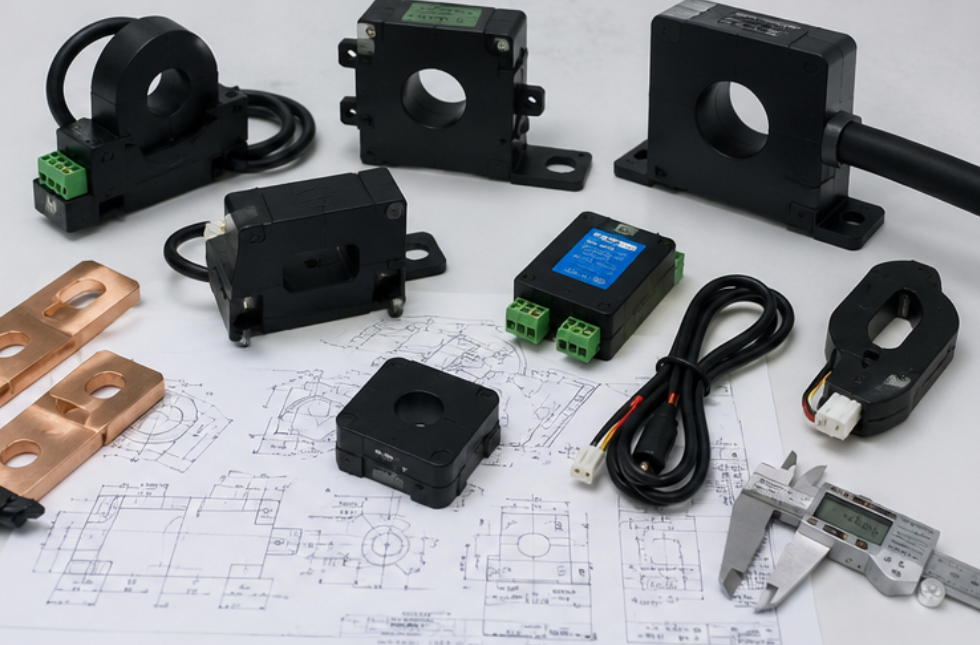
Application: EV charger, BESS, inverter, motor drive, UPS, welding machine, railway system, or industrial power supply.
Measurement position: DC bus, battery side, output cable, phase current, charging output, or protection circuit.
Measured current type: AC, DC, pulse, leakage, or bidirectional current.
Rated current, peak current, overload current, and fault current if available.
Controller input requirement: 0-5V, 0-10V, 4-20mA, ± output, CAN, RS485, or custom output.
Mechanical structure: busbar size, cable diameter, aperture size, mounting space, and wiring direction.
2. Evaluate Technical Capability And Model Coverage
A current sensor supplier for OEM projects should offer more than one product type. Different projects may need open loop Hall effect current sensors, closed loop current sensors, leakage current sensors, split core current sensors, high accuracy DC sensors, or custom current sensors. If the supplier has limited model coverage, buyers may need to source from multiple suppliers, increasing management cost and technical communication effort.
Technical capability should also include parameter matching. Buyers should check whether the supplier can recommend models based on current range, output signal, supply voltage, accuracy, response time, bandwidth, isolation voltage, aperture size, and operating environment. For OEM engineering teams, fast and accurate model matching can reduce sample testing cycles.
Accuracy and drift data are important for power electronics. A supplier should be able to explain accuracy, linearity, zero offset, temperature drift, response time, and stability under real working conditions. This is especially important for BESS, EV chargers, solar inverters, motor drives, and high-accuracy DC measurement projects.
Isolation performance should not be ignored. In high-voltage systems, current sensors must safely separate the high-current primary side from the low-voltage control side. Buyers should review isolation voltage, working voltage, dielectric strength, creepage distance, clearance distance, and insulation design according to the final equipment requirement.
| Evaluation Item | Why It Matters | What Buyers Should Ask |
|---|---|---|
| Product Range | Different OEM projects need different sensor technologies | Do you supply open loop, closed loop, leakage, split core, and custom current sensors? |
| Current Range Coverage | OEM platforms may need different ratings | Can you support 100A, 300A, 500A, 1000A, 2000A, or custom ranges? |
| Output Signal Options | The sensor must match the controller input | Can you support 0-5V, 0-10V, 4-20mA, ± output, CAN, RS485, or custom output? |
| Accuracy And Drift Data | Affects control, protection, and long-term measurement | Can you provide accuracy, linearity, offset drift, and temperature drift information? |
| Isolation Performance | Important for high-voltage equipment safety | What isolation voltage and working voltage can the model support? |
| Customization Capability | OEM projects often need special structures | Can you customize aperture size, cable length, connector, label, or output signal? |
Warning Signs When Evaluating A Supplier
The supplier only quotes price without asking application details.
The supplier cannot explain output signal, isolation, accuracy, or response time clearly.
The supplier has limited support for custom aperture, connector, or output signal.
The datasheet is incomplete or does not match the actual sample.
The supplier cannot provide stable lead time or batch production support.
The supplier cannot support replacement evaluation for existing models.
3. Check Quality Control, Testing And Batch Consistency
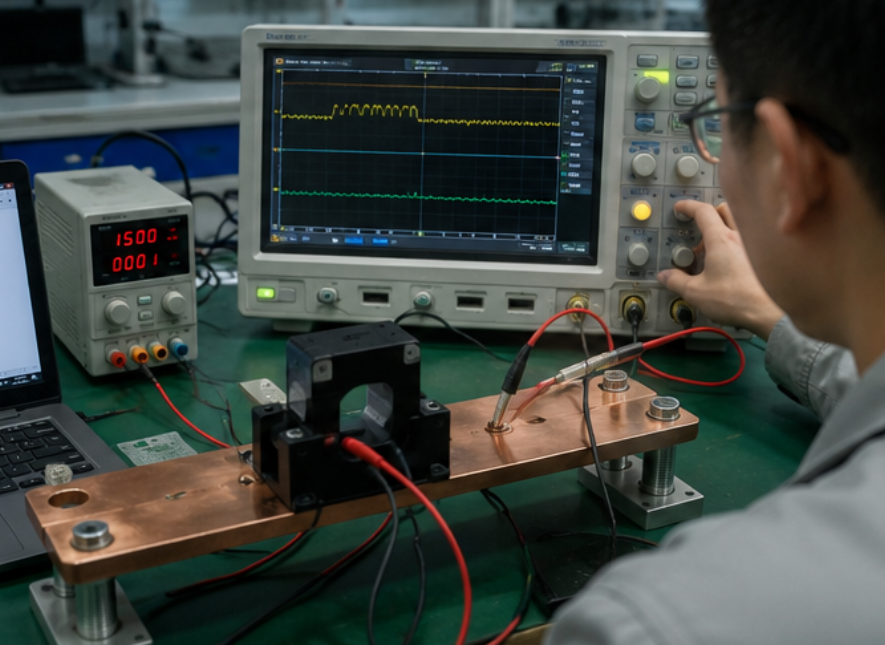
For OEM buyers, a current sensor supplier must provide stable batch quality. A sample that works during testing is not enough. The supplier must control production consistency, electrical performance, insulation performance, output calibration, mechanical dimensions, wiring quality, and final inspection before shipment.
Batch consistency is especially important when current sensors are used in EV chargers, BESS, solar inverters, motor drives, and industrial power systems. If sensor output varies too much between batches, the OEM manufacturer may need extra calibration or may experience inconsistent equipment performance.
Testing capability should include electrical testing, output signal testing, accuracy verification, insulation testing, temperature-related testing, and mechanical inspection. For high-voltage power electronics projects, buyers should ask whether the supplier can provide test reports or inspection records when needed.
Quality communication is also important. If a sample fails during testing, the supplier should be able to help analyze whether the problem comes from wrong range selection, output mismatch, wiring error, EMI, installation position, or actual sensor performance. A supplier with engineering support can reduce troubleshooting time.
| Quality Check | Why It Matters | Buyer Evaluation Point |
|---|---|---|
| Output Signal Test | Ensures the controller receives correct signal | Check zero point, full-scale output, polarity, and signal stability |
| Accuracy Test | Supports reliable current measurement | Ask for accuracy verification or test method |
| Insulation Test | Important for high-voltage safety | Check isolation voltage and dielectric strength testing |
| Mechanical Inspection | Prevents aperture, mounting, and assembly issues | Check aperture size, mounting holes, terminals, and housing dimensions |
| Batch Consistency | Reduces calibration and production risk | Ask how the supplier controls output and dimension consistency |
| Final Inspection | Reduces incoming quality problems | Ask what tests are done before shipment |
4. Review Customization, Delivery And Long-Term Cooperation
OEM projects often need customization. Common customization items include current range, output signal, supply voltage, aperture size, mounting holes, cable length, connector type, terminal direction, housing, label, packaging, and testing requirements. A good supplier should understand which items can be customized and what information is needed before quotation.
Delivery stability is also important. OEM manufacturers need suppliers that can support sample orders, pilot production, and mass production. Buyers should ask about sample lead time, tooling or customization time, monthly capacity, normal production lead time, and whether the supplier can support repeated orders with stable specifications.
For replacement projects, the supplier should be able to compare the existing model with a proposed replacement. Buyers should provide the original model number, datasheet, wiring diagram, installation photos, output signal, supply voltage, aperture size, and application conditions. The supplier should clearly explain whether the replacement can be direct, similar, or customized.
Before choosing a supplier, OEM buyers should request samples for real system testing. The current sensor should be tested under zero current, rated current, peak current, operating temperature, electrical noise, real conductor position, and actual controller input. This helps confirm whether the supplier’s recommendation is suitable for production.
Example OEM Quote Request:
Application: EV charging module
Measured current: DC output current
Current range: 500A rated, 800A peak
Output signal: 0-5V
Supply voltage: +15V
Isolation requirement: 4kV or higher
Installation: Copper busbar 40 × 6 mm
Customization: Connector direction and custom label
Quantity: 30 samples first, estimated annual demand 5000 pieces
Final Supplier Selection Checklist
Can the supplier recommend models based on real application parameters?
Does the supplier support open loop, closed loop, leakage, split core, and custom current sensors?
Can the supplier provide output signal, accuracy, drift, response time, and isolation information?
Can the supplier customize aperture size, cable, connector, label, and output signal?
Does the supplier provide datasheets, wiring diagrams, drawings, and test documents?
Can the supplier support sample testing, pilot production, and mass production?
Does the supplier have stable lead time and batch consistency control?
Can the supplier help with replacement evaluation for existing sensor models?
Conclusion
Choosing a current sensor supplier for OEM power electronics projects requires a full review of technical capability, model coverage, customization support, quality control, batch consistency, technical documents, sample support, delivery stability, and long-term cooperation ability.
For EV chargers, BESS, solar inverters, motor drives, UPS systems, welding machines, railway systems, and industrial power supplies, the right supplier can help reduce model selection risk, improve sample testing efficiency, support mass production, and provide stable current sensing solutions for long-term OEM projects.
FAQ
1. What should OEM buyers check when choosing a current sensor supplier?
OEM buyers should check model matching ability, current range coverage, output signal options, isolation voltage, customization support, quality control, technical documents, sample support, lead time, and batch consistency.
2. Why should buyers not choose a supplier only by price?
A low unit price may cause higher total cost if the sensor has wrong output, poor accuracy, unstable delivery, weak technical support, or inconsistent batch quality. OEM projects should consider total project risk.
3. What information should I provide before requesting an OEM current sensor quote?
You should provide application, current type, rated current, peak current, output signal, supply voltage, isolation requirement, aperture size, conductor size, operating temperature, sample quantity, annual demand, and customization needs.
4. Can a current sensor supplier support customized OEM projects?
A suitable OEM supplier should support customization such as current range, output signal, aperture size, connector, cable length, mounting structure, label, packaging, and testing requirements.
5. Should OEM buyers test samples before mass production?
Yes. Samples should be tested under real current range, peak current, temperature, wiring layout, electrical noise, and controller input conditions before mass production approval.
Request OEM Current Sensor Supplier Support
If you are looking for current sensor supplier support for EV chargers, BESS, solar inverters, motor drives, UPS systems, welding machines, railway systems, or industrial power electronics, send us your application, current range, peak current, output signal, isolation requirement, aperture size, drawings, sample quantity, and annual demand. Our team can help you match a suitable current sensor solution for OEM production.
Contact Us Get Quote