Closed Loop Current Sensor Supplier For High Accuracy DC Measurement
Closed Loop Current Sensor Supplier For High Accuracy DC Measurement
Closed loop current sensors are widely used in high accuracy DC measurement applications where stable output, low drift, fast response, and reliable galvanic isolation are required. They are commonly used in battery energy storage systems, EV chargers, solar inverters, UPS systems, motor drives, DC power supplies, railway power systems, and precision industrial power electronics.
For buyers, choosing a closed loop current sensor supplier is not only about comparing price. The supplier should be able to match current range, accuracy, offset drift, response time, isolation voltage, output signal, aperture size, installation method, operating temperature, and customization requirements according to the real DC measurement application.
Quick Answer
A good closed loop current sensor supplier should help buyers confirm the measured current type, rated current, peak current, accuracy target, offset drift, linearity, response time, bandwidth, isolation voltage, output signal, supply voltage, aperture size, mounting method, and working environment. For high accuracy DC measurement, buyers should focus on low zero offset, low temperature drift, stable linearity, strong isolation, fast response, and long-term output stability rather than choosing only by unit price.
1. Why Closed Loop Current Sensors Are Preferred For High Accuracy DC Measurement
Closed loop current sensors use a feedback compensation principle to measure current more accurately. Compared with many open loop Hall effect current sensors, closed loop current sensors usually provide better linearity, lower offset, faster response, and better temperature stability. This makes them suitable for applications where current measurement directly affects control accuracy, protection logic, energy calculation, or system reliability.
In DC measurement applications, offset drift is one of the most important concerns. If a sensor output shifts when the actual current is zero, the control system may calculate wrong current data. This can affect BMS current calculation, battery charge and discharge monitoring, EV charging current regulation, inverter feedback, and DC power supply control. A closed loop current sensor can help reduce this risk when selected correctly.
High accuracy DC measurement also requires stable performance over temperature. Power electronics equipment often operates in hot cabinets, outdoor charging stations, energy storage containers, or high-load industrial systems. If the current sensor has poor temperature drift performance, the output may change after the equipment heats up. This is why buyers should review offset drift, gain drift, accuracy, and temperature range before choosing a model.
Another advantage of closed loop current sensors is galvanic isolation. The sensor can measure high current while sending a safe low-level signal to the controller, BMS, PCS, PLC, ADC, or monitoring system. For high-voltage DC systems, isolation voltage, creepage distance, clearance distance, and insulation design are essential for safe operation.
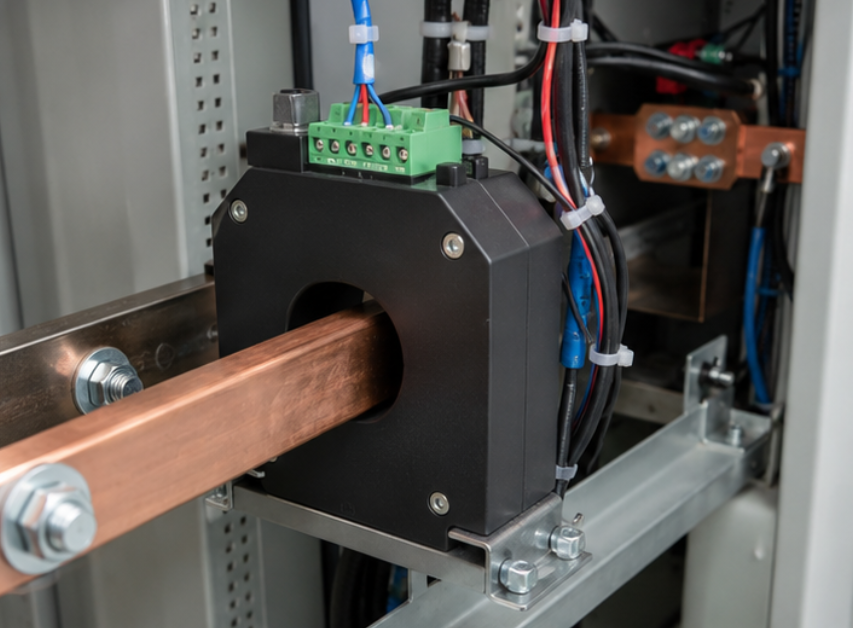
Typical Applications For Closed Loop Current Sensors
Battery energy storage systems requiring bidirectional DC current measurement.
EV chargers requiring stable charging current feedback and protection.
Solar inverters requiring accurate DC bus and inverter current sensing.
UPS systems requiring reliable battery and inverter current monitoring.
Motor drives requiring fast current feedback and control stability.
DC power supplies requiring accurate output current regulation.
Railway and industrial power systems requiring high isolation and long-term reliability.
2. Key Parameters Buyers Should Confirm Before Requesting A Quote
When requesting a quotation from a closed loop current sensor supplier, buyers should not only provide the rated current. A complete quote request should include current type, rated current, peak current, accuracy target, offset drift requirement, response time, output signal, supply voltage, isolation voltage, aperture size, conductor size, and installation method.
Current range should be selected according to normal working current and peak current. If the sensor range is too small, it may saturate during peak load or fault conditions. If the range is too large, the system may lose resolution at normal working current. For example, a 500A system may require a sensor that can handle 500A continuous current and 800A or 1000A peak current depending on the application.
Accuracy should be evaluated together with linearity, offset, temperature drift, and long-term stability. A supplier should be able to explain whether the accuracy value is measured at room temperature, full temperature range, full scale, or specific test conditions. For high accuracy DC measurement, buyers should ask for more than one simple accuracy number.
Output signal is also important. Some systems need 0-5V, 0-10V, ±4V, ±5V, 4-20mA, or customized output. Some applications may require digital communication or special signal conditioning. If the sensor output does not match the controller, BMS, PCS, PLC, or ADC input, the buyer may face additional conversion cost or redesign work.
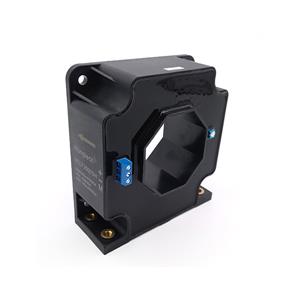
Mechanical structure should be confirmed early. Closed loop current sensors may be installed around a cable, copper busbar, PCB conductor, or panel-mounted structure. Buyers should provide aperture size, busbar width and thickness, cable diameter, mounting holes, installation space, and wiring direction before asking for final pricing.
| Parameter | Why It Matters | What Buyers Should Provide |
|---|---|---|
| Measured Current Type | Confirms whether the sensor must measure DC, AC, pulse, or bidirectional current | DC current / bidirectional DC / AC / pulse current |
| Rated Current | Determines the basic current range | 100A, 300A, 500A, 1000A, 2000A |
| Peak Current | Prevents saturation during startup, overload, or transient operation | Example: 800A peak for 1 second |
| Accuracy Target | Affects model grade and price | ±1%, ±0.5%, ±0.2%, or custom requirement |
| Offset Drift | Critical for high accuracy DC measurement and long-term stability | Low offset drift requirement or operating temperature range |
| Response Time | Important for fast protection and control feedback | Fast response for inverter, motor drive, or protection circuit |
| Isolation Voltage | Protects the low-voltage control side from high-current circuits | 2.5kV, 4kV, 6kV, 10kV, or project-specific requirement |
| Output Signal | Must match controller, BMS, PCS, PLC, or ADC input | 0-5V, 0-10V, ±4V, ±5V, 4-20mA, or custom output |
| Aperture / Conductor Size | Determines whether the sensor can be installed | Cable diameter or busbar width and thickness |
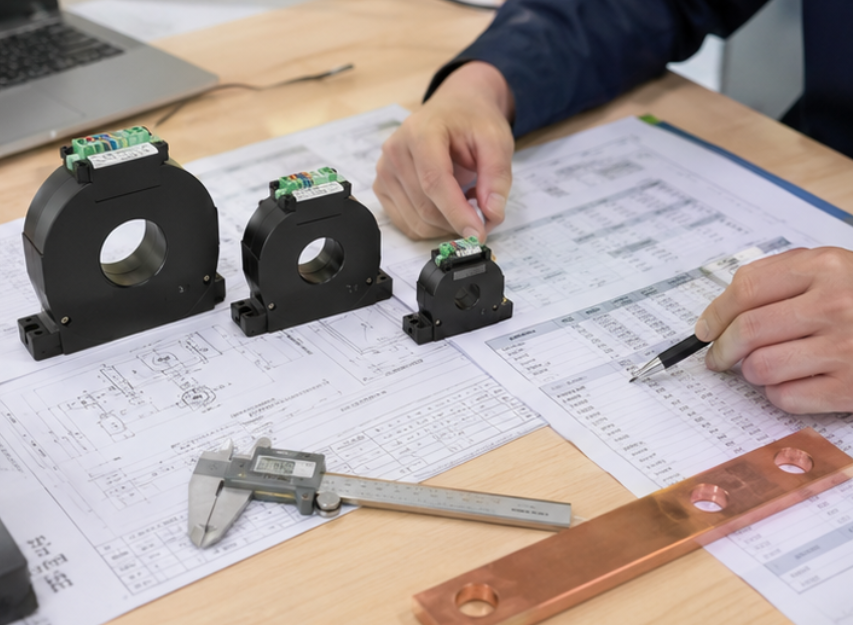
3. How To Evaluate A Closed Loop Current Sensor Supplier
A reliable closed loop current sensor supplier should be able to recommend a model based on the buyer’s real application, not only send a price list. The supplier should ask about current type, range, output, isolation, aperture size, temperature range, control system, and application environment before giving a final recommendation.
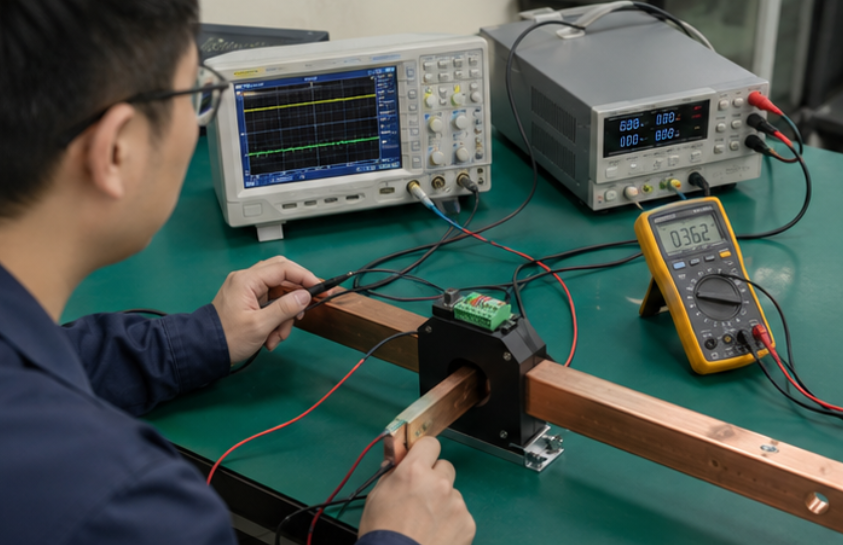
For OEM and industrial buyers, product consistency is very important. A sensor that works well during sample testing should perform consistently during mass production. Buyers should ask about quality control, batch inspection, calibration process, test conditions, and whether the supplier can provide stable long-term delivery.
Technical support is another important factor. If the buyer needs custom output signal, special aperture size, different mounting method, connector change, cable length adjustment, or model replacement, the supplier should be able to support engineering communication. This is especially useful when replacing an existing sensor model from another brand or adapting a sensor to a new equipment platform.
Documentation also matters. Buyers may need datasheets, wiring diagrams, mechanical drawings, insulation test data, accuracy data, reliability information, RoHS/REACH documents, CE-related documents, or other compliance information. A supplier with complete technical documents can help reduce approval time and project risk.
| Supplier Evaluation Point | Why It Matters | What Buyers Should Ask |
|---|---|---|
| Model Matching Ability | Reduces wrong model selection and sample failure | Can you recommend by application and parameters? |
| Accuracy And Drift Data | Important for high accuracy DC measurement | Can you provide accuracy, linearity, and offset drift information? |
| Customization Support | Helps match different controllers and installation layouts | Can output signal, aperture, cable, connector, or label be customized? |
| Quality Control | Ensures consistency between samples and mass production | What tests are done before shipment? |
| Technical Documents | Supports engineering approval and customer review | Can you provide datasheet, wiring diagram, drawing, and test documents? |
| Delivery Stability | Important for OEM and production projects | What is the sample lead time and mass production lead time? |
Common Supplier Selection Mistakes To Avoid
Choosing a supplier only by lowest unit price.
Comparing current range without checking accuracy and offset drift.
Ignoring output signal compatibility with the controller.
Not checking isolation voltage for high-voltage DC systems.
Ordering samples without confirming aperture size and busbar fit.
Using open loop sensors where high accuracy closed loop measurement is required.
Not asking for datasheets, wiring diagrams, and test documents before approval.
4. What Buyers Should Send Before Requesting Pricing
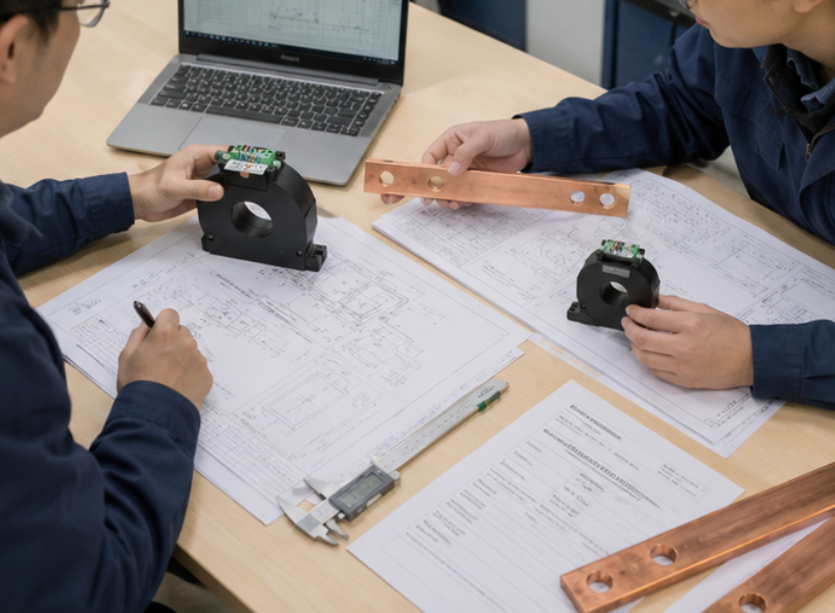
To receive a fast and accurate quotation, buyers should send a complete parameter list. This allows the supplier to recommend the correct closed loop current sensor model and avoid repeated communication. For replacement projects, buyers should also provide the existing model number, datasheet, photos, and installation drawings.
If the application requires customization, buyers should mention it from the beginning. Common customization items include current range, output signal, supply voltage, aperture size, cable length, connector, mounting holes, housing color, labeling, and special testing requirements.
Example Quote Request:
Application: Battery energy storage system
Measured current: Bidirectional DC current
Current range: 500A rated, 800A peak
Accuracy target: ±0.5% or better
Output signal: 0-5V
Supply voltage: +15V
Isolation requirement: 4kV or higher
Installation: Busbar 40 × 6 mm
Quantity: 20 samples first, estimated annual demand 3000 pieces
Final Quote Checklist
Application and measurement position.
Current type, rated current, peak current, and overload condition.
Accuracy, offset drift, response time, and bandwidth requirements.
Output signal and supply voltage.
Isolation voltage and working voltage.
Aperture size, cable diameter, or busbar dimensions.
Mounting method and installation space.
Operating temperature and electrical environment.
Certification or compliance requirements.
Sample quantity, annual demand, and customization needs.
Conclusion
A closed loop current sensor is a strong choice for high accuracy DC measurement when the application requires low drift, good linearity, fast response, and reliable isolation. It is widely used in EV chargers, BESS, solar inverters, UPS systems, motor drives, railway systems, and industrial DC power systems.
When choosing a closed loop current sensor supplier, buyers should evaluate more than price. The supplier should support model matching, technical documents, customization, testing, quality control, and stable delivery. A complete parameter list helps the supplier recommend the right model faster and provide a more accurate quotation.
FAQ
1. Why choose a closed loop current sensor for DC measurement?
Closed loop current sensors usually provide better accuracy, lower offset drift, better linearity, faster response, and stronger stability than many open loop current sensors, making them suitable for high accuracy DC measurement.
2. What applications use closed loop current sensors?
They are commonly used in battery energy storage systems, EV chargers, solar inverters, UPS systems, motor drives, DC power supplies, railway systems, and industrial power electronics.
3. What parameters should I provide before requesting a quote?
You should provide application, current type, rated current, peak current, accuracy target, output signal, supply voltage, isolation voltage, aperture size, busbar or cable size, operating temperature, and estimated quantity.
4. Can closed loop current sensors be customized?
Many projects may require customization such as current range, output signal, aperture size, cable length, connector, mounting structure, label, or test requirement. Buyers should provide customization needs before quotation.
5. How do I compare closed loop current sensor suppliers?
Compare model matching ability, accuracy data, drift performance, isolation level, output options, customization support, test documents, quality control, lead time, and technical communication, not only unit price.
Request A Closed Loop Current Sensor Quote For High Accuracy DC Measurement
If you need closed loop current sensors for BESS, EV chargers, solar inverters, UPS systems, motor drives, DC power supplies, railway systems, or industrial power electronics, send us your current range, peak current, accuracy target, output signal, isolation requirement, aperture size, and estimated quantity. Our team can help you match a suitable model and provide a practical quotation.
Contact Us Get Quote