2000A Current Sensor For High Power PCS And Industrial DC Cabinets
2000A Current Sensor For High Power PCS And Industrial DC Cabinets
A 2000A current sensor is commonly used in high power PCS cabinets, battery energy storage systems, industrial DC cabinets, DC bus systems, heavy-duty power supplies, railway power systems, welding equipment, and large power conversion cabinets. It helps monitor high DC current, support bidirectional current feedback, protect power modules, and improve system safety during high-current operation.
For high power PCS and industrial DC cabinet manufacturers, choosing a 2000A current sensor is not only about rated current. Buyers should confirm peak current, output signal, aperture size, copper busbar dimensions, isolation voltage, response time, accuracy, offset drift, operating temperature, EMC environment, and installation structure before ordering samples or starting mass production.
Quick Answer
To choose a 2000A current sensor for high power PCS and industrial DC cabinets, buyers should confirm whether the sensor is used for DC bus current monitoring, battery-side current measurement, bidirectional DC current feedback, overcurrent protection, or industrial DC system monitoring. Key parameters include 2000A rated current, peak current, current direction, output signal, supply voltage, aperture size, busbar dimensions, isolation voltage, accuracy, offset drift, response time, EMC performance, and cabinet installation space.
1. Why 2000A Current Sensors Are Used In High Power Cabinets
High power PCS cabinets and industrial DC cabinets often operate with large DC current. In battery energy storage systems, the current sensor may be installed on the battery-side DC bus, PCS input/output side, DC combiner cabinet, or high-current copper busbar. In industrial DC systems, it may be used for power supply monitoring, converter protection, welding output current detection, or railway traction power measurement.
A 2000A current sensor helps the controller, PCS, BMS, EMS, PLC, inverter control board, or monitoring system understand real-time high-current operation. This signal may be used for power regulation, current limiting, fault protection, load balancing, energy data calculation, and system diagnosis.
Compared with 300A, 500A or 1000A sensors, a 2000A current sensor usually requires a larger aperture, stronger mechanical structure, better thermal consideration, higher isolation performance, and more careful cabinet layout. Buyers should not choose this type of sensor only by current rating. The busbar size, output signal, peak current, and safety requirements are equally important.
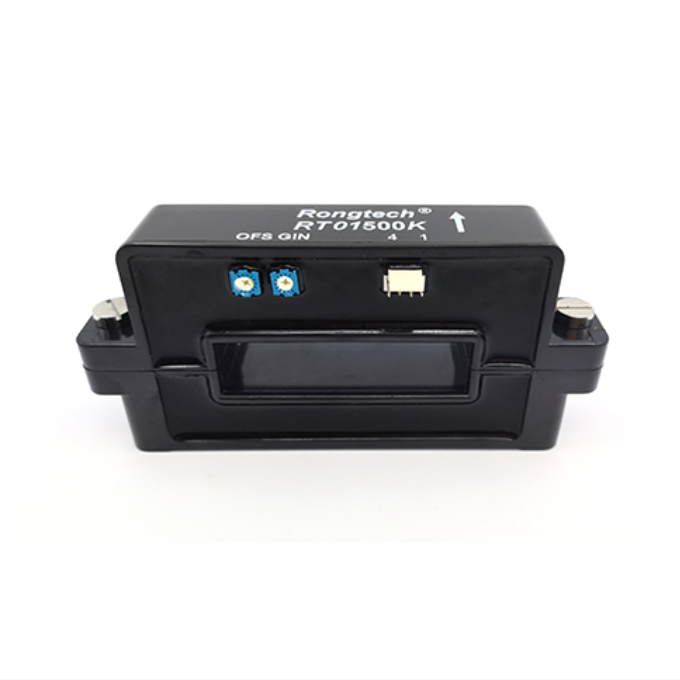
Typical Applications
High power PCS cabinet DC bus current monitoring.
Battery energy storage system charge and discharge current measurement.
Industrial DC cabinet high-current monitoring.
DC combiner cabinet and large battery rack current detection.
Railway traction and high-current DC power systems.
Heavy-duty welding power supply output current monitoring.
Large industrial power conversion equipment protection and diagnosis.
2. Confirm Rated Current, Peak Current And Current Direction
A 2000A current sensor should be selected according to real system current conditions. Buyers should confirm normal operating current, maximum continuous current, short-time peak current, overload duration, and fault current if available. In high power cabinets, peak current may be much higher than the nominal working current during switching, protection response, load changes, or abnormal operating conditions.
For PCS and BESS applications, bidirectional DC measurement is often required. The sensor should detect both charge and discharge current correctly. Buyers should confirm current direction, zero-current output point, output polarity, and controller logic before sample approval.
If the selected range is too low, the sensor may saturate during peak current. If the selected range is too high, normal current resolution may become poor. The correct model should balance peak current margin and measurement accuracy in the common working range.
| Current Parameter | Why It Matters | Buyer Should Confirm |
|---|---|---|
| Rated Current | Defines normal measurement range | 2000A rated current or project-specific range |
| Peak Current | Prevents saturation during short-time overload | Peak current value and duration |
| Current Direction | PCS and BESS may require charge and discharge current detection | Unidirectional or bidirectional DC measurement |
| Zero-Current Output | Affects current direction and controller calculation | Midpoint output, bipolar output, or custom zero point |
| Measurement Purpose | Different functions require different response and accuracy | Monitoring, feedback, protection, or energy calculation |
3. Match Output Signal With PCS, PLC Or Controller Input
Output signal matching is critical for high power current sensor selection. A 2000A current sensor may provide 0-5V, 0-10V, ±5V, 4-20mA, CAN, RS485, or customized output depending on the model and application. The output signal must match the PCS controller, PLC, BMS, EMS, ADC input, inverter control board, or monitoring system.
For compact controller boards, 0-5V or ±5V output may be common. For industrial monitoring systems, 0-10V or 4-20mA may be preferred. For smart energy storage and industrial DC systems, CAN or RS485 may be required. Buyers should confirm controller input type before comparing prices.
For bidirectional DC current, zero-current output must be clearly defined. If the controller expects 2.5V as zero-current output but the sensor provides bipolar ±5V, the system may read wrong current direction. Signal scaling should also be confirmed so the controller can calculate current accurately.
| Output Signal | Typical Use | Buyer Should Confirm |
|---|---|---|
| 0-5V | PCS controller, ADC input, compact control board | Input range, scaling, zero point, and signal ground |
| 0-10V | Industrial PLC or monitoring system | PLC input compatibility and maximum input voltage |
| ±5V | Bidirectional DC current feedback | Bipolar input and charge/discharge direction logic |
| 4-20mA | Long-distance industrial signal transmission | Loop power, load resistance, wiring distance, and scaling |
| CAN / RS485 | Digital monitoring and energy management | Protocol, baud rate, address, and data format |
| Custom Output | OEM cabinet or replacement project | Output range, scaling, connector, and pin definition |
4. Check Aperture Size For Large Busbar Installation
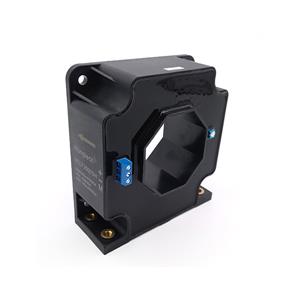
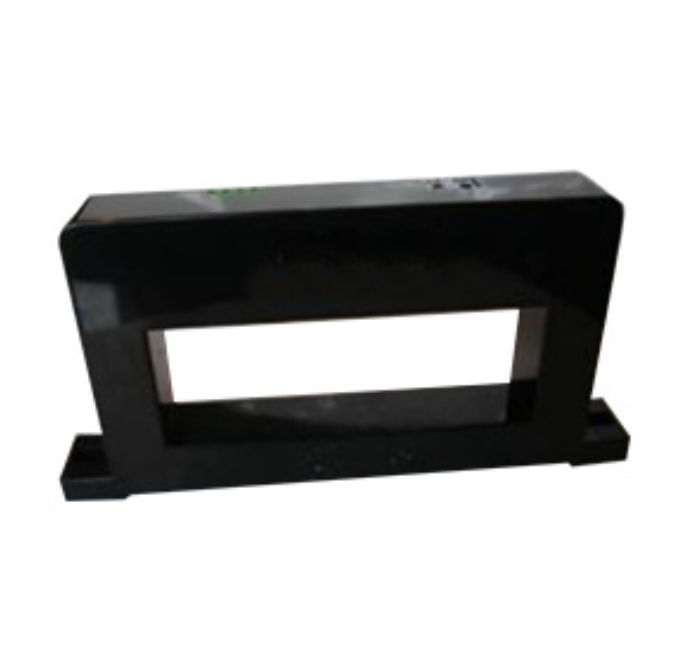
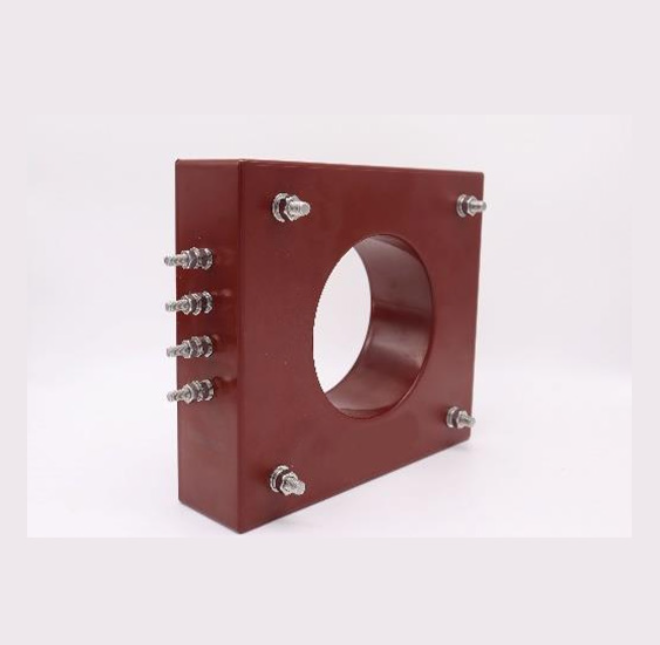
A 2000A current sensor usually needs a larger aperture because high power PCS and industrial DC cabinets often use wide copper busbars or thick parallel DC cables. If the aperture is too small, the conductor cannot pass through. If the aperture is too large, conductor centering and measurement consistency should still be reviewed.
For busbar installation, buyers should provide busbar width, busbar thickness, insulation layer, busbar orientation, and available cabinet space. For cable installation, buyers should provide full cable outer diameter and number of parallel cables. For retrofit projects, split core current sensors may be considered if conductors cannot be disconnected.
In high-current cabinets, mechanical strength and installation clearance are very important. Buyers should check sensor body size, mounting holes, terminal direction, signal cable exit direction, and distance from high-voltage or high-temperature components.
| Installation Item | Why It Matters | Buyer Should Provide |
|---|---|---|
| Busbar Width | Determines required aperture width | 60mm, 80mm, 100mm or custom width |
| Busbar Thickness | Determines aperture height and clearance | 8mm, 10mm, 12mm or custom thickness |
| Parallel Conductors | Multiple cables or busbars require larger window | Number of cables or busbars and total conductor size |
| Aperture Shape | Flat busbar and round cable need different structures | Round aperture, rectangular window, split core, or custom aperture |
| Mounting Method | Affects cabinet assembly and vibration resistance | Panel mount, base mount, busbar mount, DIN rail or custom bracket |
| Available Space | Prevents interference with cabinet components | Height, width, depth, wiring route, nearby components |
5. Confirm Isolation Voltage, Heat And EMC Performance
High power PCS and industrial DC cabinets usually operate in high-voltage and high-current environments. A 2000A current sensor should safely isolate the high-current conductor side from the low-voltage controller side. Buyers should confirm working voltage, isolation voltage, creepage distance, clearance distance, and insulation requirements.
Heat should also be considered. Large current may generate heat in copper busbars, terminals, cables, and surrounding components. The current sensor should be installed with enough clearance and should be evaluated under real operating temperature conditions. Offset drift and temperature drift may affect long-term measurement stability.
EMC performance is also important because PCS cabinets and industrial DC systems contain switching power devices, contactors, relays, fans, communication wiring, large busbars, and signal cables. The sensor output should remain stable under real cabinet noise and grounding conditions.
| Performance Item | Why It Matters | Buyer Should Confirm |
|---|---|---|
| Isolation Voltage | Protects controller and low-voltage signal circuit | 4kV, 6kV, 10kV or project-specific requirement |
| Working Voltage | Defines long-term insulation requirement | DC bus voltage, battery voltage and maximum system voltage |
| Accuracy | Affects current feedback and system calculation | General monitoring or high-accuracy feedback requirement |
| Offset Drift | Affects zero-current stability in bidirectional systems | Zero output stability and temperature drift requirement |
| Response Time | Important for protection and control response | Monitoring, feedback or fast shutdown requirement |
| EMC Performance | High power cabinets may create signal noise | Grounding, shielding, wiring layout and cabinet environment |
6. What Buyers Should Send Before Requesting A Quote
To receive an accurate quotation, buyers should provide more than “2000A current sensor.” The supplier needs application, current type, rated current, peak current, current direction, output signal, supply voltage, isolation requirement, aperture size, busbar or cable dimensions, installation space, accuracy target, response time, operating temperature, sample quantity, and annual demand.
If the project is a replacement request, buyers should also provide the original sensor model, datasheet, wiring definition, output scaling, product photos, and installation dimensions. This helps the supplier evaluate whether a direct replacement, similar model, or customized 2000A current sensor is needed.
Example Quote Request:
Application: High power PCS cabinet DC bus current monitoring
Current range: 2000A rated, 3000A peak for short-time operation
Measured current: Bidirectional DC current
Output signal: 0-5V, ±5V, 4-20mA or custom output
Supply voltage: +15V, +24V or project-specific requirement
Isolation requirement: 6kV or project-specific requirement
Installation: Copper busbar 80 × 10 mm or custom conductor layout
Function: PCS current feedback, protection and industrial DC cabinet monitoring
Quantity: 10 samples first, estimated annual demand 1000 pieces
Final Buyer Checklist
Confirm high power PCS or industrial DC cabinet application.
Confirm 2000A rated current, peak current and overload duration.
Confirm unidirectional or bidirectional DC measurement requirement.
Match output signal with PCS controller, PLC, BMS, EMS or monitoring system.
Confirm zero-current output and current direction logic.
Check supply voltage and pin definition.
Confirm aperture size, busbar size, cable diameter or parallel conductor layout.
Check isolation voltage, working voltage, creepage and clearance.
Review accuracy, offset drift, response time, EMC and operating temperature.
Provide sample quantity, annual demand and customization details.
Conclusion
A 2000A current sensor for high power PCS and industrial DC cabinets should be selected according to real electrical and mechanical requirements. Buyers should not choose only by rated current. Peak current, bidirectional DC measurement, output signal, aperture size, large busbar fit, isolation voltage, accuracy, offset drift, response time and EMC performance should all be checked before sample approval.
For high power PCS manufacturers, BESS integrators, industrial DC cabinet suppliers and OEM buyers, a complete parameter list helps the supplier recommend the correct 2000A current sensor faster, reduce testing risk and support stable mass production.
FAQ
1. What is a 2000A current sensor used for?
It is used for high power PCS cabinets, BESS systems, industrial DC cabinets, DC bus current monitoring, railway power systems, welding equipment and large power conversion systems.
2. Does a 2000A current sensor need bidirectional DC measurement?
It depends on the application. For PCS and BESS systems, bidirectional DC measurement is often required because current may flow during both charging and discharging.
3. What output signal should a 2000A current sensor provide?
The output should match the controller input. Common options include 0-5V, 0-10V, ±5V, 4-20mA, CAN, RS485 or customized output.
4. Why is aperture size important for 2000A current sensors?
High-current systems often use large copper busbars or parallel conductors. The sensor aperture must fit the real conductor size and installation direction, including insulation and assembly clearance.
5. What should buyers provide before requesting a quote?
Buyers should provide application, rated current, peak current, output signal, supply voltage, isolation requirement, aperture size, busbar or cable dimensions, sample quantity, annual demand and customization needs.
Request A 2000A Current Sensor Quote For High Power Cabinets
If you need a 2000A current sensor for high power PCS cabinets, BESS systems, industrial DC cabinets, railway power systems or heavy-duty power conversion equipment, send us your rated current, peak current, output signal, isolation requirement, aperture size, busbar or cable dimensions, sample quantity and annual demand. Our team can help you match a suitable current sensor solution for OEM production.
Contact Us Get QuoteRelated Rongtech Sensor Pages
For battery energy storage and PCS cabinet measurement, buyers often compare rated current or voltage, aperture size, output signal, insulation level, response time, drift, installation space and project documentation in the same RFQ. The following Rongtech pages connect this article with related sensor categories and quotation paths on the same website.
- Products
- Open Loop Current Sensor
- Close Loop Current Sensor
- Voltage Sensors
- Flux Gate Current Voltage Sensors
- Sensor ICs
- Leakage Current Sensors
- High Precision Shunt Resistor
- High Voltage Current Voltage Transformers
- Contact Rongtech
Inquiry Information To Prepare
A clear inquiry should include rated current or voltage, power supply, output signal, aperture or package size, accuracy class, insulation requirement, working temperature, connector preference, expected quantity and the target equipment type. This makes the article more useful for technical buyers and gives the sales team a stronger route from reading to inquiry.