100A To 2000A Current Sensor Selection Guide For Industrial Power Systems
100A To 2000A Current Sensor Selection Guide For Industrial Power Systems
Industrial power systems often require current sensors from 100A to 2000A for current monitoring, feedback control, overcurrent protection, energy management, and fault diagnosis. These sensors are widely used in EV chargers, battery energy storage systems, solar inverters, UPS systems, motor drives, welding machines, railway power systems, DC power supplies, and industrial control cabinets.
Choosing the right current sensor is not only about rated current. Buyers should also confirm current type, peak current, output signal, supply voltage, accuracy, response time, isolation voltage, aperture size, busbar or cable structure, installation space, operating temperature, and quantity requirement before requesting a quote.
Quick Answer
To choose a 100A to 2000A current sensor for industrial power systems, buyers should first confirm the real working current, peak current, current type, measurement purpose, output signal, isolation voltage, aperture size, and installation method. 100A to 300A sensors are often used for smaller power modules and control cabinets. 500A sensors are common in EV chargers, BESS, and DC bus monitoring. 1000A to 2000A sensors are used in high-power inverters, large battery cabinets, welding systems, railway equipment, and heavy industrial power systems.
1. Why Rated Current Is Only The Starting Point
Many buyers begin by asking for a 100A, 300A, 500A, 1000A, or 2000A current sensor. This is useful, but it is not enough for accurate model selection. A current sensor with the same rated current may have different output signal, aperture size, accuracy, isolation voltage, response speed, temperature drift, and installation structure.
For example, a 500A current sensor used in an EV charger may need fast response, strong isolation, and 0-5V output. A 500A current sensor used in a battery cabinet may need bidirectional DC measurement and low offset drift. A 1000A current sensor used in a welding machine may need strong overload capability and pulse current response. The same current rating does not mean the same model is suitable.
Peak current is especially important. A system rated at 500A may experience 800A or 1000A short-time peak current. A system rated at 1000A may experience much higher overload current during startup, braking, fault protection, or pulse operation. If the sensor range is too small, it may saturate or produce unstable output. If the range is too large, normal current resolution may become poor.
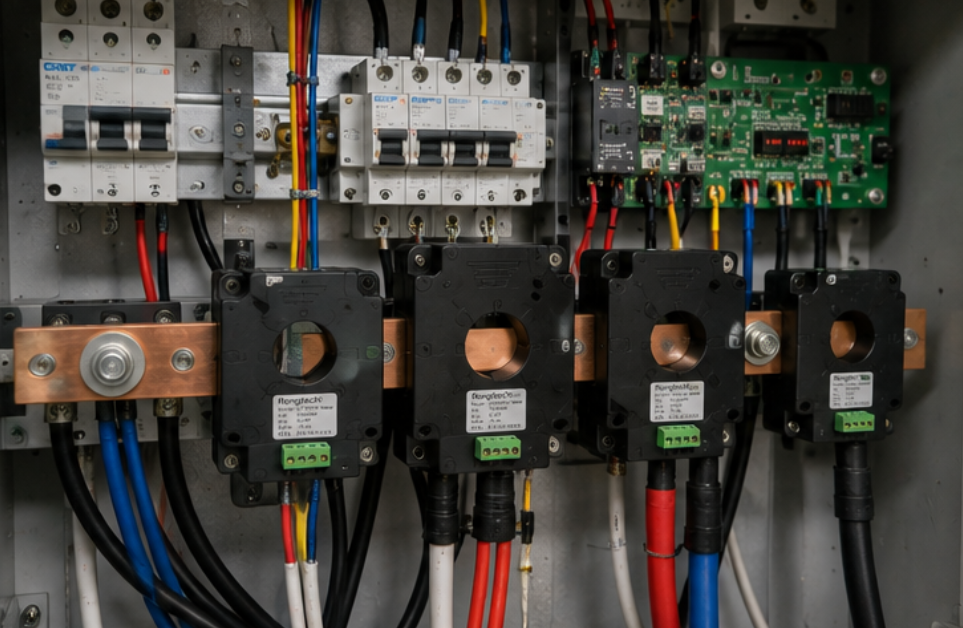
Before requesting a quotation, buyers should provide the rated current, peak current, current waveform, current direction, application, output signal, conductor size, and installation space. This helps the supplier recommend a suitable current sensor faster.
Key Questions Before Choosing Current Range
Is the measured current AC, DC, pulse, leakage, or bidirectional current?
What is the normal operating current?
What is the maximum peak current and duration?
Is the signal used for monitoring, feedback control, protection, or energy calculation?
What output signal does the controller, BMS, PCS, PLC, or ADC require?
What cable diameter or busbar size must pass through the sensor aperture?
What isolation voltage and working voltage are required?
2. How To Match 100A, 300A, 500A, 1000A And 2000A Sensors With Applications
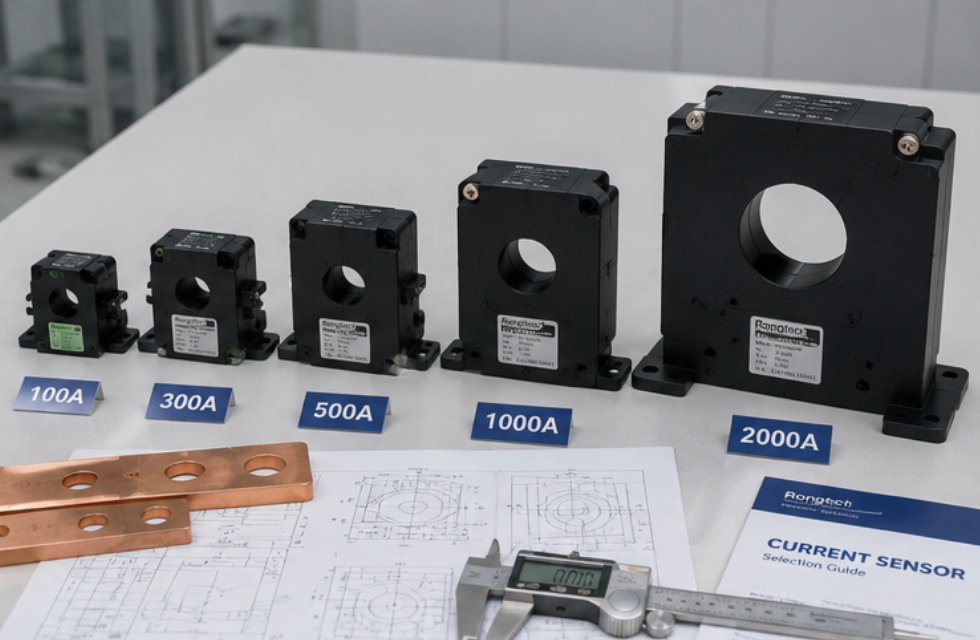
Different current ranges usually match different power levels and equipment structures. Smaller current sensors are often used in compact power supplies, control cabinets, smaller inverters, and auxiliary circuits. Higher current sensors are used in high-power EV chargers, BESS cabinets, heavy industrial power systems, welding machines, and railway equipment.
A 100A current sensor may be used for smaller power modules, control panels, auxiliary power circuits, or compact industrial power supplies. A 300A current sensor may be used in medium-power inverters, UPS systems, charging modules, and DC power equipment. A 500A current sensor is common in EV chargers, battery cabinets, PCS systems, and DC bus monitoring.
A 1000A current sensor is usually selected for high-power inverters, large battery systems, welding equipment, railway systems, and heavy-duty industrial cabinets. A 2000A current sensor is used in very high-current systems where busbar size, heat, insulation, overload capability, and mechanical installation must be carefully reviewed.
| Current Range | Typical Applications | Selection Focus |
|---|---|---|
| 100A Current Sensor | Small power supplies, control cabinets, auxiliary circuits, compact inverters | Accuracy, compact size, output signal, easy installation |
| 300A Current Sensor | Medium-power inverters, UPS systems, EV charging modules, industrial power supplies | DC measurement, peak current margin, output compatibility |
| 500A Current Sensor | EV chargers, BESS cabinets, PCS systems, DC bus monitoring, battery systems | Bidirectional DC, isolation, aperture size, low drift |
| 1000A Current Sensor | High-power inverters, welding machines, railway equipment, large DC systems | Overload capability, busbar fit, heat, strong isolation |
| 2000A Current Sensor | Heavy industrial power systems, large welding systems, railway traction, high-current cabinets | Large aperture, mechanical strength, insulation, peak current, custom structure |
3. Choose The Right Sensor Type, Output Signal And Aperture Size
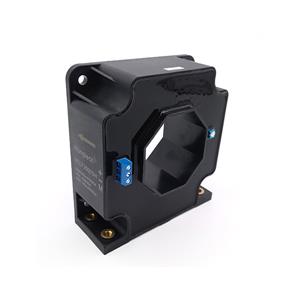
After confirming current range, buyers should choose the right sensor type. Open loop Hall effect current sensors are often cost-effective and suitable for general current monitoring. Closed loop current sensors are better for higher accuracy, lower drift, faster response, and stable DC feedback. Leakage current sensors are used for safety monitoring and residual current detection. Split core current sensors are useful for retrofit projects where cables cannot be disconnected.
Output signal must match the existing control system. Common output options include 0-5V, 0-10V, ±4V, ±5V, 4-20mA, CAN, RS485, or customized output. If the output does not match the controller, ADC, PLC, BMS, PCS, or monitoring system, the project may require extra conversion circuits or software changes.
Aperture size is another key point. A 100A sensor may fit smaller cables, while a 1000A or 2000A sensor may need a large aperture for thick cables or copper busbars. Buyers should provide cable outer diameter, busbar width, busbar thickness, insulation layer, installation direction, and available cabinet space before ordering samples.
| Selection Item | Common Options | Buyer Should Confirm |
|---|---|---|
| Sensor Type | Open loop, closed loop, split core, leakage current sensor, custom sensor | Accuracy, response time, installation method, cost target |
| Output Signal | 0-5V, 0-10V, ± output, 4-20mA, CAN, RS485 | Controller input, ADC range, PLC signal type, communication requirement |
| Supply Voltage | +5V, +12V, +15V, +24V, ±15V | Available power rail in the equipment |
| Aperture Size | Round aperture, rectangular aperture, split core window, custom aperture | Cable diameter, busbar width, busbar thickness, insulation layer |
| Isolation Voltage | 2.5kV, 4kV, 6kV, 10kV, project-specific | System voltage, safety requirement, certification requirement |
| Installation Method | Panel mount, PCB mount, busbar mount, DIN rail, split core | Mounting holes, wiring direction, available cabinet space |
4. What Buyers Should Send Before Requesting A Quote
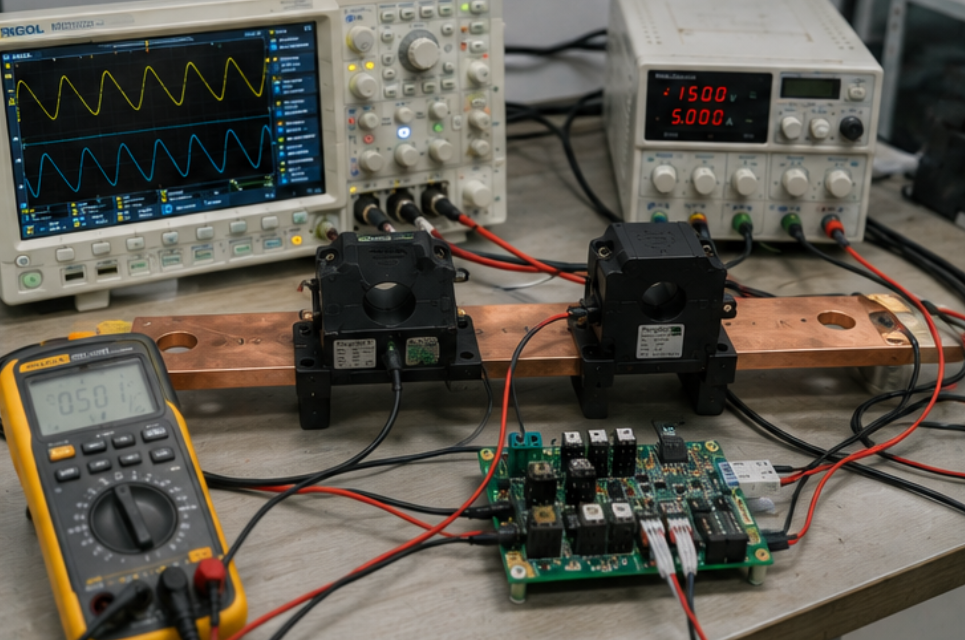
To receive a fast and accurate quotation, buyers should provide more than the current rating. A complete request should include the application, current type, rated current, peak current, output signal, supply voltage, isolation requirement, accuracy target, aperture size, conductor size, mounting method, operating temperature, sample quantity, annual demand, and customization needs.
If the project is a replacement request, buyers should provide the original sensor model number, datasheet, photos, wiring definition, and installation dimensions. If the project is a new OEM design, buyers should provide drawings, expected current range, controller input requirement, and production forecast.
Example Quote Request:
Application: Industrial battery energy storage cabinet
Measured current: Bidirectional DC current
Current range: 500A rated, 800A peak
Output signal: 0-5V
Supply voltage: +15V
Isolation requirement: 4kV or higher
Installation: Copper busbar 40 × 6 mm
Quantity: 20 samples first, estimated annual demand 3000 pieces
Final Selection Checklist
Confirm application and measurement position.
Confirm AC, DC, pulse, leakage, or bidirectional current.
Confirm rated current, peak current, overload current, and fault current.
Choose open loop, closed loop, split core, leakage, or custom current sensor.
Match output signal with controller, BMS, PCS, PLC, ADC, or monitoring system.
Confirm supply voltage and wiring definition.
Check isolation voltage, working voltage, creepage, and clearance.
Provide cable diameter, busbar size, aperture size, and installation space.
Confirm accuracy, response time, drift, operating temperature, and EMC environment.
Provide sample quantity, annual demand, and customization details.
Conclusion
Selecting a 100A to 2000A current sensor for industrial power systems requires more than choosing a rated current. Buyers should review application, current type, peak current, sensor type, output signal, supply voltage, isolation voltage, aperture size, installation method, accuracy, response time, operating environment, and long-term supply requirements.
For EV chargers, BESS, solar inverters, UPS systems, motor drives, welding machines, railway power systems, and industrial power cabinets, a complete parameter list helps suppliers recommend the correct model faster, reduce sample testing risk, and provide a more accurate quotation.
FAQ
1. How do I choose between 100A, 500A, 1000A and 2000A current sensors?
Choose based on normal working current, peak current, overload condition, measurement resolution, and application type. Do not choose only by nominal system current.
2. What current sensor is suitable for EV chargers?
EV chargers commonly use Hall effect current sensors, open loop sensors, closed loop sensors, leakage current sensors, or customized sensors depending on current range, output signal, isolation, and safety requirements.
3. What output signal should I choose?
The output signal should match the control system. Common choices include 0-5V, 0-10V, ± output, 4-20mA, CAN, RS485, or customized output.
4. Why is aperture size important?
Aperture size determines whether the sensor can fit the cable or copper busbar. Buyers should provide cable outer diameter or busbar width and thickness before requesting a quote.
5. What information should I provide for a quotation?
Provide application, current type, rated current, peak current, output signal, supply voltage, isolation voltage, aperture size, conductor size, accuracy target, sample quantity, and annual demand.
Request A 100A To 2000A Current Sensor Quote
If you need 100A, 300A, 500A, 1000A, 2000A or custom current sensors for industrial power systems, send us your application, current range, peak current, output signal, isolation requirement, aperture size, busbar or cable dimensions, sample quantity, and annual demand. Our team can help you match a suitable current sensor solution and provide a practical quotation.
Contact Us Get Quote