1000V DC Voltage Sensor For EV Charger And Inverter DC Bus Monitoring
1000V DC Voltage Sensor For EV Charger And Inverter DC Bus Monitoring
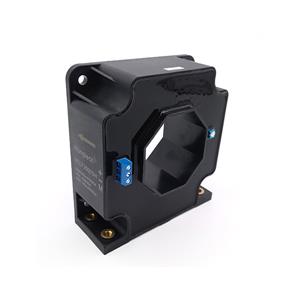
A 1000V DC voltage sensor is commonly used in EV chargers, solar inverters, PCS converters, UPS systems, battery energy storage systems, motor drives, and industrial power conversion equipment. It helps monitor DC bus voltage, detect overvoltage and undervoltage conditions, support control feedback, and protect power modules during operation.
For EV charger and inverter manufacturers, selecting a 1000V DC voltage sensor is not only about voltage range. Buyers should confirm nominal voltage, maximum voltage, transient voltage, isolation voltage, output signal, supply voltage, response time, accuracy, temperature drift, installation method, and controller compatibility before ordering samples or starting mass production.
Quick Answer
To choose a 1000V DC voltage sensor for EV charger and inverter DC bus monitoring, buyers should confirm the measured voltage type, nominal voltage, maximum voltage, transient overvoltage, output signal, supply voltage, isolation voltage, accuracy, response time, temperature drift, wiring method, and controller input. The sensor should safely isolate the high-voltage DC bus from the low-voltage control side and provide a stable signal for monitoring, feedback, protection, or fault diagnosis.
1. Why 1000V DC Voltage Sensors Are Used In EV Chargers And Inverters
EV chargers and inverters often operate with high-voltage DC buses. In DC fast chargers, the voltage sensor may be used to monitor DC output voltage, DC-link voltage, charging module voltage, or internal power conversion voltage. In inverters, the voltage sensor may monitor the DC bus before conversion to AC output.
A 1000V DC voltage sensor provides the controller with real-time voltage data. This data may be used for voltage regulation, overvoltage protection, undervoltage detection, DC bus balancing, system diagnosis, fault shutdown, and communication with the monitoring platform.
If the voltage sensor output is unstable, delayed, or mismatched with the controller, the equipment may display wrong voltage, trigger false alarms, fail protection testing, or damage power devices. For high-voltage power conversion equipment, voltage sensor selection should be confirmed before sample testing and cabinet layout approval.
Typical Applications
EV charger DC bus voltage monitoring.
DC fast charger output voltage detection.
Solar inverter DC-link voltage feedback.
PCS converter DC bus voltage monitoring.
BESS high-voltage battery system voltage detection.
UPS and industrial power supply DC voltage monitoring.
Motor drive DC bus protection and fault diagnosis.
2. Confirm Nominal Voltage, Maximum Voltage And Transient Voltage
A 1000V DC voltage sensor should be selected according to the real voltage conditions of the system. Buyers should confirm nominal voltage, maximum continuous voltage, transient overvoltage, and whether the measured signal is pure DC, pulsed DC, DC bus voltage, or high-voltage battery voltage.
For EV charger and inverter systems, the DC bus voltage may fluctuate during startup, shutdown, switching, load change, regenerative operation, or fault events. If the voltage sensor range is too low, it may saturate or be damaged. If the voltage range is too high, measurement resolution may become lower than needed.
Buyers should not only say “1000V voltage sensor.” A complete voltage profile helps the supplier recommend a safer and more accurate model for the real DC bus environment.
| Voltage Parameter | Why It Matters | Buyer Should Confirm |
|---|---|---|
| Nominal Voltage | Defines the normal operating voltage range | 750VDC, 800VDC, 1000VDC, or project-specific value |
| Maximum Voltage | Prevents output saturation or sensor damage | Maximum continuous DC bus voltage |
| Transient Overvoltage | Important during switching, load change or fault conditions | Transient voltage value and duration if available |
| Measured Voltage Type | Different voltage types may need different sensor response | DC bus, DC output, battery voltage, or pulsed DC voltage |
| Measurement Purpose | Different functions require different accuracy and response | Monitoring, feedback, protection, or fault diagnosis |
3. Match Output Signal With The Controller Or Monitoring System
Output signal matching is a key step in voltage sensor selection. The 1000V DC voltage sensor output must match the EV charger controller, inverter control board, PCS controller, BMS, PLC, ADC input, or monitoring system. If the output signal does not match, the system may display wrong voltage or require additional conversion circuits.
Common output signals include 0-5V, 0-10V, ±5V, 4-20mA, CAN, RS485, or customized output. For compact controller boards, 0-5V is often used. For industrial PLC systems, 0-10V or 4-20mA may be required. For smart energy equipment, digital output may also be considered.
Buyers should provide the controller input type, required output scaling, supply voltage, signal wiring distance, and whether the voltage data is used for monitoring, feedback control, or protection.
| Output Signal | Typical Use | Buyer Should Confirm |
|---|---|---|
| 0-5V | EV charger controller, inverter board, ADC input | Input range, scaling, signal ground and output limit |
| 0-10V | PLC or industrial monitoring system | PLC compatibility and maximum input voltage |
| 4-20mA | Long-distance industrial signal transmission | Loop power, load resistance, wiring distance and scaling |
| CAN / RS485 | Digital monitoring and energy management system | Protocol, baud rate, address and data format |
| Custom Output | OEM controller or replacement project | Output range, connector, wiring definition and scaling |
4. Confirm Isolation Voltage And High Voltage Safety
A 1000V DC voltage sensor must safely separate the high-voltage measurement side from the low-voltage control side. This is especially important in EV chargers, inverters, PCS systems, BESS cabinets, and high-voltage DC bus equipment.
Buyers should confirm isolation voltage, working voltage, dielectric strength, creepage distance, clearance distance, and insulation material. Isolation voltage should not be confused with continuous working voltage. The sensor should be suitable for long-term operation in the real high-voltage cabinet environment.
If the isolation level is too low, the system may face safety risk, controller damage, insulation failure, or project testing problems. For high-voltage power conversion equipment, buyers should not reduce isolation performance only to lower the sensor cost.
| Isolation Item | Why It Matters | Buyer Should Confirm |
|---|---|---|
| Working Voltage | Defines long-term insulation requirement | Continuous DC bus voltage and maximum system voltage |
| Isolation Voltage | Protects low-voltage controller and signal circuit | 2.5kV, 4kV, 6kV, 10kV or project-specific requirement |
| Creepage And Clearance | Important for high-voltage safety | Voltage level, pollution degree, altitude and cabinet layout |
| Insulation Environment | Humidity, dust and heat affect insulation reliability | Cabinet protection level and operating environment |
5. Review Accuracy, Response Time, Drift And EMC Performance
The required accuracy depends on how the voltage signal is used. If the sensor is used only for display or general monitoring, standard accuracy may be enough. If the sensor is used for inverter feedback, EV charger voltage regulation, PCS control, or overvoltage protection, better accuracy and stable output may be required.
Response time is important when the voltage signal is used for fast protection. DC bus voltage may rise quickly during switching, load change, regeneration, or fault conditions. A slow voltage sensor may delay overvoltage detection and protection action.
Temperature drift and EMC performance should also be reviewed. EV charger and inverter cabinets contain switching modules, IGBT or SiC devices, contactors, fans, relays, DC-link capacitors, and communication wiring. The voltage sensor output should remain stable under real cabinet noise and temperature conditions.
| Performance Item | Why It Matters | Buyer Should Confirm |
|---|---|---|
| Accuracy | Affects voltage display, feedback and protection threshold | General monitoring or high-accuracy control requirement |
| Response Time | Important for fast overvoltage protection | Monitoring, feedback or protection function |
| Temperature Drift | Affects long-term output stability in hot cabinets | Operating temperature range and drift tolerance |
| EMC Performance | Switching power devices may create signal noise | Grounding, shielding, wiring layout and cabinet environment |
| Batch Consistency | Important for OEM mass production | Sample test data, inspection process and annual demand |
6. What Buyers Should Send Before Requesting A Quote
To receive an accurate quotation, buyers should provide more than “1000V DC voltage sensor.” The supplier needs application, measured voltage type, nominal voltage, maximum voltage, transient voltage, output signal, supply voltage, isolation requirement, accuracy target, response time, wiring method, operating environment, sample quantity and annual demand.
If the project is a replacement request, buyers should provide the original voltage sensor model, datasheet, wiring definition, output scaling, product photos and installation dimensions. This helps the manufacturer evaluate whether a direct replacement, similar model or customized voltage sensor is needed.
Example Quote Request:
Application: EV charger and inverter DC bus voltage monitoring
Measured voltage: High-voltage DC bus
Nominal voltage: 750VDC to 1000VDC
Maximum voltage: 1000VDC continuous, transient condition to be confirmed
Output signal: 0-5V or custom output
Supply voltage: +15V or project-specific requirement
Isolation requirement: 4kV or higher
Function: DC bus feedback, overvoltage protection and system monitoring
Quantity: 20 samples first, estimated annual demand 3000 pieces
Final Buyer Checklist
Confirm EV charger, inverter, PCS, BESS or UPS application.
Confirm measured voltage type and measurement position.
Provide nominal voltage, maximum voltage and transient voltage.
Match output signal with controller, ADC, PLC, BMS or PCS input.
Confirm supply voltage and wiring definition.
Check isolation voltage, working voltage, creepage and clearance.
Review accuracy, response time, temperature drift and EMC performance.
Confirm installation method, wiring distance and cabinet environment.
Test samples under real voltage and cabinet conditions before mass production.
Provide sample quantity, annual demand and customization details.
Conclusion
A 1000V DC voltage sensor for EV charger and inverter DC bus monitoring should be selected according to real system voltage, not only nominal voltage. Buyers should confirm maximum voltage, transient voltage, output signal, isolation voltage, response time, accuracy, drift, EMC performance and controller compatibility before sample approval.
For EV charger manufacturers, inverter suppliers, BESS integrators and OEM buyers, a complete parameter list helps the supplier recommend the correct voltage sensor faster, reduce testing risk and support stable mass production.
FAQ
1. What is a 1000V DC voltage sensor used for?
It is used for DC bus voltage monitoring, DC output voltage detection, inverter feedback, overvoltage protection, undervoltage detection and system diagnosis in EV chargers, inverters, PCS and BESS systems.
2. Is 1000V DC voltage sensor suitable for EV chargers?
Yes, if the voltage range, output signal, isolation voltage, response time and controller input match the EV charger design. Buyers should also confirm maximum voltage and transient voltage conditions.
3. What output signal should a DC voltage sensor provide?
The output should match the controller input. Common options include 0-5V, 0-10V, 4-20mA, CAN, RS485 or customized output.
4. Why is isolation voltage important?
Isolation voltage protects the low-voltage controller and signal circuit from the high-voltage DC bus. It is essential for EV chargers, inverters, PCS systems and BESS cabinets.
5. What should buyers provide before requesting a quote?
Buyers should provide application, measured voltage type, nominal voltage, maximum voltage, transient voltage, output signal, supply voltage, isolation requirement, response time, sample quantity and annual demand.
Request A 1000V DC Voltage Sensor Quote
If you need 1000V DC voltage sensors for EV chargers, inverters, PCS cabinets, BESS systems, UPS equipment or industrial power conversion projects, send us your nominal voltage, maximum voltage, output signal, isolation requirement, response time, accuracy target, sample quantity and annual demand. Our team can help you match a suitable voltage sensor solution for OEM production.
Contact Us Get QuoteRelated Rongtech Sensor Pages
For voltage sensor and power conversion monitoring, buyers often compare rated current or voltage, aperture size, output signal, insulation level, response time, drift, installation space and project documentation in the same RFQ. The following Rongtech pages connect this article with related sensor categories and quotation paths on the same website.
- Products
- Open Loop Current Sensor
- Close Loop Current Sensor
- Voltage Sensors
- Flux Gate Current Voltage Sensors
- Sensor ICs
- Leakage Current Sensors
- High Precision Shunt Resistor
- High Voltage Current Voltage Transformers
- Contact Rongtech
Inquiry Information To Prepare
A clear inquiry should include rated current or voltage, power supply, output signal, aperture or package size, accuracy class, insulation requirement, working temperature, connector preference, expected quantity and the target equipment type. This makes the article more useful for technical buyers and gives the sales team a stronger route from reading to inquiry.