-
12-05-2026
What Engineers Should Check Before Ordering A Closed Loop Current Sensor
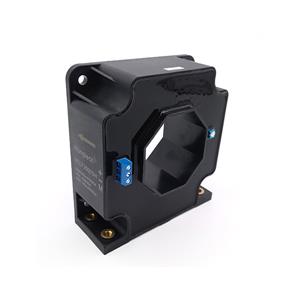
Closed loop current sensors are widely used in industrial power electronics because they provide high accuracy, fast response, good linearity, low temperature drift, and stable current feedback. They are commonly applied in motor drives, servo systems, solar inverters, EV charging stations, UPS systems, energy storage systems, welding equipment, and precision power measurement applications. Before ordering a closed loop current sensor, engineers should not only check the rated current. They also need to confirm accuracy, response time, bandwidth, isolation voltage, output signal, power supply, aperture size, mounting method, thermal environment, and system compatibility. This guide explains what should be checked before placing an order and how to avoid common selection mistakes.
-
06-05-2026
How To Choose A Current Sensor For Solar Inverters
Choosing the right current sensor for solar inverters requires a clear understanding of the measurement point, current type, system voltage, accuracy requirement, response speed, operating environment, and installation structure. A suitable current sensor can improve inverter monitoring, control feedback, protection response, and long-term reliability. For standard inverter monitoring, open loop Hall effect current sensors often provide a good balance of cost and performance. For high-performance solar inverters, hybrid energy systems, energy storage inverters, and control-critical power electronics, closed loop or high-accuracy current sensors may offer better stability and precision. The final choice should always match the real inverter design and application requirement.