The Impact of Capacitance Value on Inverter Switching Frequency
The Impact of Capacitance Value on Inverter Switching Frequency
The Inherent Trade-off: Power Density vs. Ripple Suppression
The relationship between capacitance value and switching frequency in an inverter is fundamentally governed by a critical trade-off: the need for a "stiff" DC bus versus the physical size of the component. In a high-power inverter, the DC-link capacitor's primary role is to absorb the high-frequency current ripple generated by the rapid switching of the IGBTs or SiC/GaN devices. The required capacitance (C) to maintain a given voltage ripple (ΔV) is inversely proportional to the switching frequency (f) and the load current (I), as per the fundamental relationship derived from the charge equation (Q = C * V = I * t). A higher switching frequency allows the use of a smaller capacitor, as the time between charge and discharge cycles (t) is reduced, and the capacitor can be recharged more frequently. Rongtech's high-frequency film capacitors are specifically designed to exploit this relationship, offering a low equivalent series resistance (ESR) and high ripple current handling capability, which enables engineers to select a smaller, more compact capacitor when designing for high-frequency operation, thereby increasing the overall power density of the system.
The High-Frequency Ceiling: ESL and Self-Resonance
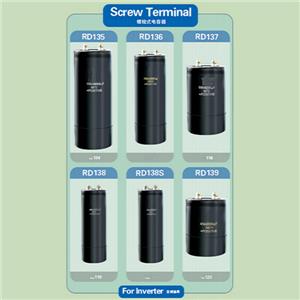
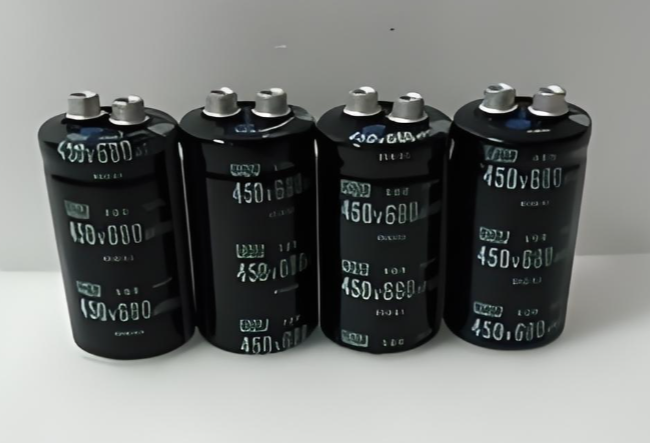
As switching frequencies push into the hundreds of kilohertz (kHz) and even megahertz (MHz) range, the physical construction of the capacitor becomes as important as its nominal capacitance value. At these extreme frequencies, the parasitic inductance of the capacitor, known as Equivalent Series Inductance (ESL), becomes the dominant limiting factor. The impedance of a capacitor (Z) is no longer determined solely by its capacitance (1/ωC) but by the combination of its capacitive reactance and its inductive reactance (ωL). Every capacitor has a self-resonant frequency (SRF), where the impedance is at a minimum. Beyond this point, the component behaves like an inductor, and its ability to filter high-frequency noise is severely compromised. Rongtech's advanced film capacitor technology addresses this by utilizing low-inductance terminal designs, such as "screw" or "busbar" terminations, and specialized winding techniques that minimize the current loop area. This reduces the ESL, allowing the capacitor to maintain a low impedance at the high switching frequencies required by modern SiC and GaN inverters, ensuring that the selected capacitance value remains effective in its intended frequency range.
Material Science: The Shift from Electrolytic to Film
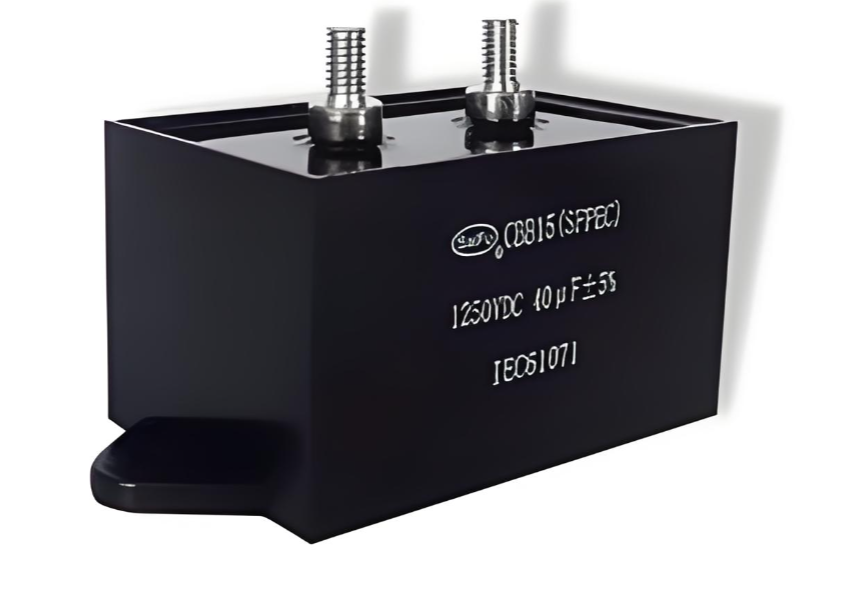
The choice of dielectric material is inextricably linked to the achievable switching frequency. Traditional aluminum electrolytic capacitors, while offering high capacitance per unit volume, are severely limited in their high-frequency performance due to their high ESR and the physical limitations of the liquid electrolyte. As inverters transition to higher switching frequencies to reduce the size of magnetic components and improve efficiency, the industry is increasingly shifting towards metallized film capacitors, such as Rongtech's polypropylene (PP) and polyethylene naphthalate (PEN) types. These film dielectrics offer inherently low dielectric losses (low Dissipation Factor, DF) and are not subject to the "drying out" or life limitations of electrolytics. This material shift allows for a significant reduction in the required physical size of the DC-link bank, as the high-frequency performance of film capacitors means that a smaller microfarad (µF) value can be used to achieve the same level of ripple suppression that would require a much larger electrolytic capacitor at a lower frequency.
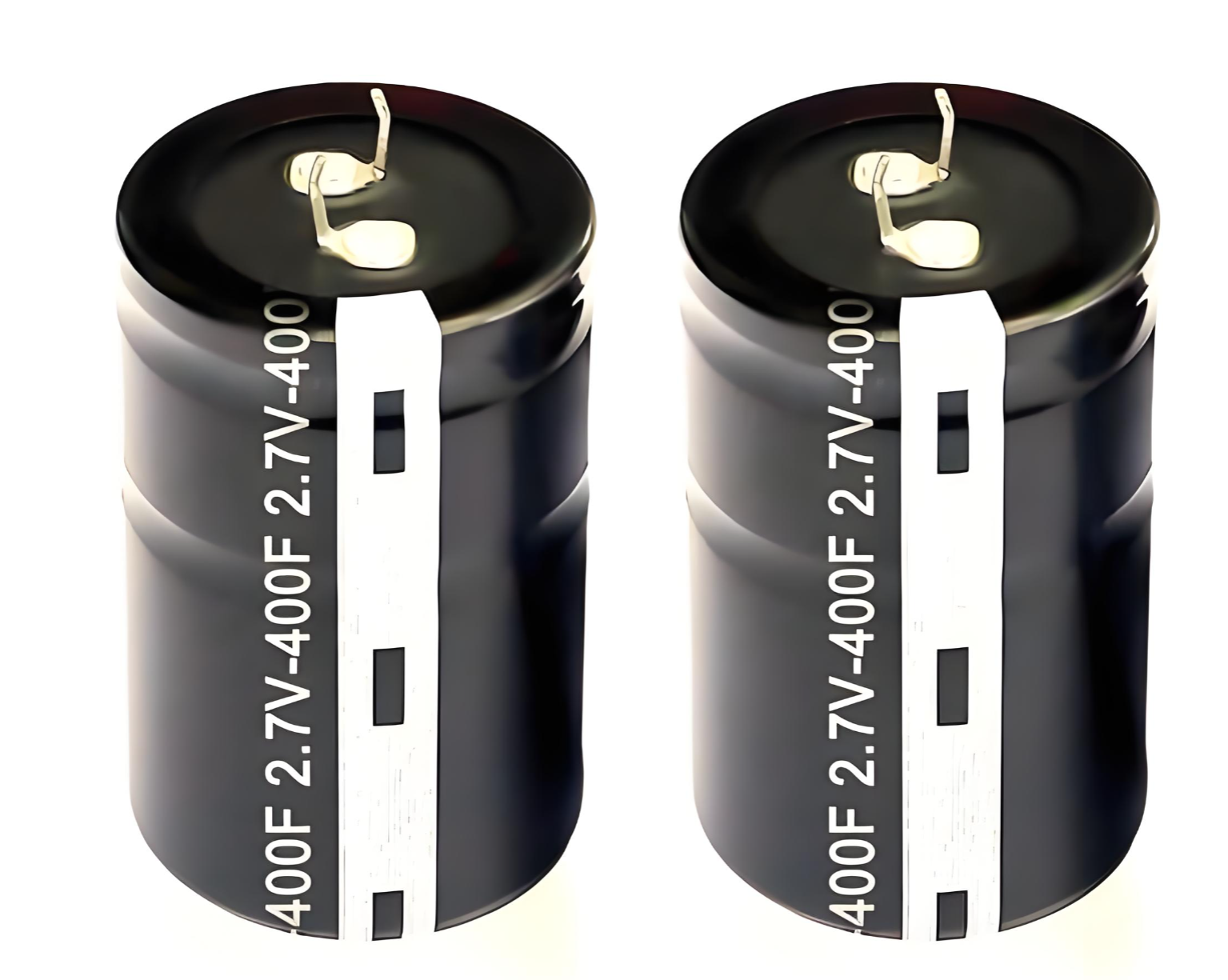
The selection of the optimal capacitance value in an inverter is not a static decision but a dynamic calculation that is directly influenced by the target switching frequency. Rongtech's engineering solutions, which combine low-ESL film capacitor technology with high-reliability materials, empower designers to push the boundaries of frequency, achieving higher power density and efficiency without compromising the stability of the DC bus.