How To Choose The Right Precision Shunt Resistor For Reliable Current Measurement
Reliable current measurement starts long before the amplifier or ADC. In most low-voltage, high-current designs, the shunt resistor is still one of the most accurate and compact ways to measure current, but only when its resistance value, temperature behavior, layout method, and thermal limits are matched to the real application. TI’s current-sensing guidance notes that shunt-based sensing is typically preferred for currents up to about 100 A on rails below 100 V, while Vishay and Bourns both emphasize that precision, repeatability, Kelvin connection, low TCR, and low thermal EMF are what separate a true measurement-grade shunt from a simple low-ohmic resistor.
Start With Resistance Value, Tolerance, And TCR
The first step is to choose the shunt value around the measurement target, not around a catalog habit. TI explains that shunt selection is always a compromise between measurement accuracy and power dissipation: a larger shunt value creates a stronger sense voltage that is easier to measure accurately, but it also increases power loss; a smaller value reduces loss, but demands more gain and can make offset and noise more significant. TI’s isolated-data-converter note makes the same point in a more practical way: the required resistance and power rating should be calculated from both continuous current and maximum current, not just from the nominal operating point.
Once the basic resistance is defined, tolerance and TCR become the next decision points. TI notes that low shunt tolerance and low temperature coefficient have a direct impact on total measurement accuracy, while Vishay’s technical notes show that TCR can shift the resistance value as temperature rises and that datasheets do not always present TCR in exactly the same way. In other words, a precision shunt is not “precise” just because the room-temperature tolerance looks good. For real current measurement, the resistor must hold its value across warm-up, ambient changes, and sustained load.
Material behavior matters here as well. Vishay’s resistor fundamentals and Bourns’ current-sense materials both highlight low thermal EMF, low TCR, and stable metal-alloy constructions as important for measurement applications, especially when sense voltages are very small. That is why high-precision shunt selection should always begin with three linked questions: how much signal is needed, how much loss is acceptable, and how much resistance change can be tolerated as the resistor heats during normal operation.
Confirm Kelvin Connection, Layout, And Self-Heating Behavior
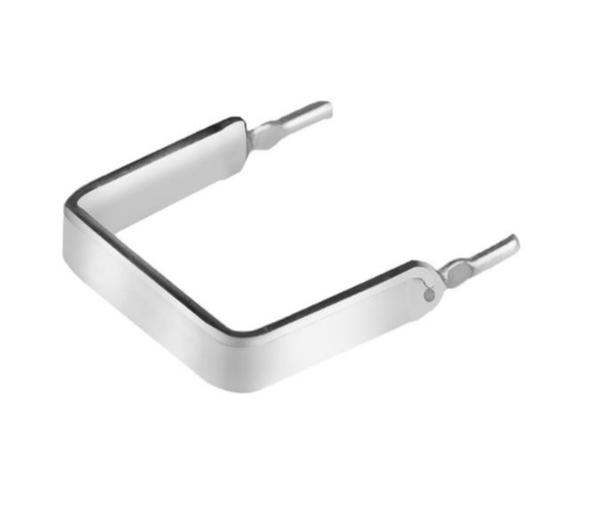
A precision shunt resistor can lose much of its value if the PCB implementation is poor. Vishay states directly that a Kelvin connection to a four-terminal resistor is essential for precise current sensing because it removes errors associated with lead resistance, contact resistance, and lead TCR from the measurement path. Bourns makes the same recommendation, noting that a 4-terminal current-sense resistor using the Kelvin principle allows separate paths for load current and voltage measurement, which improves accuracy and stability. For procurement, this means the resistor should be judged not only by its datasheet, but also by whether the intended board layout and amplifier interface can actually use Kelvin sensing correctly.
TI’s layout guidance goes one step further and shows that even with the right shunt, routing can still create avoidable error. The company recommends Kelvin sensing lines, very short input traces, and placing the current-sensing device close to the shunt. Its best-practice notes explain that individual Kelvin lines from the resistor pads help ensure the measured voltage is the true shunt drop rather than a mixture of shunt drop and copper-path error. This is especially important in low-ohmic designs where microvolts of extra drop can noticeably affect current accuracy.
Self-heating is the next issue that must be confirmed before finalizing the part. Vishay notes plainly that self-heating changes resistance because of TCR, and TI’s guides repeatedly tie shunt choice to power dissipation. That means a resistor that is accurate on paper can still drift in the finished product if its thermal rise is too high. Bourns adds that low thermal EMF and long-term stability are meaningful advantages in current-sense products, and cites performance of up to 21,000 hours at rated power and 130 °C for one series. Reliable current measurement therefore depends on more than static accuracy; it depends on how the shunt behaves after minutes, hours, and years of real operating heat.
Compare Power Margin, Pulse Capability, And Long-Term Stability
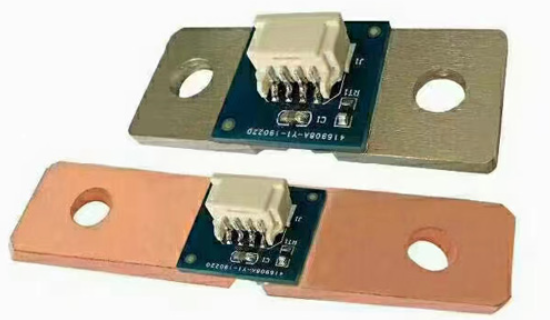
The final step is to compare the shunt as a lifecycle component, not just as a startup component. TI’s shunt-selection note says the resistor must be sized for both continuous and maximum current, while Bourns highlights surge performance and high-power capability in low-ohmic current-sense products used in power electronics. If the application includes startup surges, capacitor charging, motor current spikes, or short overcurrent events, pulse and overload behavior should be checked before the part is approved. A shunt that handles nominal current well may still become the weak point under repetitive pulse stress.
Long-term drift is just as important as short-term performance. Bourns cites long-term resistance stability of ΔR/R max 1% for 21,000 hours at rated power and 130 °C for one series, while Vishay notes in its resistor FAQ that end-of-life resistance change should be considered together with all design-related sources of change, not in isolation. That is a useful purchasing mindset: the real question is not only whether the shunt is accurate when installed, but whether it will remain accurate after sustained electrical stress, heat, and environmental exposure.
It is also worth comparing package style and current range against the real system. TI notes that shunt-resistor sensing is often preferred up to around 100 A on lower-voltage rails, while Vishay and Bourns both offer discrete, welded, and four-terminal formats for different current and assembly needs. In practice, the right precision shunt resistor is the one that balances signal level, efficiency, thermal behavior, manufacturability, and long-term measurement stability in the finished product. That is what makes current measurement reliable, not just initially accurate.
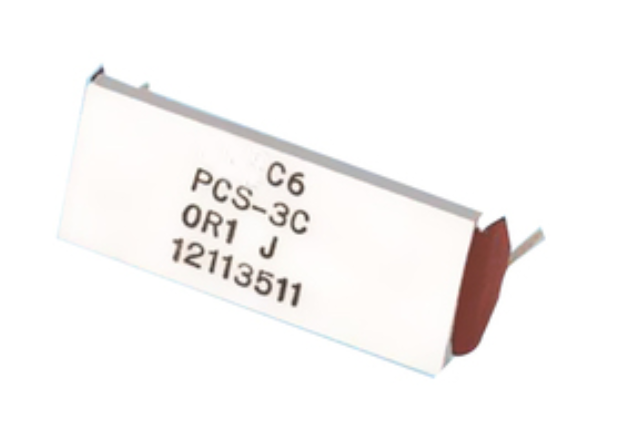
To choose the right precision shunt resistor for reliable current measurement, confirm four things together: the resistance value is appropriate for both signal level and power loss, the tolerance and TCR fit the real temperature range, the layout supports true Kelvin sensing, and the part has enough thermal and long-term stability margin for the actual load profile. When those checks are made together, the shunt resistor becomes a reliable measurement component rather than just a low-ohmic part on the BOM.