How FRD Diode Modules Reduce Switching Losses in Frequency Converter Circuits
How FRD Diode Modules Reduce Switching Losses in Frequency Converter Circuits
1. The Crucial Role and Switching Challenge of Diode Modules in Frequency Converters
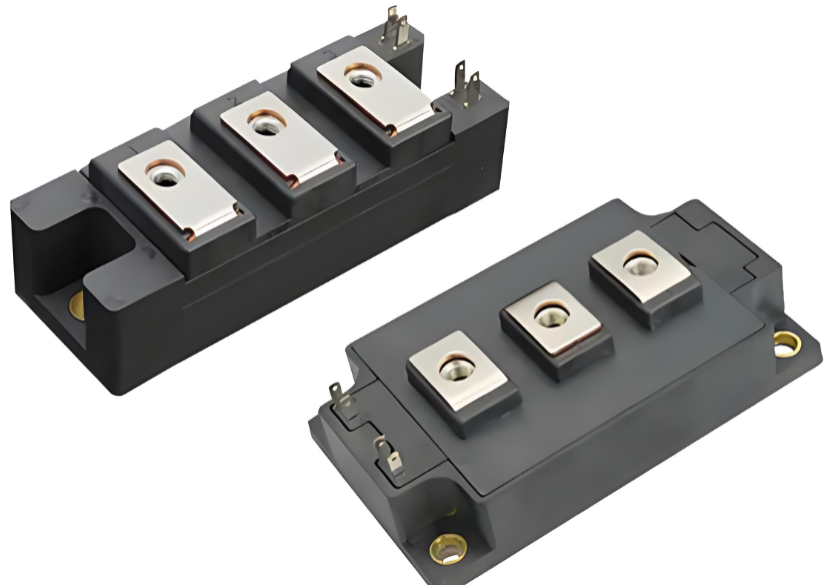
In the power conversion stage of a frequency converter (inverter), the diode module, often integrated within the same package as the IGBTs, plays a vital role as a freewheeling diode. Its primary function is to provide a path for the inductive load current to circulate when the main IGBT switch turns off. Without this path, high voltage spikes would destroy the switching devices. However, the reverse recovery characteristic of a standard silicon diode becomes a major source of switching loss. When the IGBT turns on again, the diode, which was previously conducting, must rapidly switch from the forward-biased state to the reverse-blocking state. A standard diode exhibits a slow reverse recovery process, characterized by a significant reverse recovery current (Irr) flowing in the opposite direction as the stored charge is removed. This current, peaking at the same time as the voltage across the IGBT is high, creates a large instantaneous power loss during each switching cycle, leading to reduced efficiency, increased heat generation, and limitations on the maximum switching frequency of the converter.
2. The FRD Advantage: Engineered for Ultrafast and Soft Recovery
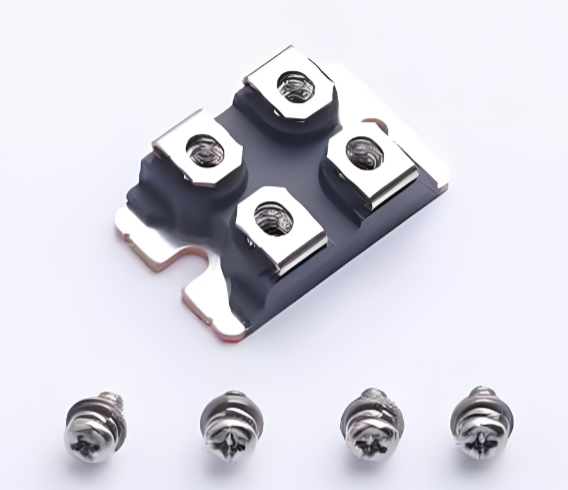
The Fast Recovery Diode (FRD) module is specifically engineered to mitigate the limitations of standard diodes. The key differentiator lies in its controlled reverse recovery characteristics. FRDs are manufactured using lifetime control techniques, such as electron irradiation or platinum doping, which reduce the concentration of minority carriers in the silicon. This results in a much shorter reverse recovery time (trr) and a significantly lower peak reverse recovery current (Irr). More importantly, advanced FRDs like the R60FP series are designed for "soft" recovery. A soft recovery diode is characterized by a smoother, more gradual decay of the reverse recovery current, as opposed to the abrupt "snappy" recovery of a standard diode. This softness is quantified by a low softness factor (S-factor). The soft recovery characteristic drastically reduces the peak current and associated voltage ringing caused by parasitic inductances in the circuit. This directly translates to lower switching losses and reduced Electromagnetic Interference (EMI), contributing to a cleaner and more efficient system operation.
3. System-Level Benefits: Enhanced Efficiency, Frequency, and Reliability
The adoption of FRD modules delivers profound system-level benefits in frequency converter design. The most immediate impact is a substantial increase in conversion efficiency. By minimizing switching losses at each transition, the overall power dissipation of the inverter bridge is reduced. This allows for the use of smaller heat sinks or enables operation at higher output power within the same thermal constraints. Secondly, the reduced switching loss and softer recovery characteristics enable the frequency converter to operate at higher switching frequencies. This is a critical advantage, as higher switching frequencies allow for a reduction in the size of passive filter components (inductors and capacitors) needed to smooth the output waveform, leading to more compact and cost-effective inverter designs. Furthermore, the lower stress on the IGBTs during turn-on, due to the reduced reverse recovery current of the FRD, enhances the reliability and longevity of the entire power module. This combination of higher efficiency, increased power density, and improved robustness makes FRD modules an indispensable component in modern high-performance frequency converters for applications ranging from industrial motor drives to renewable energy systems.
Summary
In conclusion, FRD diode modules are a critical enabling technology for high-efficiency frequency converters. By fundamentally improving reverse recovery characteristics—achieving ultrafast and soft recovery—they directly minimize switching losses, which in turn unlocks higher operating frequencies, improved power density, enhanced system efficiency, and superior reliability. Their role is pivotal in advancing the performance of modern power conversion systems.