How To Choose Current Sensor Samples Before OEM Mass Production
How To Choose Current Sensor Samples Before OEM Mass Production
Before OEM mass production, current sensor sample selection is one of the most important steps for EV chargers, BESS cabinets, PCS systems, solar inverters, UPS equipment, motor drives, welding machines, railway power systems, and industrial DC cabinets. A current sensor may look suitable on paper, but real sample testing can reveal output mismatch, aperture problems, drift, signal noise, installation conflict, or insufficient isolation.
For OEM buyers, choosing current sensor samples should not be based only on rated current and price. Buyers should prepare complete application data, compare datasheets, test electrical performance, check mechanical fit, confirm output signal compatibility, and evaluate supplier batch consistency before approving a model for mass production.
Quick Answer
To choose current sensor samples before OEM mass production, buyers should first confirm application, current type, rated current, peak current, output signal, supply voltage, aperture size, conductor dimensions, isolation voltage, accuracy, drift, response time, EMC environment, mounting method, sample quantity, and annual demand. The sample should be tested in the real equipment under rated current, peak current, temperature, wiring, and controller input conditions before mass production approval.
1. Why Sample Selection Matters Before OEM Mass Production
In OEM power electronics projects, current sensors are not independent components. They must work with the controller, ADC input, PLC, BMS, PCS, inverter board, charger controller, protection circuit, wiring harness, busbar layout, and cabinet structure. If the wrong sample is selected, the problem may not appear until installation, debugging, or mass production.
A sample may pass a simple bench test but fail in the real cabinet. Common problems include output signal mismatch, zero-current error, unstable reading under noise, aperture too small for busbar, connector direction conflict, insufficient isolation, poor response time, or temperature drift under long operation.
For OEM buyers, sample selection should be treated as a small production validation process. The goal is not only to receive a working sample, but to confirm whether the model can be produced consistently, installed easily, tested repeatedly, and supplied reliably during mass production.
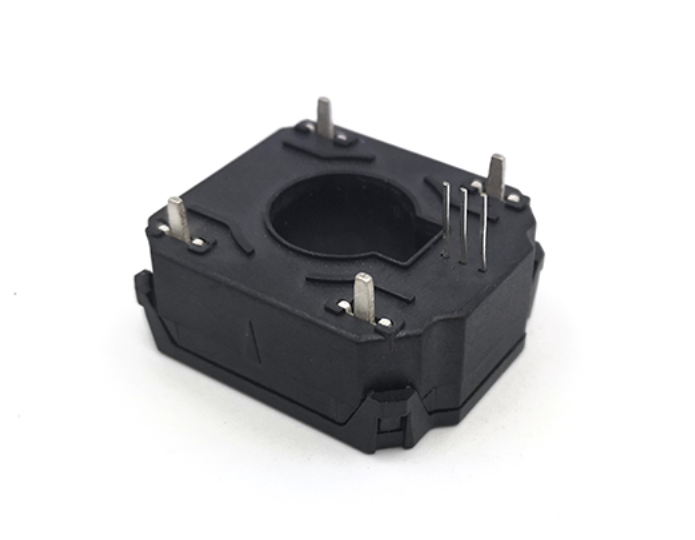
Typical OEM Applications
EV charger module current feedback and output current monitoring.
BESS battery cabinet charge and discharge current measurement.
PCS cabinet bidirectional DC current feedback.
Solar inverter DC bus or phase current monitoring.
UPS and industrial DC power supply current measurement.
Motor drive phase current feedback and overcurrent protection.
Welding machine output current and pulse current detection.
2. Prepare Complete Parameters Before Asking For Samples
A good sample recommendation depends on the information buyers provide. If the buyer only says “we need a 500A current sensor,” the supplier may recommend a model that matches current range but fails in output signal, aperture size, isolation voltage, or controller compatibility.
Before asking for samples, buyers should prepare the application, measured current type, rated current, peak current, overload duration, current direction, output signal, supply voltage, accuracy target, response time requirement, aperture size, busbar or cable dimensions, installation photos, and annual demand.
If the project is replacing an existing model, buyers should also provide the original sensor model number, datasheet, product photos, wiring definition, pin layout, output scaling, mounting dimensions, and sample test problems. This helps the supplier judge whether a direct replacement, similar model, or customized sample is required.
| Sample Request Item | Why It Matters | Buyer Should Provide |
|---|---|---|
| Application | Different equipment needs different sensor performance | EV charger, BESS, PCS, inverter, UPS, motor drive, or welding machine |
| Current Range | Defines measurement range and overload margin | Rated current, peak current, overload duration, fault current if available |
| Current Type | Different current types require different sensing technology | AC, DC, pulsed DC, leakage, or bidirectional DC current |
| Output Signal | Must match the controller input | 0-5V, 0-10V, ±5V, 4-20mA, CAN, RS485, relay or custom output |
| Installation Structure | Prevents mechanical mismatch during sample testing | Busbar size, cable diameter, aperture requirement and cabinet photos |
| Production Plan | Helps supplier evaluate customization and batch support | Sample quantity, pilot order quantity, annual demand and delivery schedule |
3. Test Output Signal And Controller Compatibility First
Output signal matching should be tested before mechanical approval or price comparison. The current sensor output must match the controller, ADC input, PLC, BMS, PCS controller, inverter control board, EV charger controller, or monitoring system. If the signal cannot be read correctly, the sample cannot be approved for mass production.
Common output signals include 0-5V, 0-10V, ±5V, ±10V, 4-20mA, CAN, RS485, relay output, switch output, or customized output. For bidirectional DC current measurement, buyers should test zero-current output and current direction logic carefully. The system must correctly identify charge and discharge direction, positive and negative current, or forward and reverse current.
During sample testing, buyers should verify output scaling at zero current, low current, rated current, and near peak current. If the controller software requires calibration, the calibration method should be confirmed before mass production.
| Output Test Item | Why It Matters | Testing Focus |
|---|---|---|
| Output Type | Wrong signal type cannot match controller input | 0-5V, 0-10V, ±5V, 4-20mA, CAN, RS485 or custom output |
| Zero-Current Output | Important for bidirectional DC measurement | Midpoint output, bipolar output, custom zero point and stability |
| Full-Scale Output | Determines current calculation accuracy | Output scaling at rated current and near peak current |
| Controller Reading | Confirms real system compatibility | ADC reading, PLC display, BMS or PCS calculated current value |
| Signal Noise | Power electronics cabinets may create noise | Output stability under switching, load and real wiring conditions |
4. Check Aperture Size, Mounting And Wiring Direction
A current sensor sample must fit the real conductor and cabinet layout. Many OEM sample failures happen because the sensor electrical parameters are correct, but the aperture cannot fit the busbar or cable, the mounting holes do not match, or the connector direction conflicts with the wiring route.
For busbar installation, buyers should test the sample with the actual copper busbar, insulation layer, mounting bracket, and nearby components. For cable installation, buyers should test the sample with the actual cable outer diameter and bending direction. If multiple cables pass through one aperture, the full conductor layout should be tested.
If the standard sample does not fit, buyers should discuss custom aperture, connector direction, wire length, mounting holes, housing size, or split core structure with the supplier before moving to pilot production.
| Mechanical Test Item | Why It Matters | Testing Focus |
|---|---|---|
| Aperture Size | Determines whether conductor can pass through | Cable outer diameter, busbar width and busbar thickness |
| Mounting Holes | Affects cabinet assembly and replacement feasibility | Hole distance, screw size, bracket position and mounting surface |
| Connector Direction | Affects wiring harness layout | Connector direction, cable exit direction and wire bend space |
| Body Size | Prevents interference with nearby components | Height, width, depth and distance from terminals or contactors |
| Assembly Process | Mass production needs repeatable installation | Installation time, tool access, cable routing and operator error risk |
5. Verify Accuracy, Drift, Response Time And Isolation
Current sensor sample testing should include more than basic output reading. Buyers should test accuracy, zero-current stability, offset drift, temperature drift, response time, isolation voltage, and EMC performance according to the real function of the sensor.
If the current sensor is used for monitoring only, standard accuracy may be acceptable. If it is used for PCS feedback, EV charger current control, BESS charge and discharge calculation, or motor drive feedback, buyers should test accuracy and response time more carefully. If it is used in high-voltage equipment, isolation voltage and creepage distance should also be confirmed.
Samples should be tested under real cabinet wiring, real load, real current direction, and operating temperature whenever possible. A sensor that performs well on a simple bench may still have signal noise or drift in the real power cabinet.
| Performance Test Item | Why It Matters | Testing Focus |
|---|---|---|
| Accuracy | Affects measurement and control quality | Low current, rated current and near full-scale current points |
| Offset Drift | Affects zero-current stability in DC systems | Zero output after warm-up, temperature change and long operation |
| Response Time | Important for protection and fast control | Dynamic current, overcurrent event and controller sampling cycle |
| Isolation Voltage | Protects low-voltage control circuits | Working voltage, test voltage, creepage and clearance requirement |
| EMC Stability | Power cabinets may contain switching noise | Signal noise under real wiring, switching, grounding and shielding conditions |
6. Evaluate Supplier Capability Before Mass Production Approval
OEM mass production requires more than a successful sample. Buyers should evaluate whether the supplier can provide stable batch quality, consistent output calibration, reliable insulation testing, mechanical inspection, customization support, delivery planning, and technical documents.
For custom current sensors, buyers should confirm whether the supplier can maintain the same aperture dimensions, output scaling, connector direction, cable length, label, and packaging across batches. If the first sample works but later batches are inconsistent, the production line may face delays or after-sales problems.
Before approving mass production, buyers should request datasheets, mechanical drawings, wiring diagrams, inspection standards, test reports, sample approval records, and packaging confirmation. Pilot production is recommended before full-volume orders.
| Supplier Check Item | Why It Matters | Buyer Should Confirm |
|---|---|---|
| Batch Consistency | OEM production needs repeatable output and dimensions | Output calibration, dimension tolerance and inspection process |
| Customization Ability | Custom projects need stable technical support | Aperture, output, connector, cable length, label and packaging support |
| Testing Documents | Supports sample approval and production quality control | Datasheet, drawing, wiring diagram, test report and inspection standard |
| Delivery Planning | Prevents mass production delay | Sample lead time, pilot order lead time and mass production schedule |
| Technical Communication | Reduces wrong model selection and repeated sample changes | Engineer support, replacement advice and sample testing feedback |
7. What Buyers Should Send Before Requesting OEM Samples
To receive suitable current sensor samples, buyers should provide complete project information. This includes application, current type, rated current, peak current, output signal, supply voltage, isolation voltage, aperture size, busbar or cable dimensions, mounting method, accuracy target, response time, operating temperature, sample quantity, pilot order plan, and annual demand.
If buyers already have an original model or competitor sample, they should provide model number, datasheet, product photos, wiring definition, output scaling, and installation dimensions. This allows the supplier to recommend a standard equivalent or customized OEM sample faster.
Example OEM Sample Request:
Application: EV charger module and BESS cabinet current monitoring
Current range: 500A rated, 800A peak for short-time operation
Measured current: Bidirectional DC current
Output signal: 0-5V with midpoint zero-current output
Supply voltage: +15V
Isolation requirement: 4kV or higher
Installation: Copper busbar 40 × 6 mm
Customization: Aperture size, connector direction and label
Sample quantity: 10 pieces for validation
Estimated annual demand: 3000 pieces after approval
Final Sample Selection Checklist
Confirm application and measurement position.
Provide rated current, peak current and overload duration.
Confirm AC, DC, pulsed DC or bidirectional current measurement.
Match output signal with controller, ADC, PLC, BMS or PCS input.
Confirm zero-current output and current direction logic.
Check supply voltage and pin definition.
Confirm aperture size, busbar size, cable diameter and mounting method.
Check isolation voltage, working voltage, creepage and clearance.
Test accuracy, drift, response time, EMC and temperature stability.
Evaluate batch consistency, sample lead time and mass production support.
Conclusion
Choosing current sensor samples before OEM mass production requires a complete review of electrical parameters, mechanical fit, controller compatibility, sample testing results, and supplier production capability. Buyers should not approve a model only because the current range and price look suitable.
For EV chargers, BESS cabinets, PCS systems, inverters, UPS equipment, motor drives and industrial power electronics, a structured sample selection process helps reduce redesign risk, improve sample approval efficiency, and support stable long-term mass production.
FAQ
1. What should buyers check before ordering current sensor samples?
Buyers should check application, rated current, peak current, output signal, supply voltage, aperture size, isolation voltage, accuracy, response time, installation method and controller compatibility.
2. Why is output signal testing important?
The current sensor output must match the controller input. If the signal type, scaling, zero point or polarity is wrong, the equipment may read incorrect current data.
3. Should samples be tested in real equipment?
Yes. Samples should be tested in the real cabinet or equipment under real current, wiring, temperature, grounding and controller reading conditions before mass production approval.
4. What if the standard sample does not fit the busbar or cable?
Buyers can request customization for aperture size, housing structure, mounting holes, connector direction, cable length, output signal or label according to the OEM project needs.
5. What should buyers provide before requesting OEM samples?
Buyers should provide application, current range, peak current, output signal, supply voltage, isolation requirement, aperture size, busbar or cable dimensions, sample quantity, annual demand and customization needs.
Request Current Sensor Samples For OEM Validation
If you need current sensor samples for EV chargers, BESS cabinets, PCS systems, inverters, UPS equipment, motor drives or industrial power electronics, send us your current range, peak current, output signal, isolation requirement, aperture size, busbar or cable dimensions, sample quantity and annual demand. Our team can help you select and test suitable samples before OEM mass production.
Contact Us Get QuoteRelated Rongtech Sensor Pages
For current sensor selection and OEM project matching, buyers often compare rated current or voltage, aperture size, output signal, insulation level, response time, drift, installation space and project documentation in the same RFQ. The following Rongtech pages connect this article with related sensor categories and quotation paths on the same website.
- Products
- Open Loop Current Sensor
- Close Loop Current Sensor
- Voltage Sensors
- Flux Gate Current Voltage Sensors
- Sensor ICs
- Leakage Current Sensors
- High Precision Shunt Resistor
- High Voltage Current Voltage Transformers
- Contact Rongtech
Inquiry Information To Prepare
A clear inquiry should include rated current or voltage, power supply, output signal, aperture or package size, accuracy class, insulation requirement, working temperature, connector preference, expected quantity and the target equipment type. This makes the article more useful for technical buyers and gives the sales team a stronger route from reading to inquiry.