What Should Be Confirmed Before Finalizing An IPM Selection
Finalizing an Intelligent Power Module selection is not just a matter of matching a voltage class and current number. Official documentation from Infineon, onsemi, ST, and Mitsubishi Electric shows that IPMs combine the power stage with gate-drive and protection functions, but the exact feature set, protection behavior, thermal path, and interface requirements differ from one family to another. That means the right decision depends on the real application, not on the module label alone.
Confirm The Real Application, Power Range, And Electrical Margin
The first thing to confirm is where the IPM will actually be used. Infineon states that its CIPOS™ IPM portfolio spans roughly 20 W to 5 kW and is selected based on voltage, size, and cost requirements, while ST describes its IPM range as covering motor-drive applications from a few watts up to 7 kW. onsemi’s recent application notes also position IPMs clearly in 3-phase motor-drive use cases. In practical terms, that means the selection should start with the real bus voltage, motor type, switching profile, overload behavior, cooling method, and target power level of the equipment rather than with a generic “600 V” or “1200 V” class.
Voltage and current margin also need to be checked beyond the nominal operating point. Infineon’s CIPOS™ Maxi application note says the overcurrent trip level is usually set below about two times the nominal rated collector current, and its product notes show clear differences in peak current and required shunt-resistor sizing across current classes. This is important because an IPM that looks sufficient at rated load can still be the wrong choice if startup current, acceleration, regenerative events, or abnormal load conditions push it too close to its protection threshold.
The electrical environment should also be confirmed early. Infineon’s recent CIPOS™ Mini datasheet highlights rugged SOI gate-driver technology, stability against transient and negative voltage, and allowable negative VS potential for signal transmission. These details matter because real inverter systems are not electrically quiet. If the application includes long motor cables, fast switching edges, or frequent transients, the IPM has to be selected with enough real-world electrical headroom, not just enough nameplate voltage.
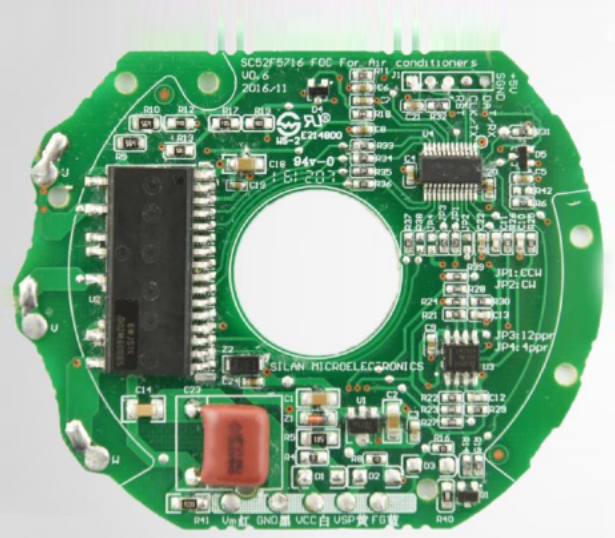
Confirm Protection Functions, Fault Logic, And Control Interface
The second thing to confirm is the exact protection package built into the IPM. onsemi datasheets show protection combinations such as cross-conduction prevention, external shutdown, undervoltage lockout, overcurrent protection, and a fault-detection output flag. Infineon’s current CIPOS™ Mini datasheet lists overcurrent shutdown, built-in NTC thermistor, undervoltage lockout at all channels, open-emitter access for current monitoring, and cross-conduction prevention. This means two IPMs that look similar on voltage and current may behave very differently when a fault happens.
Protection behavior also has to be understood, not just protection names. ST’s SLLIMM documentation shows that under a low-side supply undervoltage condition, the output driver is forced off after a short delay and a fault signal is sent to the MCU; it also documents different restart behavior for high-side and bootstrap undervoltage events. Mitsubishi’s IPM application note says over-temperature protection disables the gate drive, keeps the fault output active during the event, and warns that repetitive tripping should be avoided because it indicates stressful operation. In procurement terms, this means the control team must confirm how the module trips, what causes the fault output, how reset works, and whether the recovery behavior fits the intended control strategy.
The current-sensing and shutdown path also deserves special attention. Infineon notes that an RC filter is necessary in the overcurrent sensing circuit to prevent malfunction due to noise, and its application notes describe how the ITRIP pin is used for overcurrent shutdown. That is a practical reminder that an IPM with “built-in protection” still depends on correct external design choices. Before finalizing a part, it is important to confirm whether overcurrent sensing uses an internal shunt, external shunt, or trip pin, whether the controller can read the fault logic cleanly, and whether the interface matches the MCU and gate-drive architecture already planned.
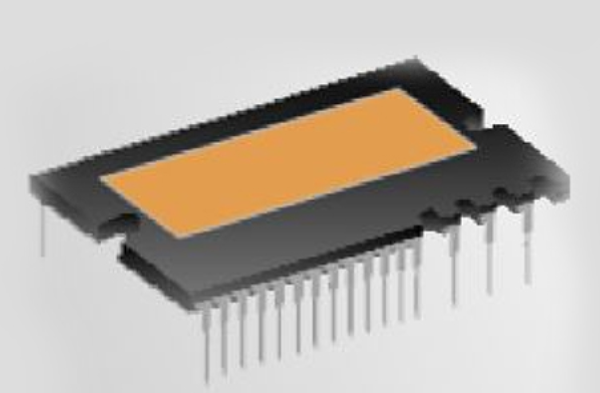
Confirm Thermal Path, Package Layout, And Assembly Reliability
The third thing to confirm is thermal behavior in the real system. Mitsubishi’s application notes show explicit thermal-resistance data and stress that the relationship between internal temperature, case temperature, and junction temperature depends on the actual cooling condition and control strategy, recommending evaluation on the real system when setting protection levels. Its mounting notes also specify that thermal grease with good conductivity and long-term endurance should be applied evenly, and that the case-to-heatsink thermal resistance depends on grease thickness and conductivity. In practice, this means an IPM cannot be judged only by its catalog current rating; it has to be judged by the full thermal path from silicon to heatsink in the actual equipment.
Package and layout fit are also part of selection. ST’s high-power SLLIMM documentation includes dedicated design and mounting guidelines, and onsemi’s recent SPM application note provides PCB-layout guidance for connecting the module directly to the MCU-side interface. Mitsubishi’s newer Super Mini DIPIPM note also gives recommended through-hole patterns and package handling guidance. So before locking in an IPM, it is worth confirming whether the footprint, creepage strategy, pinout, PCB routing, current path, and heatsink attachment all fit the real product structure without forcing compromises later.
Long-term reliability should be confirmed as part of the same decision. Features such as thermistor monitoring, fault output, open-emitter access, and undervoltage lockout are valuable, but they do not replace good thermal design, clean layout, and realistic validation. The safest final choice is usually the IPM that gives enough electrical margin, understandable protection behavior, and a manageable thermal/mechanical integration path, rather than the one with the most attractive headline specification.
Before finalizing an IPM selection, confirm three things in order: whether the module truly matches the application’s power and electrical stress, whether its protection and fault behavior fit the control strategy, and whether its package plus thermal path can survive real operating conditions. Once those three points are clear, the selection becomes much more reliable and much less likely to create redesign risk later.