How To Choose The Right Thyristor For Reliable Power Switching
Choosing a thyristor for reliable power switching is not just about matching voltage and current on the front page of a datasheet. In real switching circuits, long-term reliability depends on how well the device handles surge current, dv/dt, di/dt, gate triggering conditions, thermal stress, and the actual behavior of the load. ST’s application notes, Infineon’s technical guidance, and Littelfuse datasheets all point to the same reality: a thyristor that looks acceptable on paper can still switch unreliably if its dynamic and thermal margins are too tight for the real application.
Start With Voltage, Current, And Surge Margins
The first step is to confirm the real electrical stress of the application, not just the nominal working point. A thyristor used in a controlled rectifier, soft starter, heater controller, UPS stage, or industrial power circuit may see repetitive blocking voltage, RMS current, average on-state current, and much higher short-duration surge current during startup or fault conditions. ST’s selection note emphasizes voltage rating, current rating, and surge capability as core selection factors, while Littelfuse datasheets show that practical thyristor specifications routinely separate average current, RMS current, and non-repetitive surge current because they do not represent the same type of stress.
A reliable choice usually means leaving margin, not selecting the device closest to the normal operating value. Littelfuse explicitly warns that overheating, overvoltage including dv/dt, and surge currents are among the main causes of semiconductor failure, and its datasheets recommend voltage selection for worst-case conditions and limiting continuous current below the absolute rating for longer life. That is why the better procurement question is not “Can this thyristor carry the rated load?” but “Can it still switch safely during line variation, startup current, load abnormality, and temperature rise?”
Another important point is application type. ST’s portfolio material shows thyristors used across controlled bridges, AC switching, motor starters, UPS, charging stations, and renewable energy management. These applications do not stress the device in the same way. A resistive load may be relatively predictable, while an inductive or highly dynamic load can create much more demanding turn-on and transient conditions. Reliable selection therefore starts with the real switching waveform and load behavior, not with the broadest catalog category.
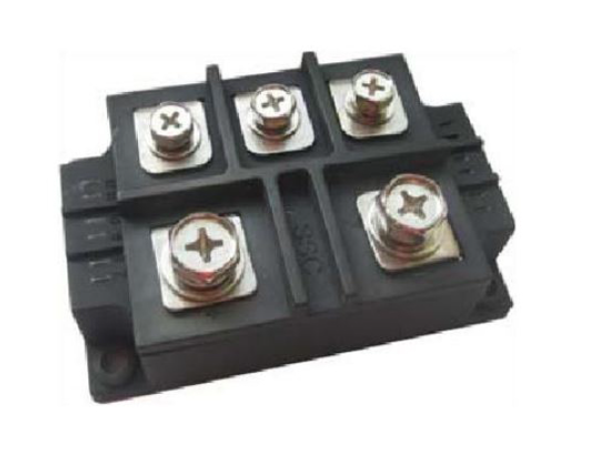
Check Gate Triggering, dv/dt, And di/dt For Stable Switching
Once the basic ratings are acceptable, the next question is whether the thyristor will trigger consistently and avoid false triggering. Infineon defines gate trigger current, IGT, as the minimum gate current that causes the thyristor to turn on, and notes that this value depends on main-terminal voltage and junction temperature. It also states that the trigger pulse generator should safely exceed the maximum datasheet IGT value. In real procurement terms, this means a thyristor is only as reliable as the gate-drive conditions it will actually receive in the circuit. A part that looks fine on paper may still misfire or trigger inconsistently if the available gate current margin is too small.
dv/dt and di/dt are just as important for reliable switching. ST explains that when a high dv/dt transient appears across an SCR, internal capacitances can inject current into the gate area and unintentionally trigger the device. ST also notes that this undesired triggering can then lead to high di/dt turn-on stress. Its selection note further shows that external gate-cathode components can be used to improve dv/dt immunity. In other words, reliable switching is not only about whether the thyristor can be turned on; it is also about whether it stays off when it should, and whether it turns on under controlled conditions rather than under noise or transients.
The reason this matters so much is that many real power circuits are electrically noisy. Littelfuse and ST datasheets list critical dv/dt and critical di/dt values because these limits determine whether the device can survive real switching stress. ST’s portfolio materials also show dynamic-performance parameters such as dV/dt and critical di/dt as headline differentiators for industrial SCRs. Before selecting a part, it is important to confirm that the gate drive, snubber network, load type, and switching transient profile all fit within the device’s practical dynamic limits.
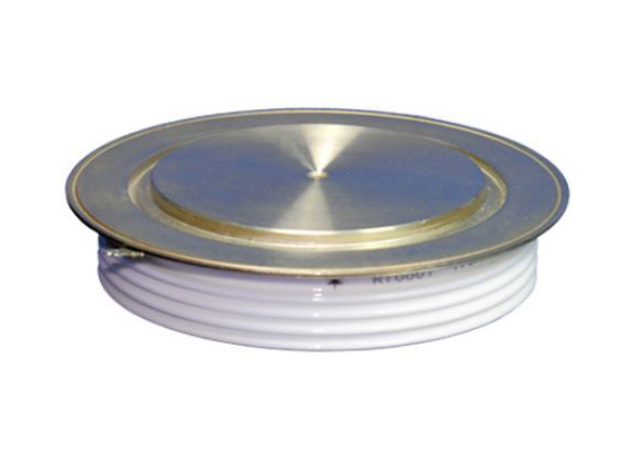
Match Thermal Design, Package, And Mounting To Real Operation
Even a thyristor with the right electrical and triggering characteristics can still fail early if thermal design is weak. Littelfuse repeatedly links long device life to proper heat sinking and correct mounting, and its datasheets identify overheating as one of the main causes of semiconductor damage. ST and Infineon also highlight junction temperature as a key condition behind important ratings such as triggering, dv/dt, and current capability. This means thermal design is not a secondary issue added after selection; it is part of the selection itself.
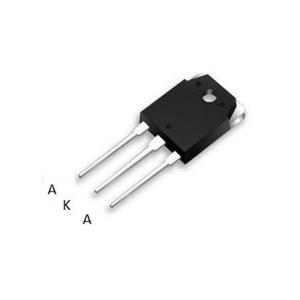
Package choice matters because it affects cooling, mounting style, and current capability. ST’s thyristor portfolio spans discrete and module-style products for different power levels, and Littelfuse module datasheets show substantial differences in current rating, gate trigger parameters, and thermal behavior across package families. A compact part may save space, but a larger module may offer better thermal spreading, easier busbar connection, or stronger surge capability. For reliable power switching, the right package is the one that matches the real mechanical layout, cooling path, and service conditions of the equipment.
Mounting quality also affects reliability more than many teams expect. Littelfuse specifically notes that correct mounting, soldering, and lead forming help protect against component damage. That is especially important in industrial equipment exposed to vibration, repeated thermal cycling, or maintenance over many years. In practice, the best thyristor choice is usually the one that balances electrical rating, dynamic robustness, and thermal/mechanical fit, rather than the one with the lowest initial price or the most impressive single specification.
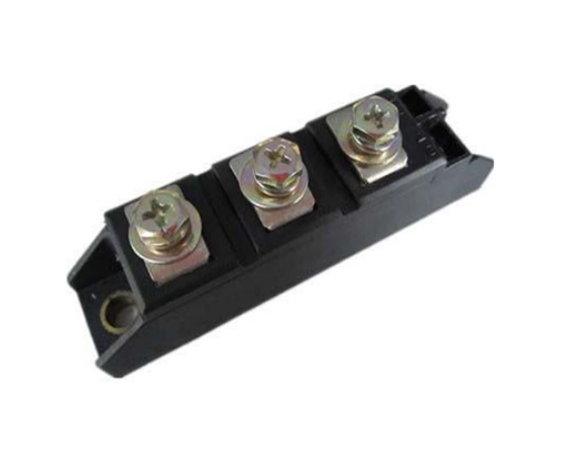
To choose the right thyristor for reliable power switching, focus on more than nominal ratings. Confirm voltage and current margin, surge capability, gate-trigger margin, dv/dt and di/dt robustness, thermal path, and package suitability under the real operating conditions of the circuit. When those checks are done together, the selected thyristor is much more likely to switch cleanly, survive transients, and remain stable over long service life.