Overvoltage Protection Mechanisms in DC-Link Capacitors
Overvoltage Protection Mechanisms in DC-Link Capacitors
Active Circuit Protection: Sensing and Intervention
Active protection circuits form the primary defense against overvoltage conditions in DC-link capacitors. These systems utilize voltage sensors and comparators to continuously monitor the DC bus voltage. When the voltage exceeds a predefined threshold—typically set above the capacitor's rated voltage but below its dielectric breakdown limit—the circuit triggers an intervention. This often involves disabling the inverter's gate drivers to halt switching operations or activating a crowbar circuit, which intentionally shorts the DC bus to rapidly dissipate energy through a sacrificial resistor or fuse. For systems with bidirectional power flow, such as regenerative braking in motor drives, active control algorithms can redirect excess energy back to the grid or a braking resistor. This proactive approach prevents the capacitor from being subjected to destructive voltage spikes that exceed its dielectric strength.
Passive Component Safety: Fuses and Varistors
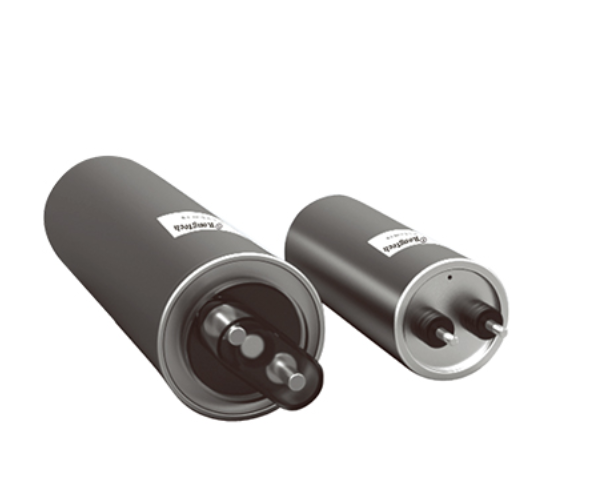
Passive protection mechanisms provide a crucial physical safety net when active circuits fail or when transients occur too rapidly for electronic control to respond. Fast-acting fuses are strategically placed in series with the DC-link capacitor. In an overcurrent event caused by a capacitor short circuit or severe overvoltage, the fuse blows, electrically isolating the capacitor from the circuit to prevent catastrophic failure like case rupture or fire. Additionally, Metal Oxide Varistors (MOVs) or Transient Voltage Suppression (TVS) diodes are often installed in parallel with the capacitor. These components exhibit a low resistance when the voltage exceeds their clamping voltage, shunting transient energy away from the capacitor. While passive components offer robust protection against short-duration spikes, they are sacrificial and require replacement after a fault event.
Intrinsic Capacitor Design: Self-Healing and Robust Dielectrics
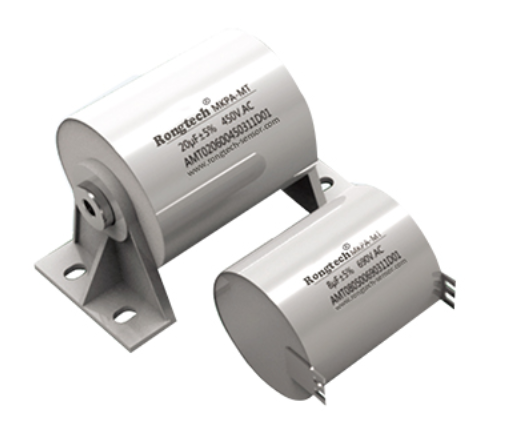
The inherent design of modern DC-link capacitors, particularly metallized film types, incorporates built-in overvoltage resilience. Self-healing is a critical property where a localized dielectric breakdown does not lead to immediate capacitor failure. When a weak spot in the metallized electrode is punctured by an overvoltage, the resulting high-current arc vaporizes the surrounding metal layer, electrically isolating the fault point. This process restores insulation integrity with only a negligible loss of capacitance. Furthermore, capacitors designed for harsh environments feature robust dielectric materials like polypropylene film, which have high dielectric strength and excellent thermal stability. Advanced designs may also include pressure relief vents or pressure-sensitive disconnects that physically open the circuit if internal gas pressure builds up due to thermal runaway, preventing explosive failure.
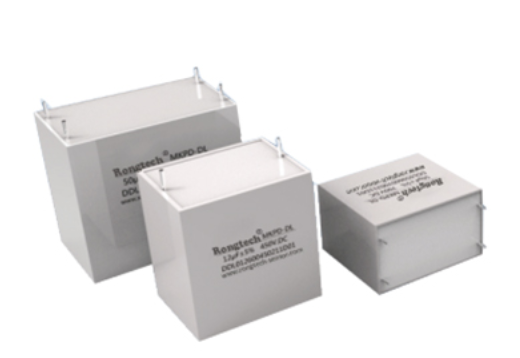
Effective overvoltage protection for DC-link capacitors requires a multi-layered strategy. Active circuits provide intelligent, real-time control to mitigate overvoltage at the source. Passive components offer fail-safe isolation against catastrophic faults. Finally, the capacitor's own self-healing and robust construction ensure it can withstand transient stresses without permanent damage. This integrated approach is essential for maintaining system reliability and longevity in high-power applications.