Key Differences: Closed-Loop vs. Open-Loop Hall Effect Current Sensors for Motor Control
Operational Principles and Core Performance Distinction
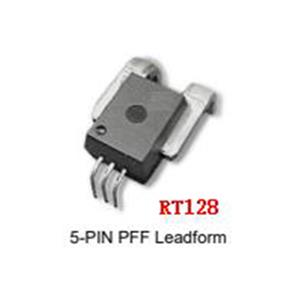
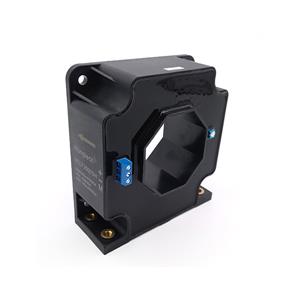
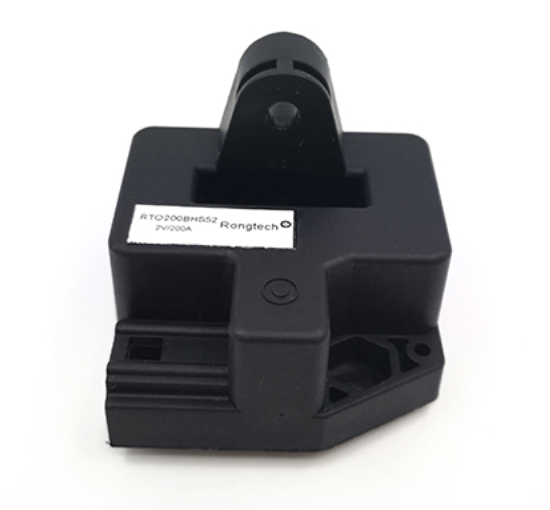
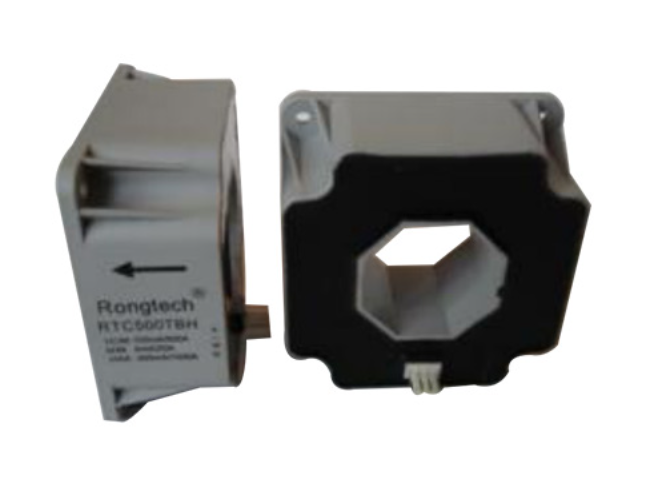
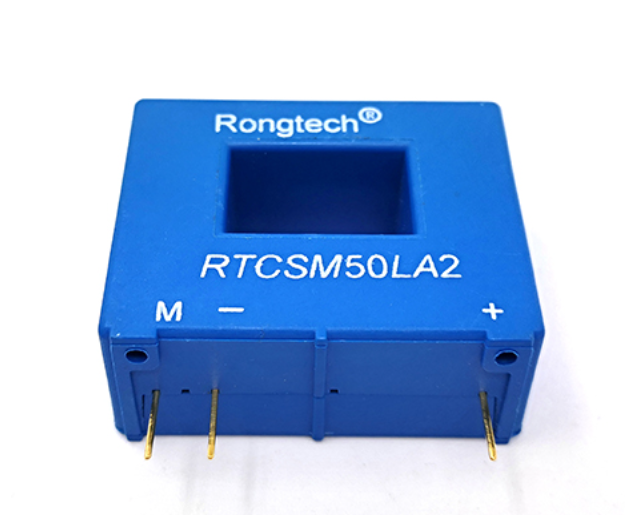
The fundamental difference between closed-loop and open-loop Hall effect sensors lies in their feedback mechanism. An open-loop sensor, as offered in Rongtech's RTU series, directly outputs a voltage from its Hall generator, proportional to the magnetic field (and thus primary current) with no secondary compensation. Its structure is simple, compact, and cost-efficient. In contrast, a closed-loop sensor, like Rongtech's RTC series, incorporates a sophisticated negative feedback system. Its Hall element detects the magnetic field, and its output drives a compensation coil that generates an opposing magnetic field to maintain a net-zero flux in the core. The current needed for this compensation is the sensor's isolated output signal. This active feedback loop grants closed-loop sensors far superior accuracy, typically <0.5% at 25°C, and outstanding linearity. The bandwidth is also significantly higher, often exceeding 150 kHz, enabling them to track rapid current transients in modern pulse-width modulation (PWM) driven motors, a challenge for the slower, more bandwidth-limited open-loop design.
Application-Based Selection for Motor Control Systems
Choosing between the two types hinges on the specific demands of the motor control application. For cost-sensitive, high-volume applications like home appliance motors, fan controllers, or pumps where precise torque control is less critical, the Rongtech open-loop sensor is ideal. Its lower power consumption, smaller footprint, and attractive price point make it a perfect fit. Its good enough accuracy suffices for functions like overload protection and basic speed regulation. However, for high-performance motor drives—such as industrial servo drives, robotics, CNC machine tools, and electric vehicle (EV) traction inverters—the Rongtech closed-loop sensor is mandatory. Its high accuracy is crucial for precise torque control and high-efficiency field-oriented control (FOC) algorithms. The high bandwidth and fast response time (typ. <1µs) are essential to accurately measure the high-frequency switching currents from IGBTs/SiC MOSFETs, ensuring stable control, minimizing torque ripple, and protecting sensitive power semiconductors from damaging overcurrent spikes that an open-loop sensor might miss.
Strategic Advantages and Total Cost of Ownership
Beyond the initial unit price, the total cost of ownership (TCO) reveals a more nuanced picture. While the open-loop sensor wins on upfront cost, the closed-loop sensor offers significant strategic value. Its extreme accuracy eliminates calibration drift over time and temperature, reducing long-term maintenance and system recalibration needs. Its superior performance can enable a more compact and efficient motor and inverter design, potentially lowering system-level costs. For mission-critical industrial automation, the reliability and diagnostic precision of a closed-loop sensor minimize unplanned downtime—a cost that far outweighs the sensor's price premium. Rongtech supports this strategic choice by offering both sensor types, allowing designers to precisely match performance to application. The decision is not about which is universally "better," but about selecting the right tool: a robust, economical open-loop sensor for monitoring and protection, or a high-performance, precision closed-loop instrument for advanced control and optimization.
In summary, the choice between open-loop and closed-loop Hall effect current sensors defines the performance ceiling and efficiency of a motor control system. Open-loop sensors provide a reliable, economical solution for basic monitoring and protection. Closed-loop sensors are the engineered choice for high-performance applications demanding precision, speed, and reliability. Rongtech Industry’s comprehensive portfolio of both technologies empowers engineers to make the optimal, system-level decision, balancing performance needs with cost considerations to build more efficient, reliable, and intelligent motor drives.