How To Compare Open-Loop And Closed-Loop Current Sensors For Different Control Systems
Choosing between an open-loop and a closed-loop current sensor is not simply a question of which one is “better.” The right answer depends on the control system itself. Rongtech’s product structure already reflects this distinction, offering both open-loop and closed-loop current-sensor categories rather than treating them as interchangeable parts. LEM’s official guidance also draws a clear line: open-loop solutions are generally aimed at cost-sensitive applications with moderate accuracy needs, while closed-loop solutions are intended for applications that require higher accuracy and faster response.
Start With The Control Goal, Not The Sensor Type
The first step is to define what the control system expects from the current signal. In some systems, current sensing is mainly used for monitoring, current display, or basic protection. In others, it is a core part of the regulation loop and directly affects torque control, current control, speed control, or semiconductor protection. LEM states that both open-loop and closed-loop sensors are used in drives, power supplies, UPS systems, welding equipment, EV motor control, BMS, and energy-management systems, but it also notes that closed-loop sensors are the better fit when high accuracy, wide bandwidth, and fast response time are required.
That distinction matters because many control systems do not need the same level of sensor performance. If the current signal is mainly for general monitoring, an open-loop sensor may already provide the right balance of isolation, size, and cost. If the signal is used as the key element in a fast regulation loop or for protecting IGBTs and MOSFETs, the sensor must react more quickly and hold accuracy more tightly under changing conditions. Allegro’s technical paper explains that closed-loop sensors are often chosen when high accuracy and fast response are required, especially in applications where switch protection is important.
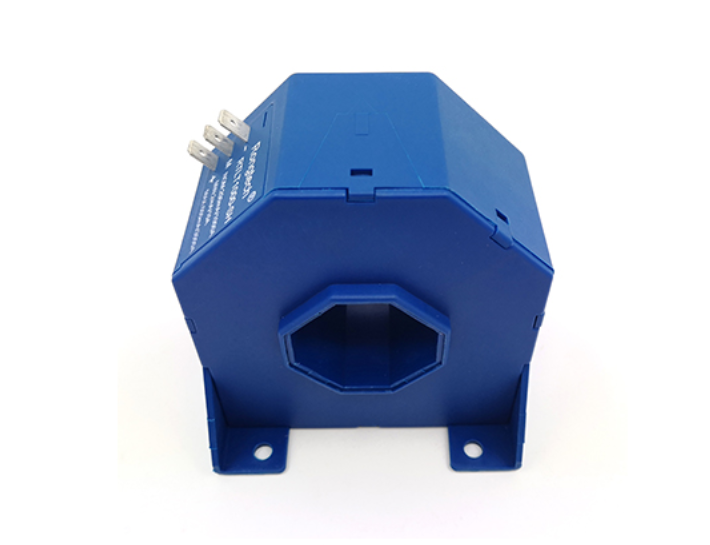
Compare Accuracy, Drift, Response Time, And Power Consumption Together
Open-loop current sensors use a simpler Hall-effect implementation. LEM describes them as the smallest, lightest, and most cost-effective Hall-based current-measurement solution, with very low power consumption, low insertion loss, and suitability for DC, AC, and complex current waveforms. However, LEM also notes that open-loop sensors typically have moderate bandwidth and response time, along with larger gain drift versus temperature. Allegro adds that open-loop accuracy can be affected by sensitivity nonlinearity and drift over temperature because the Hall sensor is measuring the magnetic field directly.
Closed-loop sensors use a compensation circuit that drives a current through a secondary winding to counterbalance the magnetic flux. LEM states that this architecture improves overall accuracy, response time, linearity, and temperature drift, while Allegro explains that the Hall element in a closed-loop sensor operates around a net-zero field, which removes sensitivity-related error sources found in open-loop designs. The trade-off is clear: closed-loop sensors are usually larger, consume more power because they must drive the compensation coil, and are more expensive because of the added circuitry.
This comparison shows why sensor choice must be based on control priorities. If the system values compact size, low power draw, and lower cost, open-loop often makes more sense. If the system values better linearity, faster dynamic response, and lower temperature drift, closed-loop usually has the advantage. TI’s 2026 Hall-effect current-sensing note similarly groups current-sensor technologies by trade-offs in accuracy, isolation, frequency response, size, and cost, rather than assuming one approach is universally superior.
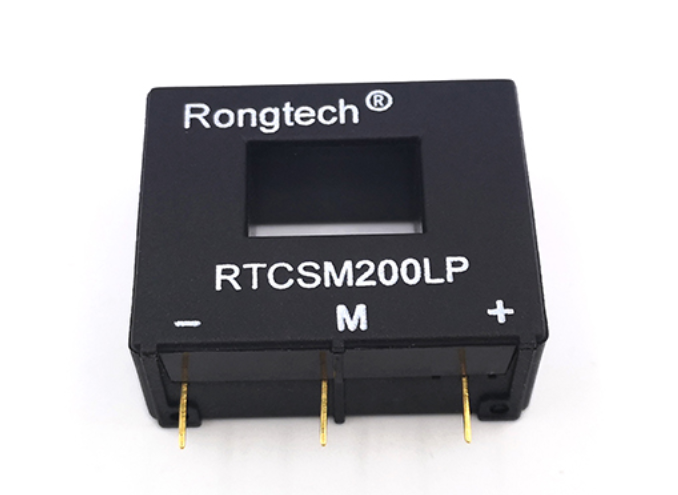
Match The Sensor To The Real Control System Environment
Control systems do not operate in ideal conditions. The sensor must fit the real conductor size, PCB or busbar arrangement, thermal environment, and application noise level. TI notes that different current-sensing methods suit different applications because their current capability, physical construction, and thermal behavior differ. LEM also points out that open-loop sensors are especially advantageous at high current levels above 300 A, while closed-loop sensors are especially well suited to regulation loops and semiconductor protection where bandwidth and fast response are critical.
This means the final decision should be made at system level. In a compact industrial drive where cost and board space are tightly controlled, open-loop may be the more practical choice. In a high-performance servo, precision power electronics platform, or protection-critical converter, closed-loop may justify its larger size and higher cost because the control quality depends on it. The best current sensor is not the one with the most impressive datasheet. It is the one whose performance level actually matches the control system’s job.
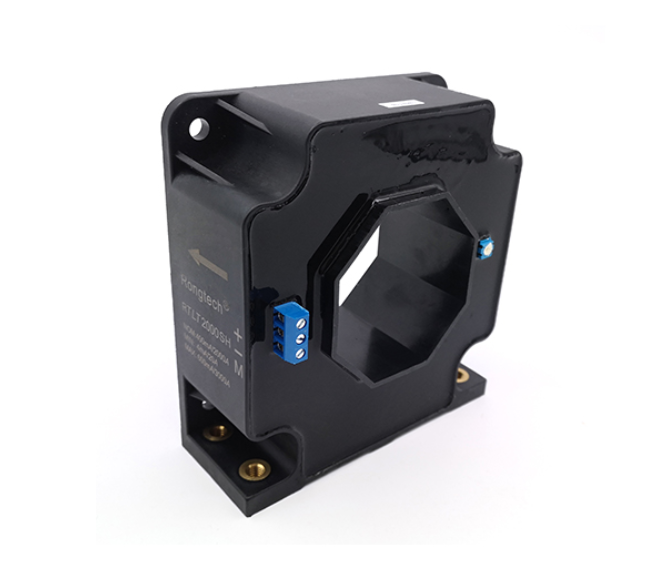
Open-loop and closed-loop current sensors are not substitutes in every control system. Open-loop solutions are often better when size, power consumption, and cost matter most. Closed-loop solutions are often better when accuracy, response time, linearity, and low drift matter most. The right comparison always starts with the control system’s real job, then matches the sensor architecture to that job.