How Hall Voltage Sensors Address High-Voltage Sampling Safety Challenges in BMS for 800V Platforms
How Hall Voltage Sensors Address High-Voltage Sampling Safety Challenges in BMS for 800V Platforms
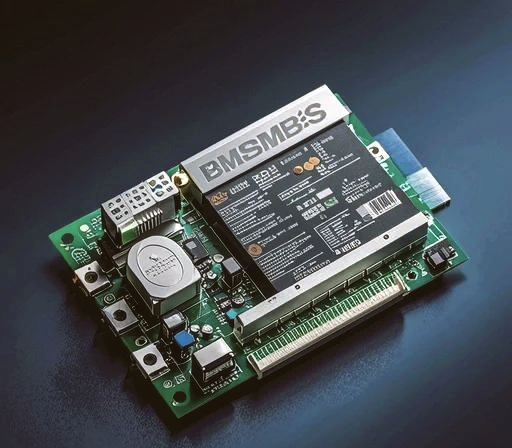
The rapid adoption of 800V high-voltage platforms in new energy vehicles (NEVs) has revolutionized charging speed and efficiency, but it also introduces critical safety challenges for Battery Management Systems (BMS). One key issue is ensuring accurate and safe voltage sampling of the high-voltage battery pack, which directly impacts vehicle performance and user safety. Hall effect voltage sensors have emerged as a vital solution to these challenges.
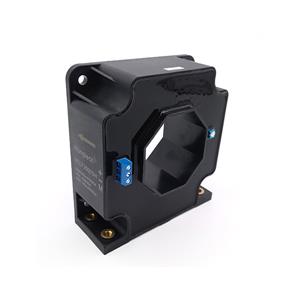
Traditional voltage sensing methods, such as resistive dividers, face significant limitations in 800V systems. They are prone to thermal runaway risks due to power dissipation and lack sufficient electrical isolation, increasing the potential for short circuits or electric shock hazards. In contrast, Hall effect voltage sensors operate on the principle of electromagnetic induction, generating a proportional output voltage based on the magnetic field produced by the current flowing through a conductor. This non-contact measurement method eliminates direct electrical connection to the high-voltage circuit, providing inherent electrical isolation—often exceeding 2500V—which is crucial for protecting both the BMS and personnel.

Moreover, Hall sensors offer high accuracy and fast response times, enabling real-time monitoring of battery cell voltages even under dynamic driving conditions. Their compact design and low power consumption make them ideal for integration into space-constrained BMS architectures. For instance, in an 800V NEV, a Hall voltage sensor can accurately sample the total pack voltage while isolating the control unit from high-voltage transients, thereby preventing data corruption or system failures.
Additionally, these sensors exhibit excellent immunity to electromagnetic interference (EMI), a common challenge in high-voltage environments. This ensures reliable operation despite the presence of switching noise from inverters or chargers. As automakers push toward higher voltage platforms to achieve faster charging and longer ranges, the role of Hall voltage sensors in enhancing BMS safety and reliability becomes increasingly indispensable.

In summary, Hall effect voltage sensors address the core safety pain points of high-voltage sampling in 800V BMS by combining electrical isolation, precision, and robustness. Their adoption not only mitigates risks associated with high-voltage exposure but also supports the sustainable growth of next-generation electric vehicles.