Ground Resistance Tester Applications in Industrial Maintenance and Safety Checks
Ground Resistance Tester Applications in Industrial Maintenance and Safety Checks
The Critical Importance of a Reliable Grounding System
In any industrial facility, a properly installed and maintained grounding (or earthing) system is not merely a technical requirement; it is the fundamental cornerstone of electrical safety, equipment protection, and system reliability. Its primary purposes are threefold: to provide a safe path for fault current to trip protective devices, to establish a stable reference voltage (zero potential) for electrical systems, and to protect against lightning and surge damage. A high-quality, low-resistance ground connection ensures that in the event of a line-to-ground fault, sufficient current flows to quickly operate circuit breakers or fuses, isolating the fault. It also prevents dangerous voltage gradients on equipment enclosures, which could lead to electric shock hazards for personnel. Furthermore, for sensitive electronic control systems, communication networks, and precision instrumentation, a stable ground plane is essential to minimize electromagnetic interference (EMI) and ensure signal integrity. However, grounding systems degrade over time due to corrosion of rods and connections, soil drying, freezing, or chemical changes, and physical damage. An ineffective ground with high resistance fails silently, creating a latent hazard that only reveals itself during a fault or surge event, often with catastrophic consequences. This is why periodic verification of ground resistance is a non-negotiable pillar of preventive maintenance and safety compliance in industrial settings.
Modern Ground Resistance Testing: Methodologies and Best Practices
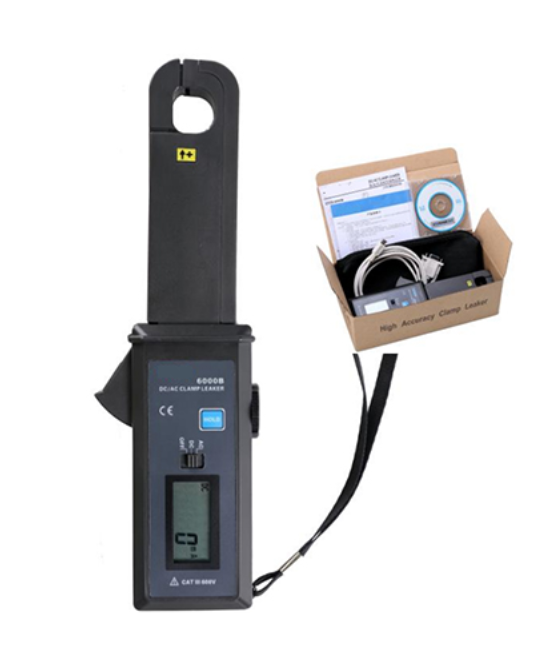
Modern ground resistance testers, like those in Rongtech's instrumentation portfolio, are sophisticated yet user-friendly tools designed for accurate and safe field measurements. The most common and reliable method for testing standalone grounding electrodes is the Fall-of-Potential method (or 3-pole method). This technique involves the ground under test (G), a current injection auxiliary electrode (C) placed a significant distance away, and a voltage measurement auxiliary electrode (P) placed between them. The tester passes a known current between G and C and measures the voltage drop between G and P, calculating resistance via Ohm's Law (R=V/I). For testing in congested urban or industrial areas where driving auxiliary rods is impractical, the Clamp-On method is invaluable. Rongtech's clamp-on ground testers can measure the resistance of an installed ground rod or grid without disconnection by inducing a test signal and measuring the resultant current on the ground conductor loop. This is ideal for periodic checks on lightning protection systems and building grounds. For large, complex grounding grids like those at substations or manufacturing plants, the 4-pole Wenner method (using four equally spaced electrodes) is used to measure soil resistivity, which is critical for designing and modeling the grounding system. Key best practices include testing under representative soil moisture conditions, ensuring proper spacing of auxiliary rods, verifying instrument calibration, and using test leads rated for the measurement. Modern testers automate these complex procedures, provide clear digital readouts, and store data for compliance reporting, making what was once a specialized task accessible to maintenance technicians.
Rongtech Testers in Action: Ensuring Compliance and Preventing Failures
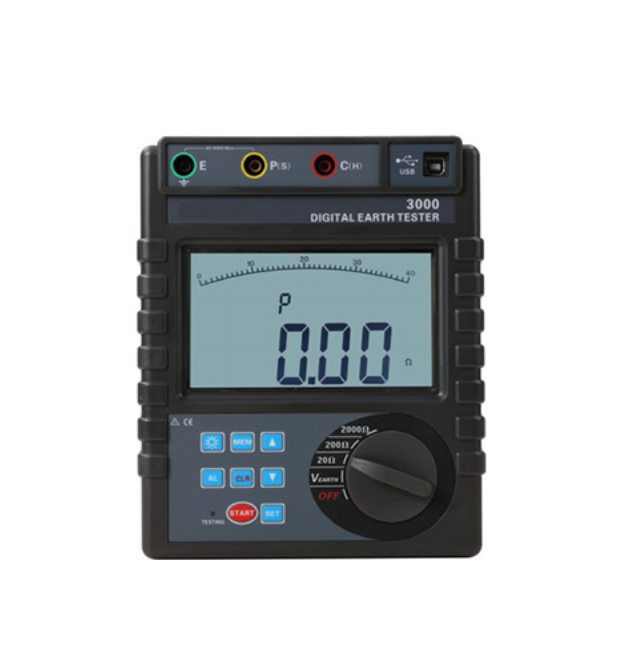
The application of Rongtech's ground resistance testers spans the entire lifecycle of industrial electrical infrastructure, from initial installation and commissioning to routine preventive maintenance and post-event diagnostics. During the commissioning of new equipment or facilities, electricians use them to verify that newly installed ground rods, mats, or grids meet the design specifications and code requirements (e.g., NEC, IEC standards, often requiring resistance below 5 ohms or 1 ohm for critical systems). For routine safety inspections and preventive maintenance, these testers are the tool of choice for facilities managers and electrical safety officers. They perform scheduled tests on all critical grounding points: the main service entrance ground, transformer and generator grounds, equipment pads for large motors and VFDs, lightning protection system down conductors, and the grounding of sensitive control rooms and server racks. This proactive approach identifies degradation—such as a corroded connection or a grounding conductor damaged by excavation—before it can cause a nuisance trip, equipment malfunction, or a safety incident. In troubleshooting and failure analysis, after events like lightning strikes, unexplained equipment damage, or persistent communication errors, ground resistance testing is a first step to rule out or confirm grounding issues. Using a Rongtech tester ensures that measurements are accurate, reliable, and documented, providing the empirical data needed to make informed decisions about repairs, upgrades, and to demonstrate due diligence in meeting Occupational Safety and Health Administration (OSHA) and other regulatory safety obligations. Ultimately, this practice transforms grounding from a "set-and-forget" installation into a managed, verified asset critical to operational continuity and personnel safety.
In summary, ground resistance testing with reliable instruments like those from Rongtech is a vital, proactive discipline within industrial electrical maintenance. It moves the integrity of the grounding system from an assumption to a verified fact. By systematically measuring and documenting ground resistance, maintenance teams can ensure that this silent guardian of safety and reliability continues to perform its critical functions: providing a safe path for faults, stabilizing electrical references, and protecting both human and capital assets. In an era of increasing reliance on complex and sensitive industrial electronics, regular ground testing is not just a box to check for compliance; it is a fundamental investment in risk mitigation, system uptime, and the overarching culture of safety that defines responsible industrial operations.