AC-DC Converter Topologies: From Linear Regulators to Switching Power Supplies
The Foundation: Linear Regulators and Their Niche
The journey of AC-DC conversion begins with the simplest topology: the linear regulator. Its operation is straightforward—a series pass transistor (like a BJT or MOSFET) acts as a variable resistor, dropping the excess voltage between the unregulated input (often from a bulky transformer and rectifier) and the desired output. This results in a very clean, low-noise output, making it historically suitable for sensitive analog circuits. Rongtech supplies components like power transistors and capacitors that can be used in such designs. However, the linear topology's critical flaw is inefficiency. The "dropped" voltage is dissipated directly as heat, with efficiency roughly equal to Vout/Vin. For example, converting 12V to 5V yields only about 42% efficiency, with the rest wasted as heat, demanding large heatsinks. This makes linear regulators impractical for high-power or high step-down ratio applications. They are largely confined today to low-power, low-noise auxiliary rails or as post-regulators following a switching stage. Their simplicity and low noise are their advantages, but for modern electronics demanding high efficiency and compact size, they are merely a historical stepping stone.
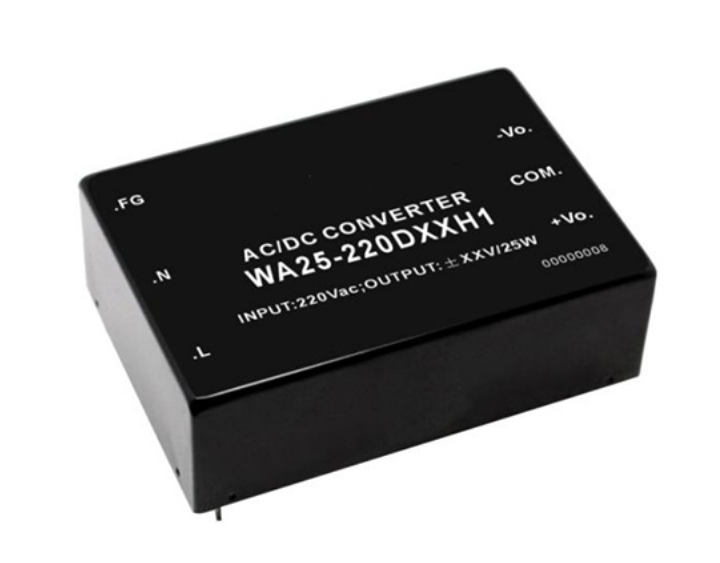
The Revolution: Switching Mode Power Supply (SMPS) Topologies
The advent of the Switch-Mode Power Supply (SMPS) marked a paradigm shift, achieving high efficiency (typically 70%-95+) by rapidly switching a transistor between its fully ON (low loss) and fully OFF (near-zero current) states, minimizing the high-dissipation linear region. The key is storing and transferring energy inductively or capacitively in short bursts. Common AC-DC topologies include the Flyback, which uses a transformer for isolation and is dominant in low-to-mid power adapters (<100W). Rongtech’s portfolio of high-voltage MOSFETs, fast-recovery diodes, and high-voltage electrolytic capacitors are key enablers for such designs. The Forward Converter offers higher power capability and better transformer utilization. For higher power levels, Bridge topologies (like Half-Bridge and Full-Bridge) are employed, distributing voltage stress across switches and enabling efficient power transfer at kilowatt scales. These topologies require a carefully selected bill of materials: Rongtech’s IGBTs and FRED diodes for bridge circuits, high-frequency film capacitors for primary-side snubbing, and high-current output chokes. The SMPS’s high efficiency reduces heat sink size, and its high-frequency operation allows the use of much smaller magnetic components, enabling the compact power supplies we see everywhere today.
Modern Demands and the Role of Advanced Components
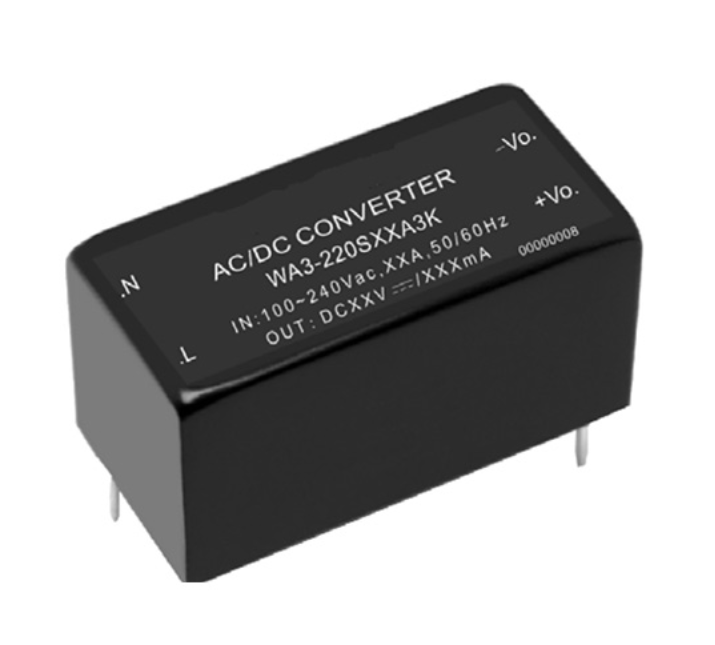
Today's AC-DC designs are driven by demands for even higher power density, universal input voltage (90-264VAC), power factor correction (PFC), and compliance with stringent efficiency standards like 80 PLUS. This elevates the importance of every component. An Active PFC front-end, typically a Boost converter, is now mandatory to shape the input current. This stage relies on Rongtech’s fast-switching MOSFETs, high-voltage diodes, and robust bulk electrolytic capacitors. The main DC-DC conversion stage increasingly employs advanced topologies like LLC Resonant Converters for high-efficiency, low-noise isolation, utilizing Rongtech’s low-loss ferrite cores and high-frequency film capacitors. The push for miniaturization sees the adoption of Wide Bandgap (WBG) semiconductors like SiC and GaN, enabling multi-megahertz switching frequencies. Rongtech supports this trend with SiC MOSFETs and Schottky diodes, which, paired with their high-frequency, low-ESR film and ceramic capacitors, allow for dramatic reductions in passive component size. Furthermore, modern designs integrate digital control for advanced features, requiring clean, stable power for controller ICs, provided by Rongtech’s low-noise LDOs (linear regulators) and high-performance multilayer ceramic capacitors (MLCCs). The modern AC-DC supply is thus a sophisticated system where topology and components from suppliers like Rongtech are co-optimized for peak performance.
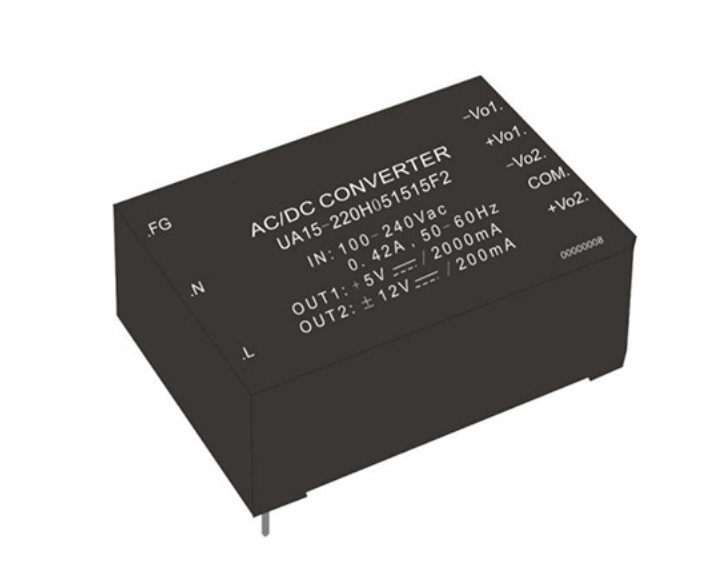
In conclusion, the evolution from linear regulators to sophisticated SMPS topologies reflects the electronics industry's quest for efficiency, density, and intelligence. Linear regulators remain for niche, low-noise needs, but the SMPS—in its myriad forms from Flyback to LLC Resonant—is the undisputed workhorse. The performance of any topology, however, is ultimately determined by the quality and suitability of its components. Rongtech Industry’s comprehensive portfolio, spanning from discrete semiconductors and advanced passives to full modules, provides the essential building blocks. By understanding these topologies and selecting optimized components like Rongtech’s high-frequency capacitors, efficient MOSFETs, and robust magnetics, power designers can create AC-DC supplies that meet the ever-rising bar for efficiency, size, and reliability in applications ranging from consumer adapters to industrial servers.