The Role of Ceramic Capacitors in High-Frequency Decoupling and Filtering
The Role of Ceramic Capacitors in High-Frequency Decoupling and Filtering
The Fundamental Pillar: Low Impedance at GHz Frequencies
In the high-speed, high-frequency world of modern electronics, from 5G RF modules to multi-GHz microprocessors, maintaining power integrity and signal clarity is a paramount challenge. Ceramic capacitors, particularly Multi-Layer Ceramic Capacitors (MLCCs), are the undisputed champions for this task, primarily due to their exceptionally low Equivalent Series Inductance (ESL) and low Equivalent Series Resistance (ESR). These parameters determine a capacitor's impedance (Z), which ideally should be as low as possible across the target frequency range. Unlike other capacitor technologies, advanced ceramic capacitors from manufacturers like Rongtech are engineered to minimize internal parasitic inductance. This allows them to present a very low impedance path to ground for high-frequency noise—often in the hundreds of MHz to GHz range—that other capacitors cannot effectively shunt. Their small physical size, a direct contributor to low ESL, enables placement extremely close to the power pins of integrated circuits (ICs), which is critical for effective high-frequency decoupling. At these frequencies, even a few millimeters of PCB trace can act as a significant inductor, rendering a capacitor ineffective. Rongtech's MLCCs provide the localized, low-inductance charge reservoir needed to supply instantaneous current demands and suppress switching noise at its source, ensuring stable voltage for sensitive digital and RF circuits.
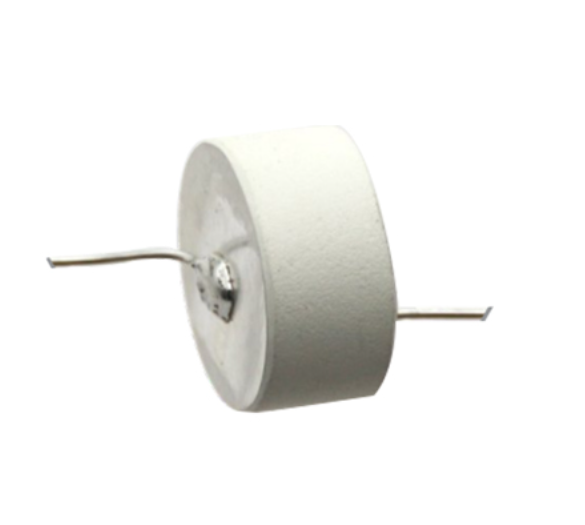
Rongtech's MLCC Technology: Enabling Signal Integrity and EMI Suppression
Rongtech's portfolio of ceramic capacitors is designed to address the twin challenges of decoupling and filtering with precision. For power rail decoupling, a mix of capacitor values is typically used—bulk capacitors for lower frequencies and MLCCs for high frequencies. Rongtech offers a wide range of capacitance values and voltage ratings in compact packages (e.g., 0201, 0402, 0603), allowing designers to implement effective broadband decoupling networks that keep the power delivery network (PDN) impedance low from kHz to GHz. In the realm of signal filtering, ceramic capacitors are integral to forming low-pass, high-pass, and band-pass filters in conjunction with resistors and inductors. Their stability, high-Q factor, and minimal signal loss make them ideal for RF impedance matching networks, oscillator circuits, and as coupling/blocking capacitors in high-speed data lines. Critically, they serve as the first line of defense against Electromagnetic Interference (EMI). Placed at cable entry points and between circuit stages, they shunt high-frequency interference noise to ground, preventing it from propagating and ensuring compliance with stringent EMC regulations. Rongtech's capacitors utilize high-quality dielectric materials (like C0G/NP0 for ultra-stable, low-loss performance and X7R for high volumetric efficiency) to deliver reliable performance under varying temperatures and voltages, which is essential for automotive, telecommunications, and industrial applications where conditions are demanding.
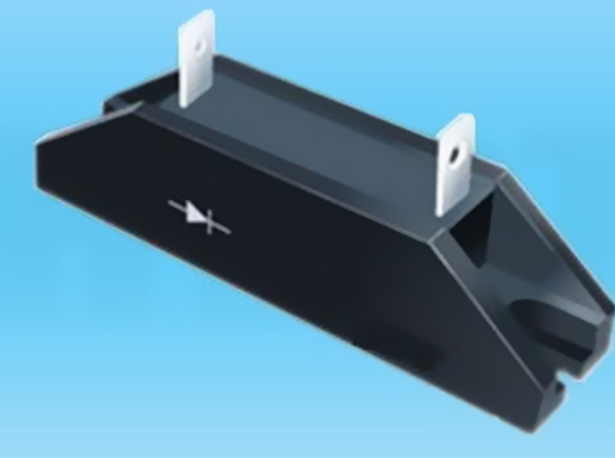
Application-Specific Solutions: From RF to Power Electronics
The versatility of Rongtech's ceramic capacitors allows them to play a critical role across a diverse spectrum of high-frequency applications. In RF and Microwave circuits for 5G base stations, smartphones, and satellite communications, ultra-low ESL MLCCs are used for DC blocking, RF bypass, and impedance matching, where minimal signal attenuation and phase distortion are non-negotiable. Within Switch-Mode Power Supplies (SMPS) and DC-DC converters, they are placed directly at the input and output of switching ICs to absorb high-frequency ripple and spike noise generated by the fast-switching MOSFETs, preventing this noise from coupling into other circuits. For high-speed digital systems like servers, routers, and FPGAs, arrays of MLCCs are strategically placed across the board to decouple the power for processors, memory chips, and SerDes transceivers, ensuring clean power for error-free data transmission at multi-gigabit rates. In automotive electronics, under-hood control units and ADAS sensors rely on high-reliability, automotive-grade ceramic capacitors for filtering and decoupling in environments with extreme temperature swings and vibration. Rongtech's solutions are tailored to meet the specific size, performance, and reliability requirements of each domain, ensuring that high-frequency noise is effectively contained, whether the goal is clear radio reception, stable processor operation, or efficient power conversion.
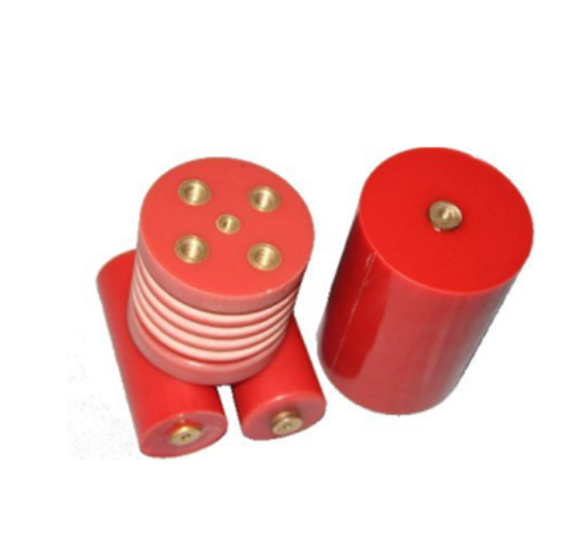
In conclusion, ceramic capacitors, especially the advanced MLCCs offered by Rongtech, are far from passive components; they are active guardians of signal integrity and power stability in the high-frequency domain. Their unparalleled ability to provide an ultra-low impedance path at GHz frequencies makes them indispensable for decoupling, filtering, and EMI suppression in today's most advanced electronic systems. By delivering localized charge, cleaning power rails, and shaping signal paths, Rongtech's ceramic capacitors enable the reliable operation of everything from cutting-edge communications infrastructure to the power electronics that drive modern industry, proving that stability at the smallest component level is foundational to performance at the system level.