How To Select A Precision Shunt Resistor For High Current Monitoring Systems
High current monitoring systems place much greater stress on a precision shunt resistor than ordinary sensing circuits. In these applications, the shunt must carry large current continuously, survive pulse events, maintain stable resistance under temperature rise, and still provide an accurate signal for control or monitoring. That is why selecting a precision shunt for high current systems requires more than checking wattage and resistance tolerance.
Focus On Current Profile, Not Just Rated Current
The first thing to define is the real current profile. High current systems rarely operate at one fixed level. They often include startup peaks, overload pulses, regenerative current, or dynamic load changes. A shunt resistor selected only around nominal current may look acceptable during normal operation but become unstable under short-term stress. That is especially important in battery systems, inverters, charging equipment, welding systems, and industrial power distribution units.
A better selection process starts with continuous current, peak current, overload duration, and duty cycle. These factors determine how much stress the shunt will actually see. In many cases, the most important design input is not the average current but the worst pulse condition. Once that is clear, the resistor can be sized with more realistic power and thermal margin.
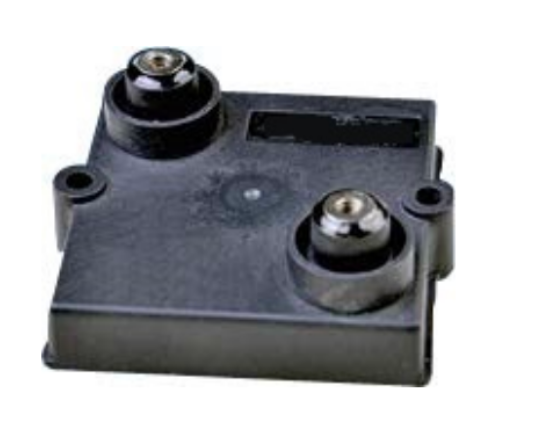
Check Thermal Path And Terminal Structure
In high current monitoring, the resistor body is only one part of the thermal picture. The terminal design, welding structure, metal alloy path, and PCB or busbar connection all affect performance. High current shunts usually require stronger terminal construction to reduce unwanted resistance variation and improve heat spreading. If the terminal geometry is weak or current distribution is uneven, the measurement can drift even when the resistor element itself is technically accurate.
The thermal path also needs to match the real assembly. In compact equipment, heat may not escape easily, which pushes the resistor closer to thermal drift limits. In busbar-mounted systems, mechanical structure may help carry heat away. This is why a high current shunt should always be evaluated as a power-path component and not merely as a sensing accessory.
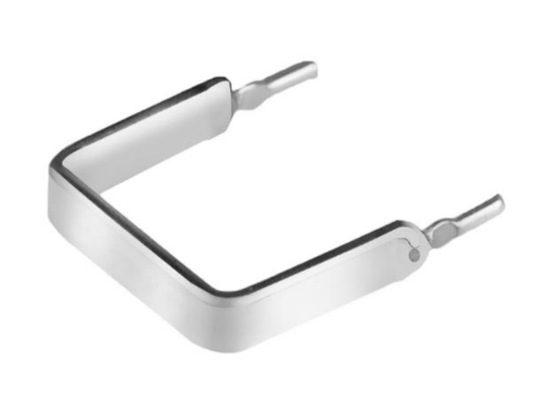
Match Signal Quality With Long-Term Reliability
High current monitoring often uses very low resistance values to reduce voltage drop and system loss. That makes signal quality harder to manage. A very small sense voltage can magnify amplifier offset, routing error, thermal EMF, and common-mode noise. For this reason, the best high current shunt is not simply the lowest-ohmic part available. It is the one that keeps power loss reasonable while still delivering a stable, measurable signal.
Long-term reliability is equally important. Repeated thermal cycling, pulse load, and vibration can gradually affect resistance stability and connection quality. In demanding systems, a shunt resistor should be selected for lifecycle consistency rather than only for initial measurement performance. Reliable monitoring depends on stable resistance over time, not just at installation.
A precision shunt for high current monitoring should be selected around real current profile, thermal structure, and long-term signal stability. In high current systems, the correct shunt is the one that survives electrical stress, manages heat well, and still supports accurate measurement over time.