How To Choose The Right Voltage Sensor For Different Power System Applications
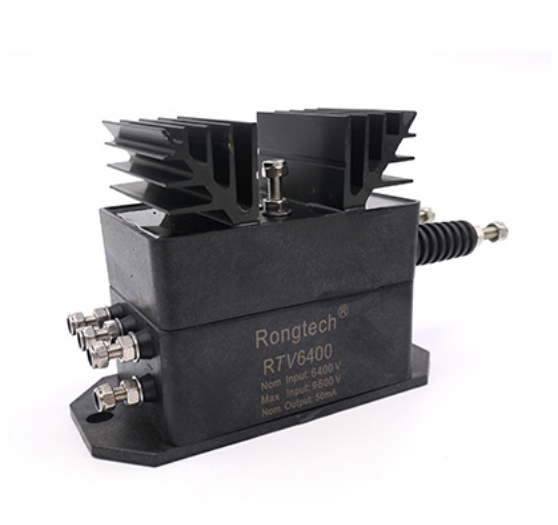
Choosing a voltage sensor is not just about matching a voltage range on a datasheet. In real power systems, the right choice depends on how the voltage is measured, how fast the control loop reacts, how much electrical isolation is required, and how stable the signal remains under heat, noise, and long operating hours. In this product category, voltage sensors are commonly used in EV control units, BMS and DC/DC converters, as well as motor drives, solar inverters, UPS systems, welding equipment, renewable energy systems, and other industrial power applications. Industry sources also show that voltage sensors and transducers are designed to measure DC, AC, pulsed, and mixed voltages, often with galvanic isolation and technologies such as Hall effect, Fluxgate, or insulating digital designs.
Voltage Range, Isolation, And Application Fit
The first step is to define the real application instead of starting from a part number. A voltage sensor used in a battery system, a motor drive, a solar inverter, or a UPS may all “measure voltage,” but they do not face the same electrical stress. The actual voltage type matters first: is the system measuring DC, AC, pulsed voltage, or a mixed waveform? LEM’s voltage sensing guidance shows that voltage transducers are selected across ranges from low voltage up to several kilovolts, and that the same technology family can be applied differently depending on the control architecture. The application also determines whether galvanic isolation is optional or essential. In high-voltage systems, isolation is often critical for safety, signal integrity, and controller protection, not just a nice extra feature.
The next check is application purpose. If the measured voltage is mainly used for monitoring, a general-purpose solution may be enough. If the signal is used for fast control, protection, balancing, or switching decisions, then isolation quality, dynamic response, and stability become much more important. LEM notes that Hall effect voltage sensors are commonly used for cost-effective general-purpose voltage measurement, while Fluxgate technologies offer higher accuracy and wider bandwidth. TI also highlights isolated voltage sensing in applications such as motor drives, solar inverters, industrial robots, DC charging stations, and UPS equipment, where the sensing path directly affects control performance. That means voltage range alone is never enough; the sensor must match the control role inside the system.
Accuracy, Response Time, And Output Compatibility
Once the application is clear, the next decision is measurement performance. Many teams focus too much on one headline accuracy figure, but actual selection should look deeper. LEM’s selection guidance specifically calls out measurement accuracy, power budget, and bandwidth or response time as key voltage sensor criteria. In real power systems, voltage sensing performance is affected by offset, drift, repeatability, temperature behavior, and delay time. A sensor that looks accurate at room temperature may behave very differently inside a hot inverter cabinet or a compact energy storage enclosure. That is why the useful question is not “What is the published accuracy?” but “Will the accuracy stay acceptable under the real operating conditions of this equipment?”
Response time also matters more than many projects expect. In a slow monitoring loop, moderate speed may be fine. In a power conversion or protection loop, sensing delay can directly influence switching quality, fault response, and control stability. LEM’s voltage sensor families emphasize delay time, insulation test voltage, and compact integration, which shows how dynamic performance and isolation are tied together in real designs. Output compatibility is equally important. A voltage sensor may deliver a proportional analog output, conditioned signal, or another standardized interface, but it still has to match the controller, ADC path, and signal conditioning structure already in use. A technically good sensor can still become the wrong choice if it adds unnecessary redesign work to the PCB, wiring, or filtering stage.
Thermal Stability, Environmental Reliability, And Total Cost
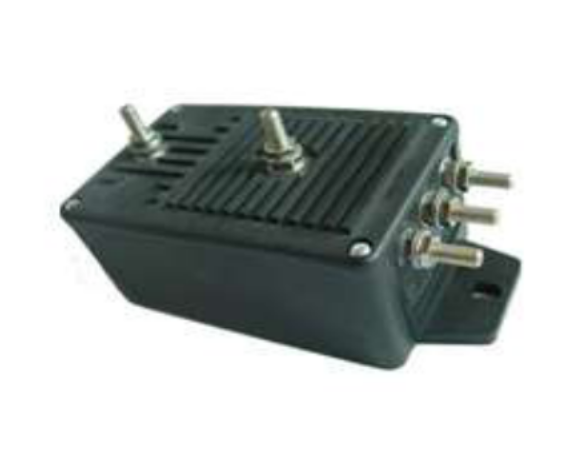
After electrical performance, the final decision usually comes down to reliability in the field. LEM’s selection criteria explicitly include mechanical requirements, thermal conditions, and environmental conditions such as vibration, temperature, and proximity to magnetic fields. In practice, this means voltage sensor selection should consider mounting space, dimensions, wiring flexibility, cooling conditions, and the temperature profile over time. It should also consider the real environment around the sensor: high-frequency switching noise, vibration, temperature cycling, and cabinet layout. In power electronics, a sensor that survives the voltage rating but drifts under thermal stress can still become a weak point in the system.
This is also where total cost of ownership becomes more important than initial price. A lower-cost option may seem attractive at the quotation stage, but if it creates signal instability, additional filtering, redesign work, reduced control precision, or earlier field failures, the real cost becomes much higher. A better selection process asks whether the voltage sensor will reduce integration risk, improve long-term measurement stability, and support the system’s expected service life. For industrial power systems, the right choice is usually the one that balances isolation, accuracy, response time, environmental reliability, and installation fit, rather than simply the one with the lowest unit price.
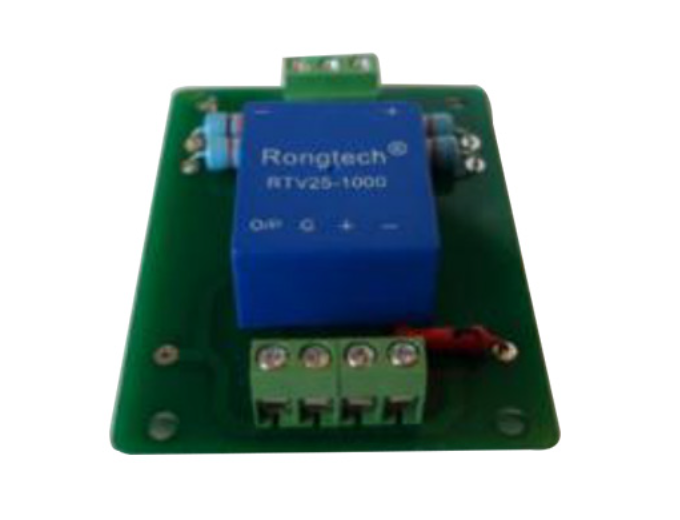
The right voltage sensor is the one that matches the actual power system, not the one with the most impressive-looking headline specification. Before making a final decision, confirm the voltage type and range, required isolation level, control role, accuracy under real temperature conditions, response speed, output compatibility, and environmental fit. When those points are checked together, it becomes much easier to choose a voltage sensor that supports stable control, reliable protection, and lower long-term risk in real operation.