Cooling Fans and Heat Sinks: Synergistic Design for Power Electronics
Cooling Fans and Heat Sinks: Synergistic Design for Power Electronics
The Physics of Synergy: From Thermal Resistance to Airflow
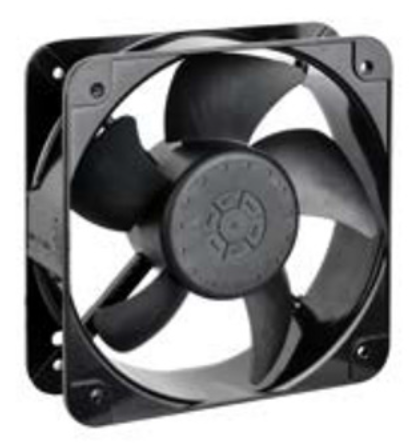
In power electronics, effective heat dissipation is not merely about adding a larger heatsink or a faster fan; it’s about creating a synergistic system where the cooling fan and heatsink operate as a unified, optimized thermal engine. The core principle lies in managing the complete thermal path from the semiconductor junction to the ambient air. The heatsink’s primary role is to conduct and spread heat away from the hot component, characterized by its thermal resistance (Rth). However, its efficiency is ultimately limited by its ability to reject this heat into the surrounding air. This is where the cooling fan creates synergy. By forcing air across the heatsink’s fins, the fan dramatically increases the convective heat transfer coefficient, effectively lowering the overall thermal resistance from the junction to the ambient environment. For manufacturers like Rongtech, which supply both critical components, the design process begins with this integrated perspective. The goal is to match a fan’s static pressure-airflow performance curve (P-Q curve) precisely with the aerodynamic resistance (impedance) of the heatsink fin array. A mismatch leads to either insufficient airflow (stagnant air pockets) or wasted energy and excessive noise. This fundamental synergy is the first and most critical step in ensuring the reliability and longevity of IGBTs, SiC modules, and power supplies.
Optimization Strategies: Balancing Performance, Size, and Acoustics
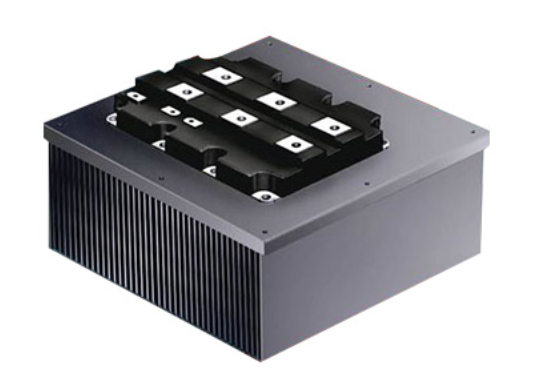
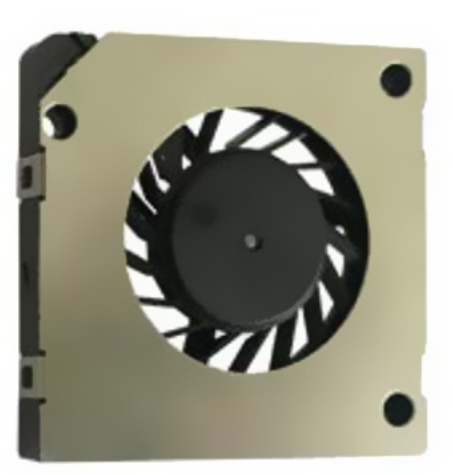
Achieving true synergy requires moving beyond simple component selection to sophisticated co-engineering. The design optimization involves multiple, often competing, parameters: thermal performance, physical size (footprint and height), power consumption of the fan, and acoustic noise. A high-performance, small-form-factor power supply, for example, demands a compact thermal solution. Rongtech’s approach involves designing heatsinks with optimized fin density, height, and base thickness to maximize surface area within a limited volume. This is then paired with a specially selected or custom-designed axial or blower fan that can deliver the necessary static pressure to push air through the dense fins, often operating at its peak efficiency point. Advanced strategies include using computational fluid dynamics (CFD) simulations to model airflow and thermal distribution, identifying hotspots, and iterating the fin structure and fan placement. Furthermore, integrating intelligent fan speed control based on temperature feedback can dramatically reduce noise and power consumption during low-load conditions while ramping up cooling when needed. This holistic, optimized design results in a thermal management system that is not just effective, but also efficient, compact, and quiet—meeting the stringent requirements of modern applications like servo drives, telecom rectifiers, and automotive onboard chargers.
Material and Reliability Engineering for Demanding Environments
The synergy between fan and heatsink must endure under real-world operating conditions, which often involve dust, moisture, vibration, and continuous thermal cycling. Therefore, material selection and reliability engineering are paramount. For heatsinks, Rongtech utilizes high-thermal-conductivity aluminum alloys and may employ advanced processes like skiving or forging to create intricate fin structures with a strong mechanical bond to the base. Surface treatments, such as anodizing, can improve corrosion resistance and radiative heat dissipation. For cooling fans, the choice of bearing type is critical for longevity. Rongtech offers fans with sleeve bearings for cost-sensitive applications and ball bearings or advanced hydrodynamic bearings for higher reliability and longer life in 24/7 industrial settings. Sealing technologies and ingress protection ratings ensure that fans can operate in dusty or humid environments without failure. The combined system is then subjected to rigorous reliability testing, including thermal shock, vibration, and extended life tests, to validate that the synergistic thermal performance is maintained throughout the product's designed lifespan. This focus on durability ensures that the power electronic system remains cool and reliable in the field, preventing thermal runaway and unscheduled downtime.
In the high-stakes world of power electronics, thermal management is a defining factor for performance and reliability. Cooling fans and heatsinks are not standalone commodities but interdependent partners in a thermal system. Their synergistic design—carefully matching performance curves, optimizing for space and acoustics, and engineering for long-term durability—transforms simple heat removal into a sophisticated, reliable engineering solution. Companies like Rongtech, with expertise in both domains, are uniquely positioned to deliver this integrated value. By providing co-engineered fan-and-heatsink solutions, they empower designers to push the limits of power density and efficiency, ensuring that advanced semiconductors can operate at their full potential within compact, reliable, and long-lasting systems.